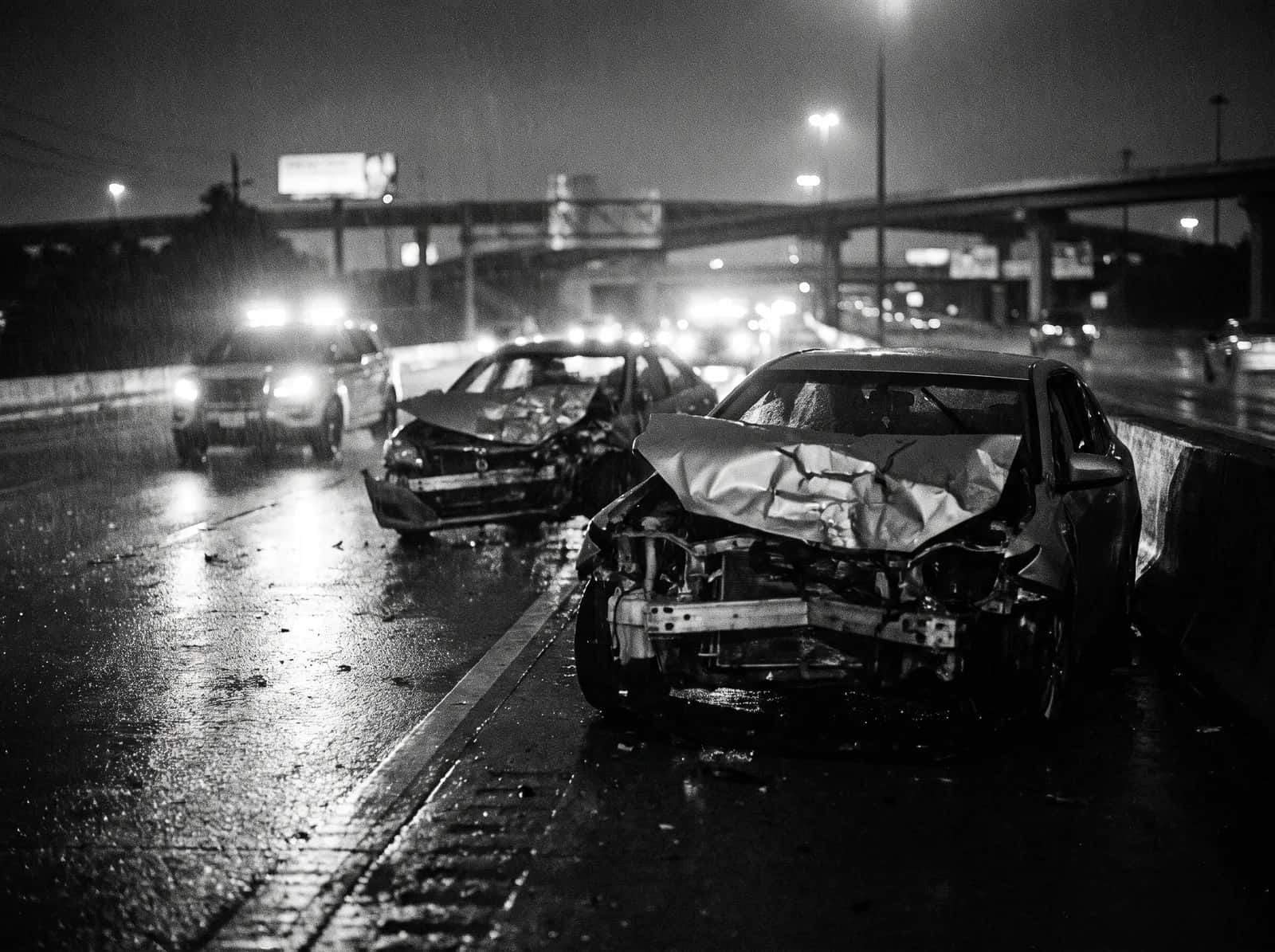

Start here: Texas crash report guide: every agency, TxDOT online purchase, fees and codes
Order it through the TxDOT Crash Report Online Purchase System, usually within about ten days of the crash, for $6 or $8 certified under Transportation Code section 550.065. The responding agency, such as Galveston, League City, or Friendswood police, the sheriff, or DPS, also keeps it.
Every crash report starts with the officer who responded. In Galveston County that may be the Galveston Police Department on the island, League City, Friendswood, Texas City, Dickinson, or another city's police inside city limits, the Galveston County Sheriff's Office in unincorporated areas, or the Texas Department of Public Safety. Transportation Code section 550.026 directs drivers to notify the local police department in a city, and the sheriff or DPS outside city limits, when someone is hurt or a vehicle cannot be safely driven. Under section 550.062, an officer who investigates a crash involving injury, death, or apparent damage of $1,000 or more must file a written report, the CR-3, with TxDOT within ten days.
The fastest route is usually the TxDOT Crash Report Online Purchase System. You search using details such as the crash date, the county, and a name or the crash ID, and pay online. Transportation Code section 550.065(d) sets the fee for a copy at $6, with an additional $2 to certify it. A report appears once the agency submits it, which the statute allows up to ten days to do, and some take longer when an investigation is ongoing. The responding agency's records division can also provide the report. If the online system does not show it yet, contact the agency with the case or incident number the officer gave you at the scene.
Not everyone can get the full report. Section 550.065(c) limits release of the complete report to people directly concerned in the crash, including anyone involved, an authorized representative, a driver's employer, parent, or guardian, an owner of a damaged vehicle or property, insurers covering a vehicle or person involved, anyone who may sue because of a death resulting from the crash, and certain news media, among others. The online system asks you to confirm which category you fall in. Anyone else can receive only a redacted version that removes names, license numbers, addresses, phone numbers, plate numbers, and insurance details, under section 550.065(c-1) and (f).
Once you have the report, read it closely. It lists each driver, vehicle, and insurer, the officer's narrative and diagram, contributing factor codes, any citations, and witness names. Check that your name, vehicle, and insurance are correct and that the narrative matches what happened. An officer may correct factual errors with a supplement, but opinions about fault are harder to change, and the report does not decide liability in a civil case. If more than one agency responded, for example city police and DPS on a highway, ask which one wrote the report. Insurers rely heavily on the report, so problems with it should be raised before the adjuster forms a view.
If police did not come to the scene, there may be no CR-3, because the duty to file applies to crashes an officer investigates. In that case, your photographs, the other driver's information, and witness contacts are the record, and you should report the crash to your insurer promptly. A crash report is only one piece of evidence: medical records, photographs, and video usually matter as much. Owsley Law Firm obtains crash reports for clients at no charge, reviews them for errors before an insurer relies on them, represents injured people from League City, Friendswood, Galveston, and across Galveston County from its Houston offices, and charges no fee unless it wins.
What to do, step by step
- Write down the responding agency and the case number at the scene.
- Wait about ten days, then search the TxDOT online system.
- Pay the $6 fee, or $8 for a certified copy.
- Read the report and flag any errors right away.
A certified copy costs $2 more and may be useful if the report will be used in court, though most insurance claims proceed with an ordinary copy.
If the report lists the wrong insurer or omits a witness, ask the investigating officer about a supplement and keep your own evidence of the correct information.
Mistakes that cost people money
- Assuming the city police wrote the report when DPS or the sheriff responded.
- Ignoring factual errors in the narrative or insurance section.
- Relying on the report as proof of fault.
Related questions
How much does a Texas crash report cost?
$6 for a copy and $2 more to certify it, under Transportation Code section 550.065.
Who can get the full report?
People directly concerned in the crash, such as those involved, their representatives, and insurers. Others can get a redacted version.
What if police did not respond?
There may be no CR-3. Your own photographs and the other driver's information become the record.
Sources
Sources this page relies on
Read next