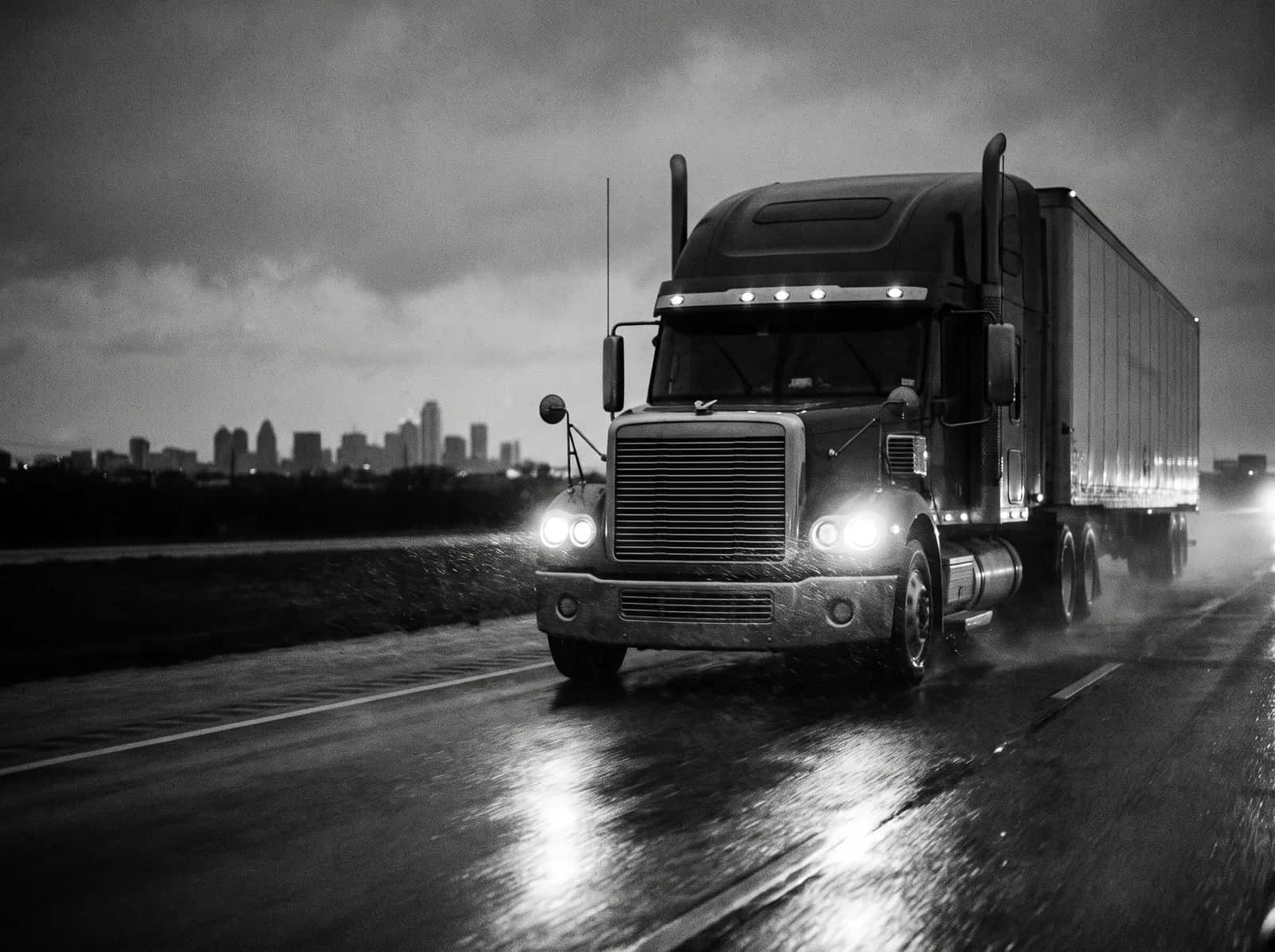

In Texas, an oilfield truck crash is a claim against the driver and the oilfield service or trucking company, and sometimes the operator or contractor that controlled the work. Water haulers, sand trucks, crude tankers, and equipment haulers crowd two-lane roads in the Permian Basin and Eagle Ford around the clock. Owsley Law Firm handles these cases statewide and charges no fee unless it wins.
Why are oilfield roads so dangerous?
Many Texas oilfield roads were built as rural farm-to-market routes and two-lane highways, not freight corridors. When drilling activity rises, those roads carry heavy trucks day and night: water and sand haulers supplying wells, crude oil tankers, and flatbeds moving pipe and rigs. Passing on two-lane roads, poorly lit lease road entrances, and fatigue combine to produce serious head-on and rear-end crashes in places far from a trauma center.

What kinds of oilfield trucks cause crashes?
Each type of truck raises its own questions about weight, cargo, and regulation.
- Water haulers and vacuum trucks running between wells and disposal sites
- Frac sand trucks and pneumatic trailers
- Crude oil tankers and condensate haulers
- Flatbeds and lowboys carrying pipe, rig parts, and heavy equipment
- Pickup trucks and crew vehicles carrying workers between sites
Who is liable for an oilfield truck crash?
Oilfield work is layered with contractors. The truck may be owned by a small hauling company working for a service company, which in turn works for the well operator. The driver's employer is generally responsible for the driver's negligence, and other companies can be responsible for their own decisions about scheduling, hiring, and safety. Master service agreements between these companies often allocate insurance and indemnity, and they can identify additional coverage. Texas assigns fault among all parties under Chapter 33 of the Civil Practice and Remedies Code.
Do hours-of-service rules apply to oilfield drivers?
Commercial drivers in interstate commerce are subject to the federal hours-of-service rules in 49 CFR Part 395, and Texas applies similar rules to intrastate carriers. The federal rules contain specific provisions for drivers supporting oil and gas operations, including a shorter restart period and special treatment of waiting time at well sites for certain drivers. Those provisions have limits. Whether a driver was legally on the road, and whether a company's schedule made safe driving impossible, is answered from logs, payroll, and dispatch records.
What about crashes involving workers in company trucks?
Many oilfield crashes involve workers riding to and from job sites. A worker injured as a passenger in a company vehicle may have claims that depend on whether the employer carries Texas workers' compensation insurance, since Texas allows employers to opt out. A worker hurt by another company's truck may have a third-party claim regardless of workers' compensation. These questions are sorted out early because they change who can be sued.
What evidence matters in an oilfield crash?
Electronic logging device data, engine control module downloads, GPS tracking, load tickets, and dispatch messages show where the truck had been and for how long. Many oilfield companies use in-cab cameras and telematics. Rural crash scenes are often cleared with little documentation, so photographs, witness names, and the trooper's crash report number should be gathered as soon as possible.
What injuries do oilfield truck crashes cause?
Oilfield crashes often happen at highway speed on rural roads, which makes head-on and rear-end collisions especially violent. Brain injuries, spinal injuries, fractures, and burns from fuel or crude fires are common. Distance to a trauma center can delay care and worsen outcomes, and many injured people are transported long distances to hospitals in Midland, Odessa, Lubbock, San Antonio, or beyond.
Workers injured in these crashes may face long recoveries away from the job that supported their families. Lost income and future earning capacity are often major parts of the claim.
What should you do after an oilfield truck crash?
Get the crash report number from the Texas Department of Public Safety trooper or local officer. Photograph the truck, its company markings, and any lease or company names visible on the trailer or doors. Write down the names of other workers or drivers who stopped. Rural scenes are cleared quickly and cell service can be spotty, so capturing information on the spot matters.
Avoid giving statements to company safety staff or insurers until you understand your rights, especially if you were a worker. Keep copies of any medical records, transport records, and pay stubs.
What damages can be recovered after an oilfield crash?
Injured people can recover medical expenses, lost wages, loss of future earning capacity, physical pain, mental anguish, impairment, and disfigurement. Oilfield workers often earn high wages with overtime, and a disabling injury can mean the loss of a career. Those losses are documented with pay records and, where needed, vocational and economic experts.
Families of workers or drivers killed in oilfield crashes can bring wrongful death claims under Chapter 71 of the Civil Practice and Remedies Code, and the estate can bring a survival claim. Where a company's conduct rose to gross negligence, Chapter 41 may allow exemplary damages.
Why do head-on crashes happen on oilfield roads?
Two-lane roads with heavy truck traffic invite risky passing. When a slow loaded truck holds up traffic, other drivers, including other truck drivers, pass in short gaps and meet oncoming vehicles head on. Fatigue and darkness add to the danger.
How long do I have to file?
Texas generally allows two years from the crash under section 16.003 of the Civil Practice and Remedies Code. Oilfield cases often involve several companies and contracts, so starting early matters for identifying every responsible party before evidence is lost.
Common questions
What clients ask about oilfield truck crashes.
Does it matter that the crash happened in West Texas?
The same Texas law applies statewide. Owsley Law Firm handles cases across Texas and travels to the client when needed.
What if the oilfield truck driver was an independent contractor?
The label does not end the analysis. The firm reviews the contracts, operating authority, and control over the work to identify everyone responsible.
I was hurt riding in my employer's truck. Can I sue?
It depends on whether your employer carries Texas workers' compensation insurance and who caused the crash. A third party at fault can usually be pursued either way.
Are oilfield trucks required to carry more insurance?
Interstate carriers must meet federal minimums, and carriers hauling oil must carry at least $1,000,000 under 49 CFR 387.9. Many carry more.
Can my family bring a claim if I was killed in an oilfield crash?
Yes. The spouse, children, and parents can bring a wrongful death claim, and the estate can bring a survival claim.
What does the firm charge?
No fee unless it wins.