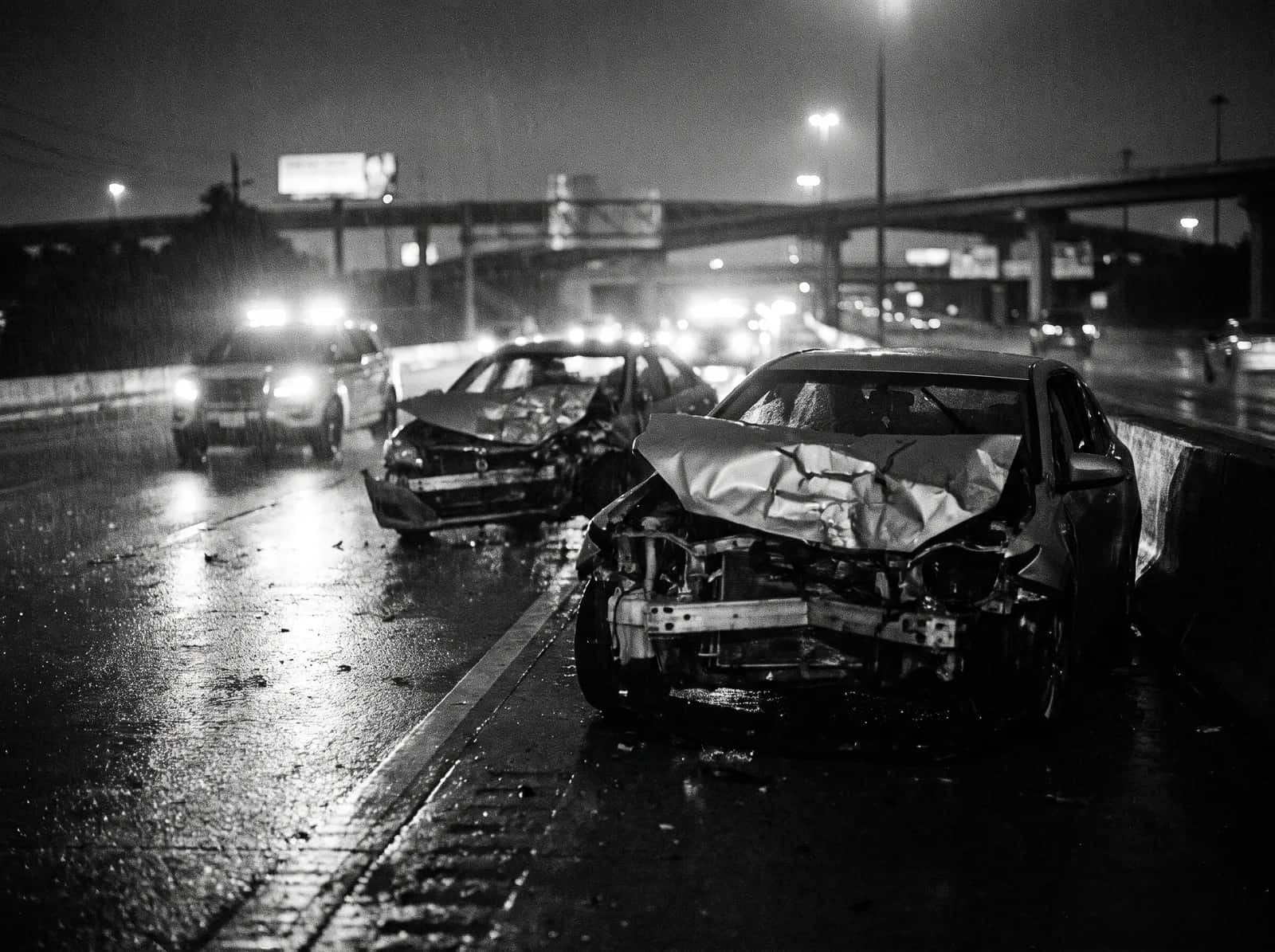

In Texas, a person riding a bicycle has the rights and duties of a vehicle operator under Transportation Code section 551.101, so a driver who fails to yield, turns across a rider, or opens a door into a bike lane can be liable for the rider’s injuries. Insurers often blame the cyclist. Owsley Law Firm handles bicycle crash claims across Texas and charges no fee unless it wins.
What rights do cyclists have on Texas roads?
Section 551.101 gives a person operating a bicycle the rights and duties applicable to a driver of a vehicle, with some exceptions. Section 551.103 generally requires a cyclist moving slower than other traffic to ride as near as practicable to the right curb or edge, but it includes exceptions, including when passing, turning left, avoiding hazards, or when the lane is too narrow to share safely. A cyclist is entitled to use the road, and a driver must treat a cyclist as traffic.
How do car and bicycle crashes happen?
Most bicycle crashes follow familiar patterns.
- A driver turns right across a cyclist going straight, often called a right hook
- A driver turning left fails to yield to an oncoming cyclist
- A driver passes too closely and strikes or sideswipes the rider
- A parked driver opens a door into the rider’s path
- A driver pulls out of a driveway or side street without seeing the rider
- A driver rear-ends a cyclist while distracted
- A driver runs a red light or stop sign
Do Texas cities have safe passing laws?
Texas does not have a statewide safe passing law, but several Texas cities, including Houston, have adopted ordinances requiring drivers to give vulnerable road users, such as cyclists and pedestrians, extra space when passing. Even where no ordinance applies, a driver who passes too closely can be negligent. The ordinance and the passing distance become evidence in the case.
Does it matter if I was not wearing a helmet?
Texas has no statewide helmet law for adult cyclists. Not wearing a helmet does not give the driver a defense to causing the crash. The defense may argue that a helmet would have reduced a head injury, which can become an issue in a case involving head trauma, but it does not affect injuries to the rest of the body and does not bar recovery.
What injuries do cyclists suffer?
A cyclist has no protection from a vehicle. Common injuries include traumatic brain injury, facial and dental injuries, collarbone, wrist, and arm fractures from bracing, hip and leg fractures, spinal injuries, internal injuries, and severe road rash that can require skin grafts and leave permanent scarring. Many cyclists cannot return to work for months. A claim should include the bike and gear as well as the injuries.
What insurance pays a cyclist?
The driver’s liability insurance is the main source. If the driver is uninsured or underinsured, or flees, your own auto policy’s uninsured and underinsured motorist coverage may cover you even though you were on a bicycle, and your auto policy’s PIP may also apply, depending on the policy language. Many cyclists do not realize their car insurance can protect them on a bike. Health insurance and any liens are handled in the settlement.
Where are cyclists at risk in Houston?
Houston has expanded its network of bike lanes and trails, but many riders still share wide, fast arterials with heavy traffic. Crashes happen where bike lanes end, at freeway frontage road crossings, at driveways and parking lot exits, and on roads with high speeds and no shoulder. Low-light hours are especially dangerous. The specific location matters because it shows what the driver should have expected and what the rider’s options were.
How much is a bicycle accident claim worth?
Bicycle crash injuries are often serious, so claims frequently involve surgery, long recovery, lost income, and lasting impairment or scarring. Value depends on those facts, how fault is divided, and the insurance available. Insurers often argue the rider was at fault for lane position, lights, or speed; under Chapter 33, any share of fault reduces the recovery and more than 50 percent bars it, which is why the evidence of how the crash happened matters.
Who is at fault when a car door hits a cyclist?
Opening a car door into the path of a cyclist, often called dooring, is a common cause of crashes in bike lanes next to parked cars. Section 545.418 of the Transportation Code prohibits opening a vehicle door on the side available to moving traffic unless it is reasonably safe to do so and does not interfere with moving traffic. A driver or passenger who opens a door without looking can be liable, and the claim generally goes against the auto insurance for the parked vehicle. Witnesses and nearby cameras help, because the vehicle often drives away soon after.
What should you do after a bicycle crash?
Call 911 and get medical care. Photograph the scene, the car, your bike, and your injuries. Keep the damaged bike, helmet, and clothing; do not repair or throw them away. Get the driver’s information and witnesses’ names, and note any cameras. Strava, Garmin, and similar ride data can show speed and route. Do not give a recorded statement to the driver’s insurer before getting advice. The two-year deadline under section 16.003 applies.
Common questions
What clients ask about bicycle accidents.
Do cyclists have to ride on the right side in Texas?
Generally as near as practicable to the right when moving slower than traffic, but section 551.103 has exceptions, including when the lane is too narrow to share safely.
Can I recover if I was not wearing a helmet?
Yes. Texas has no adult helmet law. The defense may raise it only on head injuries, not on fault for the crash.
Does my car insurance cover me on a bike?
Often, through uninsured and underinsured motorist coverage and PIP, depending on your policy language.
What if the driver says I came out of nowhere?
That is common. Video, witnesses, ride data, and the damage pattern usually show where the rider was.
What if I was hit by a car door?
A driver or passenger who opens a door into traffic without checking can be liable for a cyclist’s injuries.