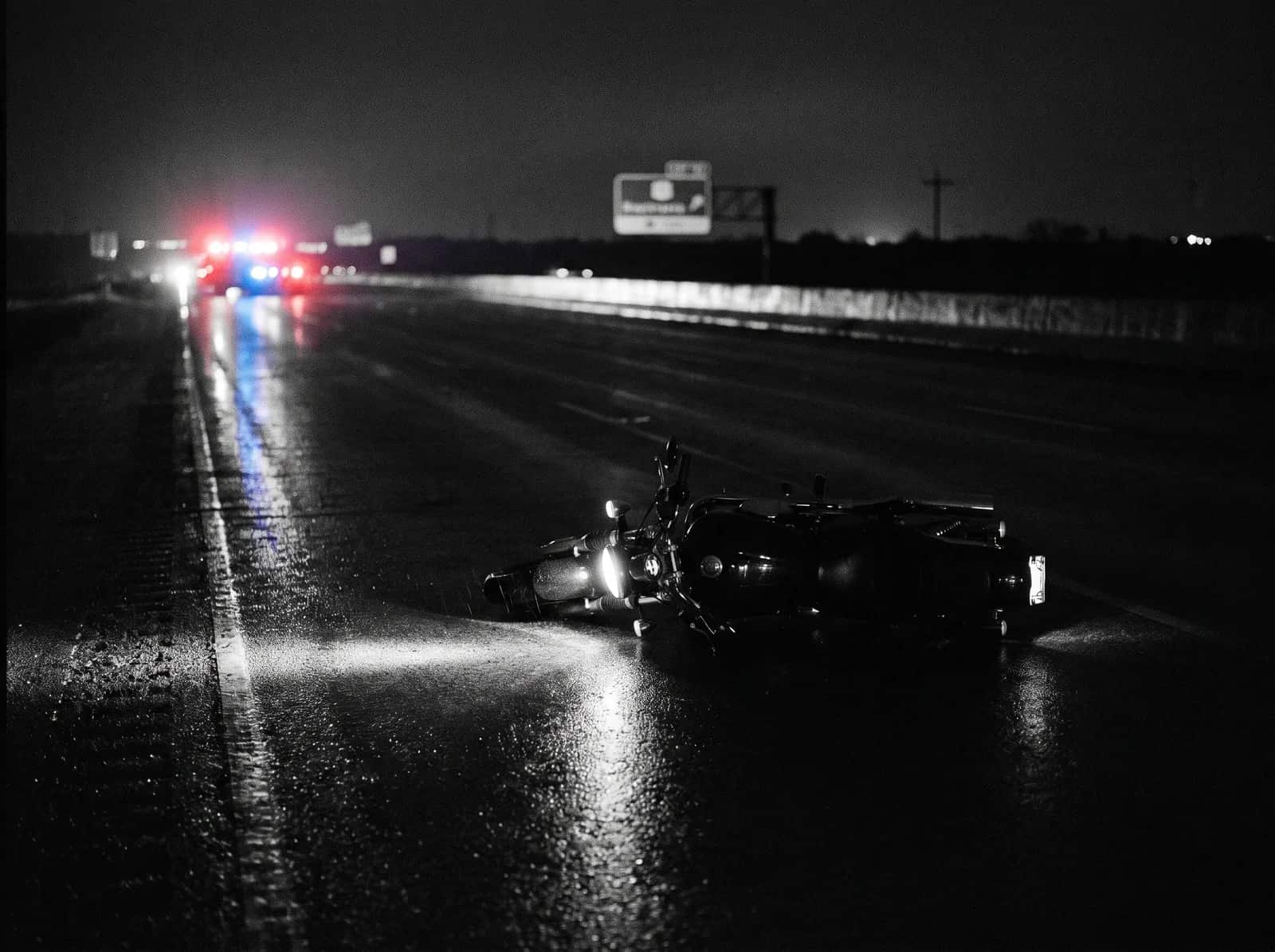

Texas law does not permit lane splitting, so a rider who was riding between lanes when a crash happened will likely be assigned some share of fault. That does not automatically end the claim. Under Texas proportionate responsibility, a rider who is 50 percent or less at fault can still recover, reduced by that share. Owsley Law Firm reviews these cases honestly and charges no fee unless it wins.
Is lane splitting legal in Texas?
No. Since September 1, 2023, Texas Transportation Code section 545.0605 expressly prohibits operating a motorcycle between lanes of traffic moving in the same direction, and passing a vehicle while in the same lane as that vehicle. Section 545.060 separately requires drivers to stay as nearly as practical within a single lane. The same statute also protects riders: a motorcycle is entitled to the full use of a lane, and a driver may not crowd a rider out of it.
This is different from California, where lane splitting is legal. Riders who learned to ride elsewhere sometimes assume the same rules apply here. They do not.

Can I still recover if I was lane splitting?
Possibly. Texas uses proportionate responsibility under Chapter 33. A jury assigns each party a percentage of fault. Your recovery is reduced by your percentage, and you are barred only if you are more than 50 percent responsible.
So the question is not just whether you were lane splitting, but what actually caused the crash. A driver who swerved into the gap without signaling, opened a door into traffic, or changed lanes while texting may carry most of the fault even if the rider was between lanes.
What crashes are mistaken for lane splitting?
Insurers sometimes label any crash between a motorcycle and a car in the same lane as lane splitting. Many are not.
- A car merging into a rider who was fully within the lane
- A rider passing in a legitimately open adjacent lane
- A rider on the shoulder where a sign or officer directed traffic
- A car that drifted out of its lane into the rider
- A rider stopped at a light who was rear-ended and pushed between cars
What evidence decides fault in these cases?
Where the motorcycle was before impact is the key fact, and memories rarely agree. Helmet cameras, dashcams from other drivers, traffic cameras, and business video can settle it. Damage to the motorcycle and the car shows the angle of impact. Witness statements from drivers in adjacent lanes are often the most useful.
The firm collects that evidence before it is overwritten and evaluates fault honestly, because the strength of the case depends on it.
How do insurers use lane splitting against riders?
Expect the insurer to argue that the rider was more than 50 percent at fault, which would bar recovery entirely. They may also argue the rider was speeding between lanes or that the driver could not have seen the motorcycle. Those are arguments, not findings.
Do not give a recorded statement describing your position, speed, or lane before getting advice. Short, factual answers to police are appropriate; a recorded interview with the other driver’s insurer is not required.
Which Houston roads see these crashes?
Lane splitting crashes cluster where traffic slows suddenly: the Katy Freeway near the 610 interchange, I-45 at downtown, the Southwest Freeway, and the West Loop near the Galleria. Stop-and-go congestion tempts riders to move between lanes and tempts drivers to make sudden lane changes. That is also where video is most likely to exist.
How long do I have to bring a claim?
Two years from the crash to file a lawsuit under section 16.003. Your own uninsured and underinsured motorist coverage may also matter if the driver’s coverage is low. Policies require prompt notice, so report the crash to your insurer early.
What injuries and damages can still be recovered?
A rider who is partly at fault still recovers the reduced share of every category of damages: medical bills, lost income, future care, pain, mental anguish, and impairment. If a jury finds the rider 30 percent at fault and the damages total a given amount, the rider recovers 70 percent of it. That is why the fault percentage, not the label, is what the case turns on.
Lane splitting crashes often involve sideswipes and door strikes that injure the legs, hands, and shoulders, and falls that cause wrist and collarbone fractures and head injuries. Complete medical documentation from the first day is essential, because insurers in mixed-fault cases look hard for gaps in treatment.
Should I talk to a lawyer if I think I was partly at fault?
Yes, especially if the injury is serious. Riders who know they were between lanes often assume they have no claim and never ask. The fault split is a question of evidence, and the other driver’s conduct, such as a sudden lane change without signaling or a door opened into traffic, often weighs heavily.
A review costs nothing and does not commit you to anything. The firm will tell you honestly whether the fault picture supports a claim. If it does, it will also tell you which of your own coverages, such as PIP or medical payments, can help in the meantime regardless of fault.
Common questions
What clients ask about lane splitting crashes.
Will I get a ticket for lane splitting?
Possibly. This firm handles personal injury claims only, not traffic tickets. A citation is not a civil finding of fault, but statements made about it can be used, so be careful what you say.
Is lane filtering at a red light legal in Texas?
Texas has not authorized lane filtering either. Moving between stopped cars at a light faces the same single-lane rule.
The driver opened a door into me between lanes. Who is at fault?
Texas law requires a person not to open a vehicle door into traffic unless it is reasonably safe. The driver or passenger who opened the door may carry significant fault even if the rider was between lanes.
Does my motorcycle insurance cover me if I was splitting lanes?
Your policy terms control. PIP and medical payments coverage usually do not depend on fault. The firm reviews the policy.
Should I still talk to a lawyer?
Yes, if you were seriously hurt. A free review tells you whether the fault split leaves a viable claim before you speak to an insurer.