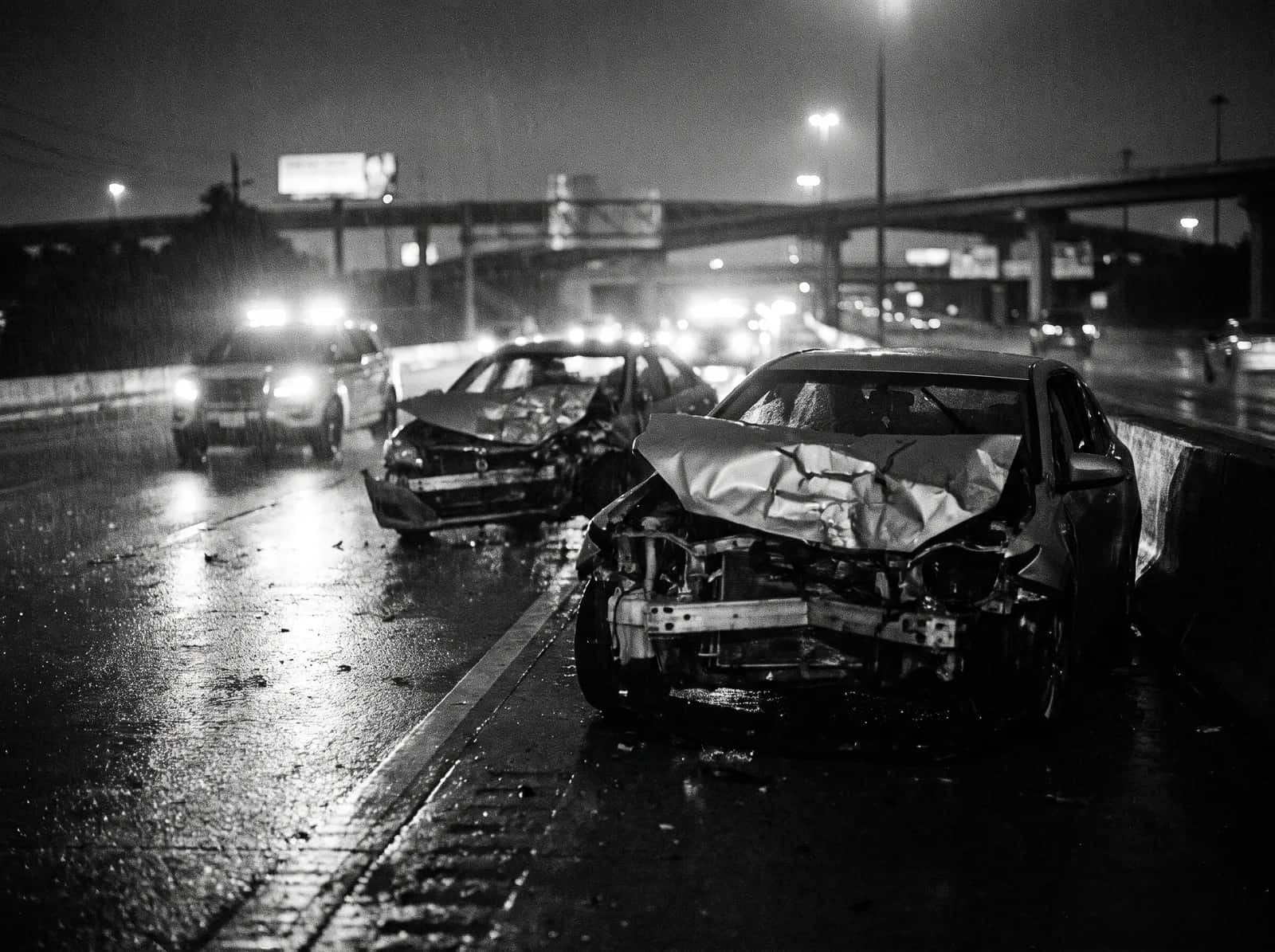

In Texas, a person hurt in a car accident caused by another driver can recover medical costs, lost income, and pain from that driver’s insurer, and often from their own policy too. Owsley Law Firm handles the claim from the first call and charges no fee unless it wins. Call before you give any recorded statement.
Understanding the claim
What does a Texas car accident lawyer do for you?
A crash can create medical, financial, and legal problems at the same time. Owsley Law Firm helps injured Texans understand the available insurance coverage, document the harm, and pursue the people and companies responsible.
Insurance carriers begin evaluating a claim immediately. Early statements, gaps in treatment, missing photographs, and lost vehicle data can affect what happens later.
Building the record
What evidence proves a car accident claim?
The relevant evidence depends on the crash. The firm evaluates every available source and moves to preserve it before it is repaired, overwritten, or discarded.
- Crash reports and scene photographs
- Vehicle damage and electronic data
- Medical records and future-care evidence
- Witness accounts and available video
- Insurance policies and coverage positions

Texas law
Which Texas laws decide a car accident case?
How long you have to act in Texas
Texas Civil Practice and Remedies Code section 16.003 gives most injury claims two years from the date of the crash. Claims against a city, county, or the state carry much shorter notice deadlines under the Texas Tort Claims Act, sometimes as little as six months, and Houston and San Antonio require notice within 90 days by charter.
Two years sounds like plenty of time. It is not. Vehicles are repaired, camera footage is overwritten within days, and witnesses move. The deadline is the last day to file suit, not the day to start.
Fault, and why the insurer wants you to talk
Texas follows modified comparative fault, called proportionate responsibility, under Chapter 33 of the Civil Practice and Remedies Code. Your recovery is reduced by your percentage of fault, and if a jury puts you at more than 50 percent, you recover nothing (section 33.001). Insurers use this rule aggressively, which is why the evidence work in the first weeks matters so much.
Adjusters are trained to draw out statements that shift a percentage of fault onto you. Reporting the crash to your own carrier is required by your policy. Giving the other driver’s insurer a recorded statement is not.
Why minimum insurance is the real problem
Texas requires drivers to carry only 30/60/25 liability coverage: $30,000 per injured person, $60,000 per crash, and $25,000 for property damage (Transportation Code section 601.072). A serious injury exhausts that quickly, so the firm looks for every other policy that may apply: the driver’s employer, a vehicle owner, an umbrella policy, and your own uninsured and underinsured motorist coverage.
Texas insurers must offer uninsured/underinsured motorist coverage and personal injury protection with every auto policy, and you keep both unless you rejected them in writing (Insurance Code sections 1952.101 and 1952.152). Many people have this coverage without knowing it. It can be the difference between a token settlement and a full recovery when the at-fault driver has minimum limits or no insurance.
What you can recover
Texas law allows recovery for past and future medical expenses, lost wages and lost earning capacity, physical pain, mental anguish, physical impairment, and disfigurement. A spouse may have a separate claim for loss of consortium. The firm documents each category with medical records, employer records, and where needed, treating physicians and economists, because an undocumented loss is a loss the insurer will not pay.
What to do now
What should you do after a car accident?
- Get medical care the same day, even if you feel fine; adrenaline hides injuries and gaps in treatment are used against you.
- Photograph the vehicles, the road, skid marks, debris, traffic signals, and your injuries before anything is moved or repaired.
- Get the crash report number from the officer; the Texas Peace Officer’s Crash Report (CR-3) is usually available within 10 days.
- Report the crash to your own insurer, but decline a recorded statement to the other driver’s carrier until you have counsel.
- Keep every bill, receipt, and work note, and do not post about the crash on social media.
- Call the firm. The consultation is free and there is no fee unless we win.
In Houston: Houston’s crash volume is driven by I-10, I-45, US-59/I-69, the 610 Loop, Beltway 8, and the Katy Freeway, some of the most heavily traveled highway segments in Texas. Harris County juries decide these cases at the Harris County Civil Courthouse downtown.
Types of cases
What kinds of car accident cases do we handle?
Drunk driving accidents
Car AccidentsDistracted driving accidents
Car AccidentsHit and run accidents
Car AccidentsUninsured motorist accidents
Car AccidentsRear-end accidents
Car AccidentsIntersection accidents
Car AccidentsPedestrian accidents
Car AccidentsHead-on collisions
Car AccidentsT-bone and side-impact crashes
Car AccidentsLeft-turn accidents
Car AccidentsSideswipe and lane-change crashes
Car AccidentsRollover accidents
Car AccidentsMulti-vehicle pileups
Car AccidentsWrong-way driver crashes
Car AccidentsSpeeding accidents
Car AccidentsParking lot accidents
Car AccidentsConstruction zone crashes
Car AccidentsRoad defect crashes
Car AccidentsGovernment vehicle crashes
Car AccidentsPassenger injury claims
Car AccidentsBicycle accidents
Car AccidentsBus accidents
Car AccidentsElectric scooter accidents
Serious consequences
What injuries can you recover for?
A claim should address the injury’s immediate and long-term effects. Medical evidence, work limitations, future care, and changes to daily living may all be relevant.

Injury guides
How your injury shapes a car accident claim.
Answered in depth
Questions people ask about car accidents.
- What is the average car accident settlement in Texas?
- How long after a car accident can you sue in Texas?
- Should I give a recorded statement to the other driver’s insurance company?
- Who is at fault in a rear-end collision in Texas?
- What happens if the other driver has no insurance in Texas?
- How much does a car accident lawyer cost in Texas?
- Is Texas a no-fault state for car accidents?
- Can I sue after a car accident if I was partially at fault in Texas?
- How long does a car accident settlement take in Texas?
- What is PIP insurance in Texas and do I have it?
- How do I get a copy of my Texas crash report?
- What evidence do I need for a car accident claim in Texas?
- Does a preexisting condition hurt my Texas car accident case?
- Can I sue a bar for a drunk driving accident in Texas?
Common questions
Frequently asked questions
Should I speak with the insurance adjuster?
You may need to report the crash, but you do not have to speculate or give an unprepared recorded statement. Counsel can help protect the accuracy of the record.
What if I was partly at fault?
Texas uses proportionate responsibility rules. A careful investigation is important because fault percentages can affect recovery.
What if the other driver was uninsured?
Your own policy may include uninsured or underinsured motorist coverage. Every potentially applicable policy should be reviewed.
How quickly should I call a lawyer?
As soon as practical. Evidence can disappear, vehicles can be repaired, and legal deadlines continue to run.