
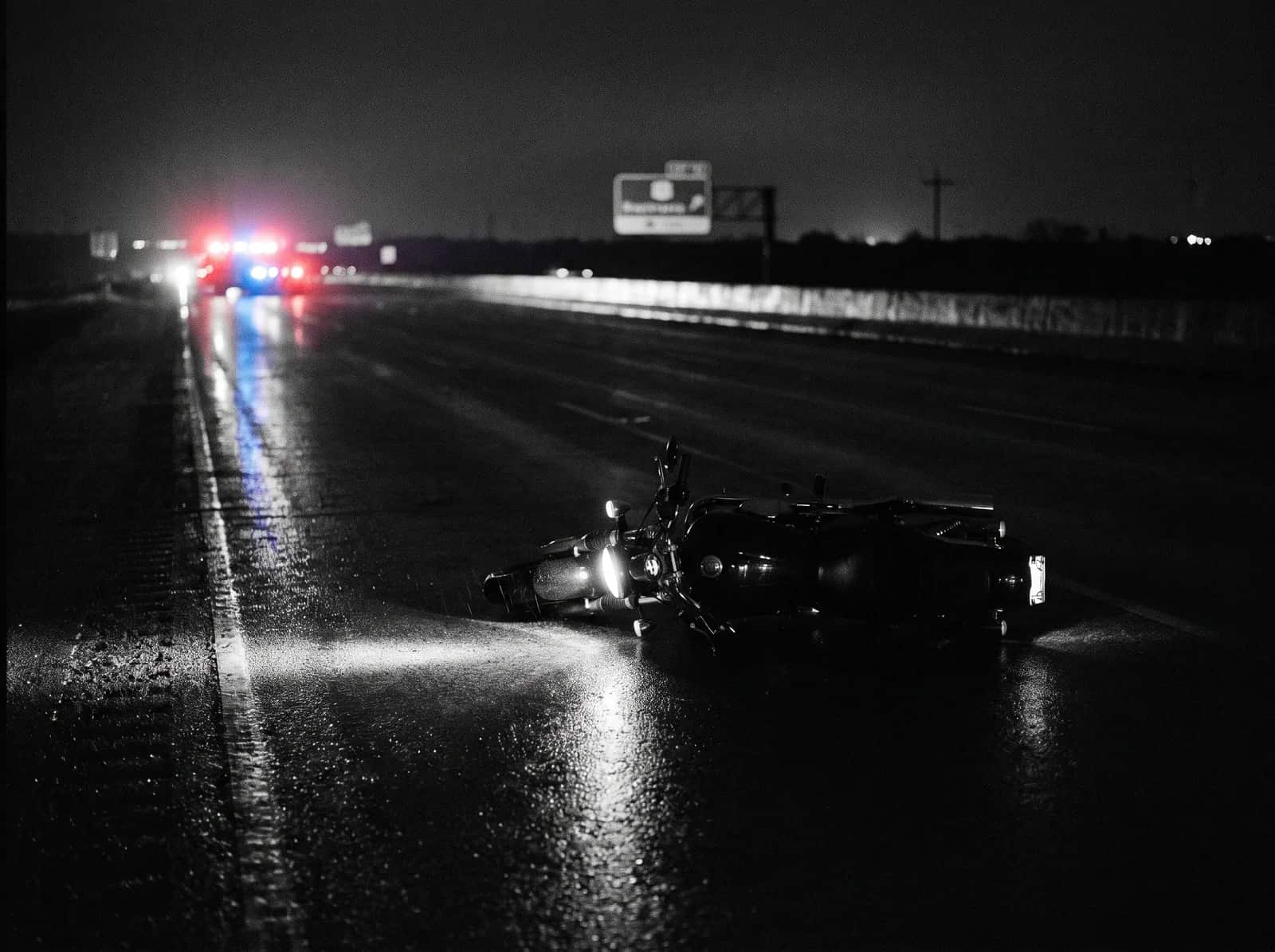

In Houston, a person hurt in a motorcycle accident caused by someone else can recover medical costs, lost income, and pain under Texas law. Owsley Law Firm handles Houston motorcycle accidents from its Houston offices, comes to you, and charges no fee unless it wins. Call before you speak with any insurer.
Motorcycle Accidents in Houston
Where do Houston motorcycle accidents happen?
Houston riders are hit at freeway merges and on surface streets like Westheimer and Bellaire, usually by a driver turning or changing lanes without looking. Harris County juries have seen enough of it to take these cases seriously when the evidence is preserved.
Houston riders are hit by drivers who did not look. A common Harris County motorcycle crash is a left-turning driver on Westheimer, Bellaire, or a freeway frontage road crossing a rider’s lane, followed by lane-change collisions at the Loop and Beltway merges. Houston’s year-round riding season and its sprawl mean riders spend more miles on freeways than in most cities, and a freeway crash at speed is rarely minor. Harris County juries have seen enough of these cases to take them seriously when the physical evidence is preserved.
Corridors where Houston motorcycle accidents cluster
- I-45 Gulf Freeway at the 610 South Loop and Broadway
- I-10 Katy Freeway between Beltway 8 and the 610 West Loop
- US-59 Southwest Freeway through the 610 interchange and Westpark
- I-45 North Freeway at Beltway 8 and the Hardy Toll Road merge
- US-290 Northwest Freeway at 34th Street and the 610 interchange
- Westheimer Road from Kirby to Beltway 8, one of the county’s busiest surface streets
Cases from Houston
What does a Houston motorcycle accident case look like?
A commuter stopped in Katy Freeway congestion is rear-ended by a pickup that never braked, and the injury is a herniated disc that needs injections and, eventually, surgery.
Does not wearing a helmet hurt a Houston motorcycle claim?
Not having a helmet does not bar a claim. Texas law requires riders under 21 to wear one, and riders 21 and older may ride without one if they completed an approved safety course or are covered by a qualifying health plan.
Transportation Code section 661.003 sets the Texas helmet rule. Riders under 21 must wear a helmet. Riders 21 and older can ride without one if they have completed an approved motorcycle operator training and safety course or are covered by a health insurance plan that provides medical benefits for injuries from a motorcycle crash. The same rule applies to passengers.
Insurers still raise the helmet in Houston motorcycle cases, usually to argue that a head injury would have been less severe with one. Under the approach the Texas Supreme Court adopted for seat belts in Nabors Well Services v. Romero (2015), that argument is weighed when the jury assigns percentages of responsibility under Civil Practice and Remedies Code chapter 33, not as a separate cut to damages, and it has no bearing on injuries to the legs, arms, chest, or spine. Proportionate responsibility under Texas law means any reduction has to be proven, not assumed.
Is lane splitting legal in Houston?
No. Since September 1, 2023, Transportation Code section 545.0605 expressly prohibits riding between lanes of traffic moving in the same direction. It also confirms a motorcycle is entitled to the full use of a lane.
Section 545.0605 does two things that matter in Houston claims. It makes lane splitting on the Katy, Southwest, or Gulf Freeway a traffic violation, which insurers will use to argue fault. And it confirms that a motorcycle is entitled to the full use of its lane, which is the rule drivers break when they drift, merge, or turn into a rider who is exactly where the law says the rider can be.
A rider who was splitting lanes can still recover as long as the rider’s own share of responsibility is not more than 50 percent. Under Texas proportionate responsibility, the rider's share of fault is deducted from the award, and the rider is barred only if found more than 50 percent responsible. The facts of the specific crash, not the label, decide that percentage.
Why do insurers blame the rider in Houston motorcycle crashes?
Because it works when the evidence is thin. Riders are often taken from the scene before the officer finishes interviews, so the report reflects the driver's version.
The most common Houston motorcycle crash is a driver turning left across a rider's path on a surface street like Westheimer or Bellaire, or changing lanes into a rider at a freeway merge. In both, the driver's standard explanation is that the motorcycle came out of nowhere or was speeding. A driver who says that is often admitting they did not look.
The answer is physical evidence: the damage pattern on the bike and the car, skid and scrape marks, the rider's gear, sight lines at the intersection, traffic and business video, and the car's event data. Accident reconstruction can establish speed and position from those facts. The sooner the evidence is preserved, the less the case depends on whose story the officer heard first.
- Damage location on the bike and the other vehicle
- Scrape, gouge, and skid marks on the pavement
- Helmet and riding gear impact points
- Sight lines and obstructions at the intersection
- Traffic, business, and dashcam video
- The other vehicle's event data
What evidence should a Houston rider keep after a crash?
Your gear, your bike's condition, photos of the scene and road surface, and every medical record. Do not wash, repair, or throw away your helmet or riding gear.
Riding gear is evidence. A scuffed helmet shows where the head hit; a torn jacket shows the direction of the slide; boots and gloves show impact points. Store them in a bag as they are. If an insurer wants to inspect the motorcycle, it should be done before repairs or salvage, with the rider's representative present.
Photograph the road where you went down. Houston riders face hazards cars barely notice: potholes, gravel spilled from construction trucks, uneven pavement at freeway transitions, and water standing on low streets after heavy rain. A road hazard can point to another responsible party, such as a contractor that left debris in a work zone.
Who is responsible for a road hazard that caused a motorcycle crash in Houston?
Sometimes a contractor, sometimes a government body, and the rules differ sharply. Claims against the City of Houston or another government unit run under the Texas Tort Claims Act, with short notice deadlines and damage caps.
When a construction contractor leaves gravel, steel plates, or an uneven lane edge in a work zone without warning, the contractor can be responsible like any other negligent party, and its traffic control plans and daily logs show how the zone was set up that day.
When the hazard is a pothole or road defect on a public street with no contractor involved, the claim is against the government body that maintains the road. The Texas Tort Claims Act generally requires notice within six months, the City of Houston's charter requires sworn written notice within 90 days, and the damages are capped. These cases need to move immediately.
Which insurance pays after a Houston motorcycle crash?
The at-fault driver's liability policy first, then your own uninsured or underinsured motorist coverage if the driver's limits are too low or there is no coverage at all.
Motorcycle injuries are often catastrophic, and the Texas minimum of $30,000 per person rarely covers them. Underinsured motorist coverage on your motorcycle policy, and sometimes on a household auto policy, can add to what the at-fault driver's insurer pays. Texas requires UM/UIM to be included unless it was rejected in writing, so the firm checks every policy in the household.
Medical payments or PIP coverage on a motorcycle policy can pay early bills regardless of fault. Health insurance pays too, and a plan with a right to reimbursement is repaid from the settlement. Riding gear and custom parts are part of the property claim, and a total loss should be valued based on the bike's actual condition and equipment, not a generic book value.
What if you were a passenger on a motorcycle in a Houston crash?
A passenger can claim against every driver who caused the crash, including the rider of the motorcycle they were on, and is rarely found at fault.
Motorcycle passengers have no control over the bike and almost never share fault. If another driver caused the crash, the passenger claims against that driver. If the rider made a mistake, the passenger can claim against the rider's liability coverage too, and when both share fault, both can be pursued. Passengers are subject to the same helmet rule as riders, and the same answer applies: no helmet does not bar the claim.
The passenger's own auto policy may also help. UM/UIM and PIP on a household auto policy can apply depending on their terms, and health insurance pays bills in the meantime. The firm reviews every policy before advising where to claim, because the order in which policies pay can change the total available.
What injuries are common in Houston motorcycle crashes?
Fractures, road rash, spinal injuries, and traumatic brain injuries lead the list, and many need surgery and long recovery.
A rider thrown at freeway speed lands on pavement. Broken bones in the legs, wrists, and collarbone are common; road rash can require skin grafts and leave permanent scarring; spinal injuries range from herniated discs to fractures; and a concussion or traumatic brain injury can occur even with a helmet. Houston's Level I trauma centers, Memorial Hermann-Texas Medical Center and Ben Taub Hospital, treat the most serious of these injuries.
Each injury type is proven differently. Fractures show on imaging; road rash and scarring are documented with photographs over time; brain injuries often require neuropsychological testing to show how memory, focus, and mood changed. A claim built only on the emergency room record undervalues an injury whose real cost appears months later.
What is a Houston motorcycle accident case worth?
Value depends on the injuries, which are often severe in motorcycle crashes, the medical proof, lost income, the fault picture, and the insurance available.
Riders absorb the crash with their bodies. Fractures, road rash that needs grafting, spinal injuries, and brain injuries are common, and recovery is long. The claim has to account for future medical care, lost earning capacity, scarring, and the physical impairment that ends a rider's ability to work or ride. The firm's motorcycle settlement guide explains the factors in detail.
Rider bias is the main threat to value, which is why the evidence work matters so much. A claim where the physical proof shows the driver turned across the rider's lane is valued very differently from one where the only account is the driver's.
How does the firm handle a Houston motorcycle case?
Preserve the bike and the gear, secure video and vehicle data, correct the crash report where it is wrong, find every policy, and build the medical proof.
In the first week the firm sends preservation letters for video and the other vehicle's data, documents the motorcycle and gear before repair, obtains the crash report and identifies witnesses, and reviews your own coverage for UM/UIM and medical payments. Riders should not give a recorded statement to the other driver's insurer until they have counsel.
Cases that do not settle are filed in the Harris County Civil District Courts at 201 Caroline Street within the two-year statute of limitations under Civil Practice and Remedies Code section 16.003. The consultation is free, there is no attorney's fee unless the firm recovers money for you, and clients may be responsible for case expenses, such as court costs, as set out in the written fee agreement.
Texas motorcycle rules that shape a Houston claim
| Rule | What it says | How it is used in a claim |
|---|---|---|
| Helmet (Transp. Code 661.003) | Under 21 must wear; 21+ exempt with a safety course or qualifying health plan | Insurers may argue it worsened a head injury, which a jury weighs when it assigns responsibility; it is not a bar by itself |
| Lane use (Transp. Code 545.0605) | Motorcycle entitled to the full lane; no riding between same-direction lanes | Cuts both ways: supports the rider's lane position, used against lane splitting |
| Fault (CPRC Chapter 33) | Recovery reduced by rider's share; barred above 50 percent | Evidence decides the percentage |
| Deadline (CPRC 16.003) | Two years to file a lawsuit | Government claims need notice far sooner |
What to do now
What should you do after a motorcycle accident in Houston?
- Get examined the same day, even for road rash. Memorial Hermann Texas Medical Center (Level I trauma) and Ben Taub Hospital (Level I trauma) handle the serious rider injuries from Houston.
- Keep your helmet, jacket, gloves, and boots as they are. Do not wash, repair, or throw them away; the damage shows where you were hit and how hard.
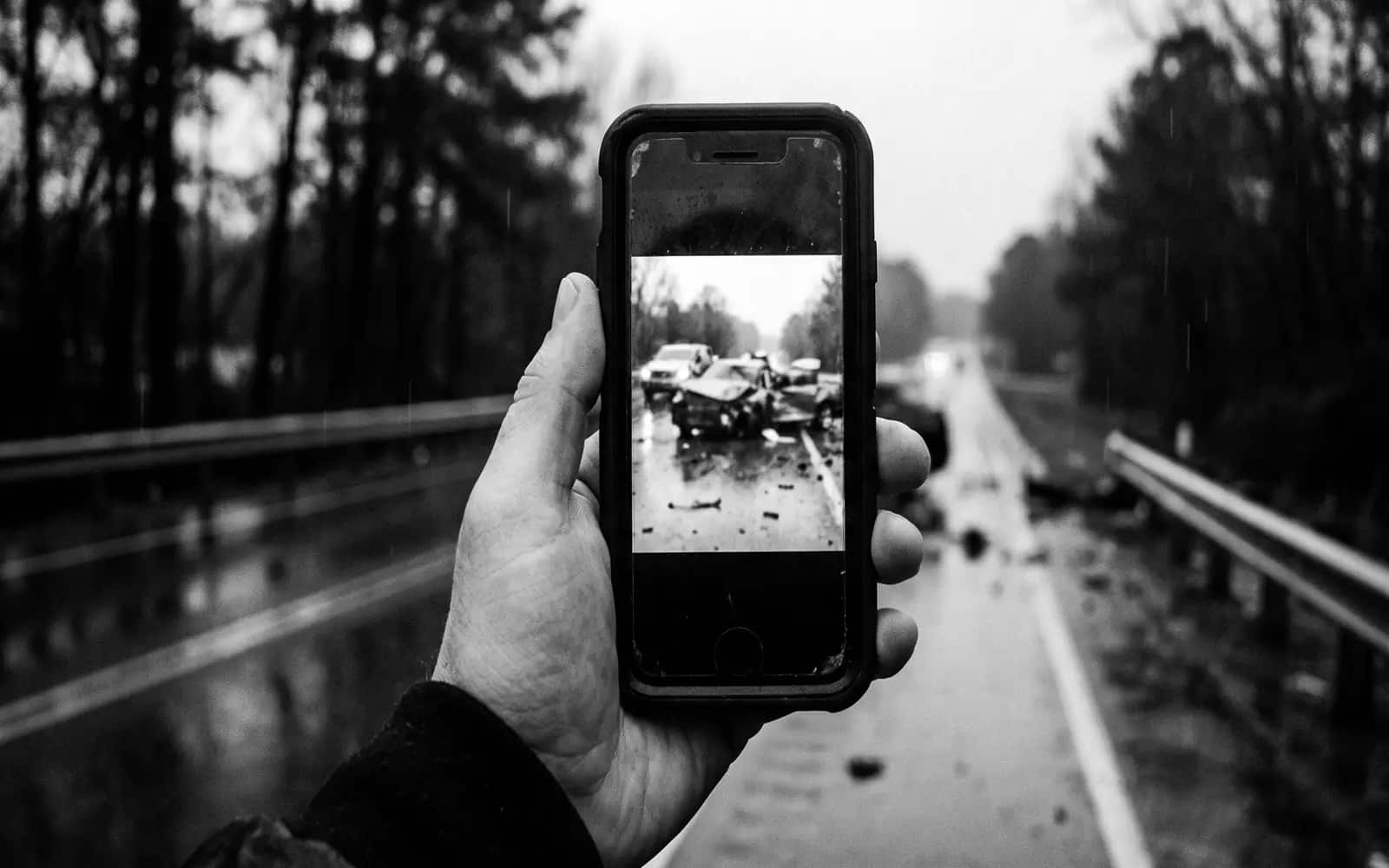
- Photograph the bike, the other vehicle, skid marks, gravel or potholes, and the sight lines, especially at crashes on I-10 (Katy Freeway and East Freeway) and I-45 (Gulf Freeway and North Freeway).
- Get the Houston crash report. Houston Police Department crash reports (Texas form CR-3) are available through the TxDOT Crash Report Online Purchase System about 10 days after the crash, and HPD Records Division also provides them. The firm obtains it for clients at no charge. Read it closely: reports sometimes assume the rider was speeding or lane splitting without evidence, and errors can be corrected.
- Expect the other driver's insurer to look for reasons to blame the rider. Report the crash to your own insurer, but give no recorded statement to the other carrier until you have counsel.
- Know where the case goes. Houston motorcycle accidents suits are filed in the Harris County Civil District Courts, 201 Caroline St.
- Call the firm. Both Houston offices are minutes from the courthouse, and the consultation is free.
Go deeper
More on motorcycle accident claims in Houston and Texas.
Common questions
Houston motorcycle accident questions
Where do Houston motorcycle accidents happen most?
Westheimer, Bellaire, and Bissonnet on the surface streets, and the Katy, Gulf, and Southwest Freeway merges and frontage roads.
Do Houston police blame the rider?
Crash reports often reflect the driver’s account because the rider is being treated. The firm corrects that with reconstruction, sight-line analysis, and witnesses.
Is lane splitting legal on Houston freeways?
No. Texas has no law allowing motorcycles to ride between lanes of traffic, so insurers will argue fault if you were splitting lanes on the Katy or Southwest Freeway. That does not end the claim. Under Texas proportionate responsibility, you can still recover as long as you were not more than 50 percent responsible, with your share deducted from the award.
Can I recover for damaged riding gear after a Houston motorcycle crash?
Yes. A helmet, jacket, gloves, boots, and other gear damaged in the crash are part of your property damage claim, along with the motorcycle itself. Keep the damaged gear rather than throwing it away, because it shows how the impact happened. Receipts or online order history help prove what it cost to replace.
Can I recover if I was not wearing a helmet in a Houston motorcycle crash?
Yes. Not wearing a helmet does not bar the claim. Riders 21 and older may legally ride without one if they completed an approved safety course or have qualifying health coverage. Insurers may argue a helmet would have reduced a head injury, but that does not affect other injuries or the driver's responsibility for causing the crash.
What if the driver says they never saw my motorcycle?
That is usually an admission that they did not look. Texas law entitles a motorcycle to the full use of its lane, and drivers must yield when turning left. Physical evidence, sight lines, and video can show the rider was visible and where the law allowed.
Should I repair my motorcycle right away after a Houston crash?
Not before it is documented. The bike's damage is evidence of speed, angle, and impact. Photograph everything and let the insurers inspect it before repair or salvage. Keep damaged gear unwashed and stored.
What if a pothole or road debris caused my Houston motorcycle crash?
A contractor that left debris or an unsafe surface in a work zone can be responsible. If a public road defect caused it, the claim is against the government body that maintains the road under the Texas Tort Claims Act, with short notice deadlines (90 days for the City of Houston) and damage caps.
Does my car insurance cover my motorcycle crash?
Sometimes. Underinsured motorist coverage on a household auto policy may apply depending on its terms, and your motorcycle policy's own UM/UIM and medical payments coverage usually apply first. The firm reviews every policy in the household before advising where to claim.
How long does a Houston motorcycle accident case take?
Many resolve without a lawsuit once treatment is complete, but serious motorcycle injuries often require longer treatment, and filed cases can take a year or more. The two-year filing deadline applies, so evidence and claims should start moving right away.
Sources
Sources this page relies on
- Texas Transportation Code, chapter 661 (motorcycle helmets)
- Texas Transportation Code, chapter 545 (rules of the road)
- Texas Civil Practice and Remedies Code, chapter 33 (proportionate responsibility)
- Texas Insurance Code, chapter 1952 (PIP and uninsured/underinsured motorist coverage)
- Texas Civil Practice and Remedies Code, chapter 16 (two-year deadline, section 16.003)
- Texas DSHS designated trauma facilities list
- TxDOT Crash Report Online Purchase System (CR-3 reports)