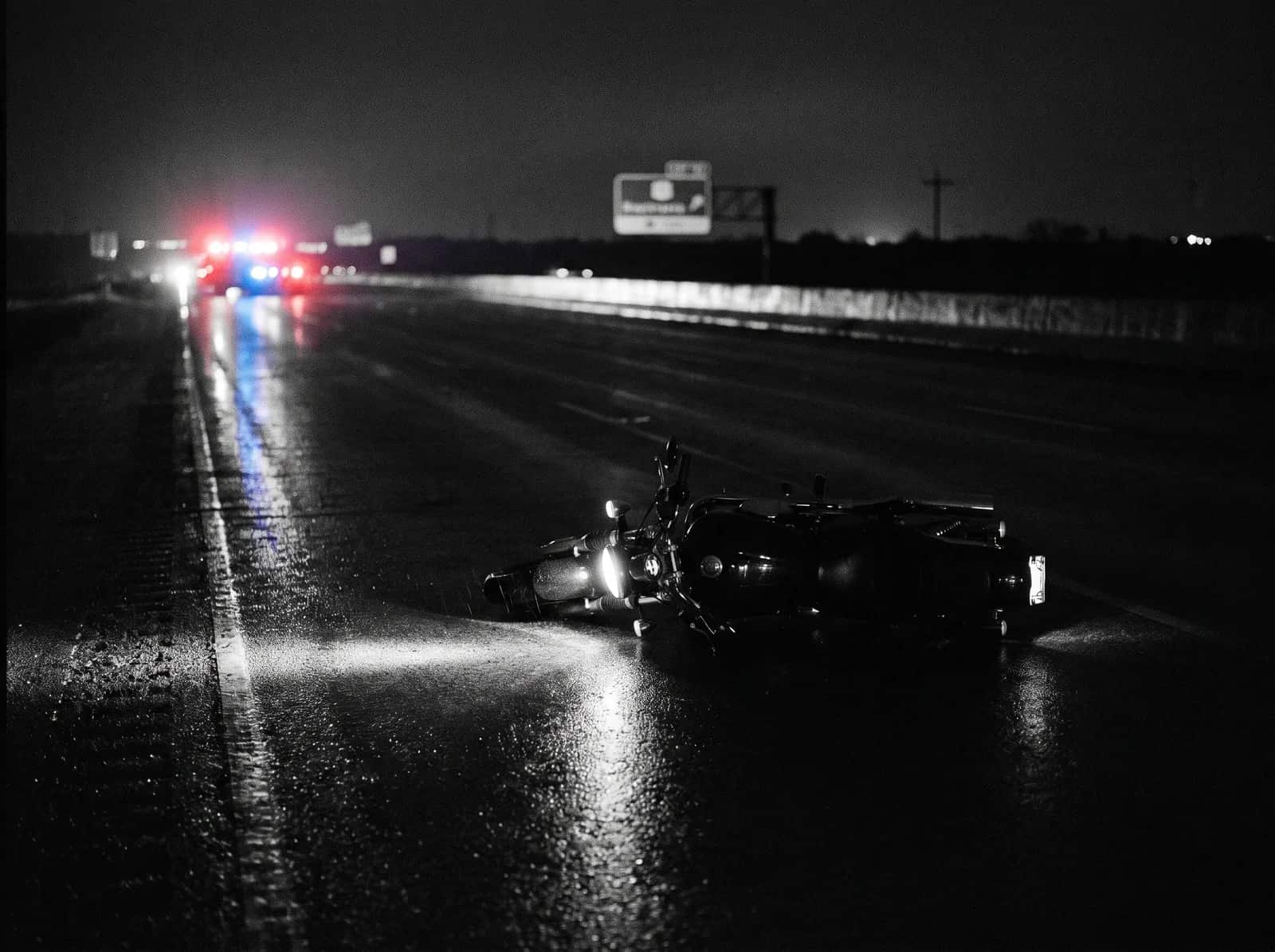

When a driver hits a motorcycle and flees in Texas, the rider can still recover. If the driver is found, the claim runs against that driver. If not, uninsured motorist coverage on the rider’s own policy may pay, but Texas policies often require actual contact with the unknown vehicle and prompt police reporting. Owsley Law Firm handles hit-and-run claims and charges no fee unless it wins.
What happens if the driver who hit me is never found?
Your own uninsured motorist (UM) coverage becomes the main source of recovery. Texas treats an unidentified hit-and-run driver as uninsured for UM purposes, subject to the policy’s requirements. That is why UM coverage is so important for riders: a hit-and-run leaves you with no one else to claim against.
UM coverage on your motorcycle policy is the first place to look. A separate auto policy you or a household family member own may also provide UM coverage, depending on its terms.
Does the other vehicle have to touch my motorcycle?
Often, yes. Texas Insurance Code section 1952.104 requires actual physical contact between the unidentified vehicle and the insured or the insured’s property before uninsured motorist coverage pays for an unknown driver. A rider forced off the road by a car that never touched the motorcycle, a so-called miss-and-run, may face a coverage denial under that requirement.
The facts and the policy language decide it. Paint transfer, damage patterns, and witnesses can establish contact that a rider did not feel in the moment.
What should I do immediately after a hit-and-run?
Report the crash to the police right away. UM policies typically require prompt reporting to law enforcement for hit-and-run claims, and the report is your proof the crash happened the way you say.
- Call 911 and ask for an officer at the scene
- Note anything about the vehicle: color, type, partial plate, direction
- Ask witnesses for names and phone numbers
- Photograph the motorcycle, the road, and any debris from the other car
- Notify your own insurer promptly in writing
- Get medical care the same day
How can the driver be found?
Many hit-and-run drivers are identified after the fact. Traffic cameras, business and residential video, toll road records, and parts left at the scene can lead to the vehicle. Body shops sometimes report vehicles brought in with matching damage.
The firm requests available video quickly, because many systems overwrite footage within days. Toll roads such as the Sam Houston Tollway and Hardy Toll Road in Houston record plates.
What if the driver is found but has no insurance?
Then the driver is an uninsured motorist in the ordinary sense, and your UM coverage applies without the hit-and-run contact requirement. The driver remains personally responsible, though many uninsured drivers have little to collect from.
If the driver had only minimum coverage, your underinsured motorist coverage may pay the difference up to its limits.
Will my own insurer treat me fairly?
In a UM claim, your own insurance company stands in the shoes of the driver who fled. It can dispute fault and damages just as that driver’s insurer would. You do not have to give a recorded statement before understanding your rights, and your policy may require certain cooperation, so read it carefully.
Texas law also provides remedies when an insurer handles a claim unreasonably. The firm documents the claim from the beginning.
How long do I have?
A lawsuit against an identified driver generally must be filed within two years under section 16.003. UM claims have their own notice requirements and contractual deadlines, which can be much shorter. Report to the police and your insurer immediately.
What injuries can a hit-and-run claim cover?
A UM claim covers the same damages as a claim against the fleeing driver would: medical bills, lost income, future care, pain, mental anguish, impairment, and disfigurement, up to the policy limit. Medical expenses are limited to amounts actually paid or incurred under section 41.0105, so billing records matter.
Riders struck from behind or sideswiped and left in the road often suffer fractures, head injuries, and spinal injuries, and some lie injured for some time before help arrives. Documenting the delay and the full course of treatment is part of showing the true harm. If multiple policies in the household carry UM coverage, the firm reviews whether more than one applies.
Where do motorcycle hit-and-runs happen in Houston?
Freeway sideswipes on the Katy Freeway, I-45, US-59, and the 610 Loop, where a driver changes lanes into a rider and keeps going, are common. So are late-night crashes on Westheimer, Washington Avenue, and in the East End, and crashes on rural farm-to-market roads in the outer suburbs where there are few witnesses or cameras.
The location shapes the search for the driver. Freeway segments and toll roads have cameras and toll plate readers; neighborhood streets have doorbell and business cameras. The firm identifies which sources may exist and requests them quickly.
Common questions
What clients ask about motorcycle hit-and-run.
I did not have UM coverage on my motorcycle. Is there anything else?
Possibly. A separate auto policy you or a household member own may include UM coverage that applies. PIP or medical payments coverage may also help.
Is fleeing the scene a crime?
Yes, in Texas a driver involved in a crash causing injury must stop and render aid. This firm handles the civil injury claim only.
The police never found the driver. Is my claim weaker?
Not necessarily. UM claims are designed for exactly that situation, if the policy requirements are met.
Can I recover for my motorcycle as well as my injuries?
Property damage may be covered under UM property damage coverage or collision coverage, depending on your policy.
How much does the firm charge?
Nothing up front, and no fee unless it recovers for you.