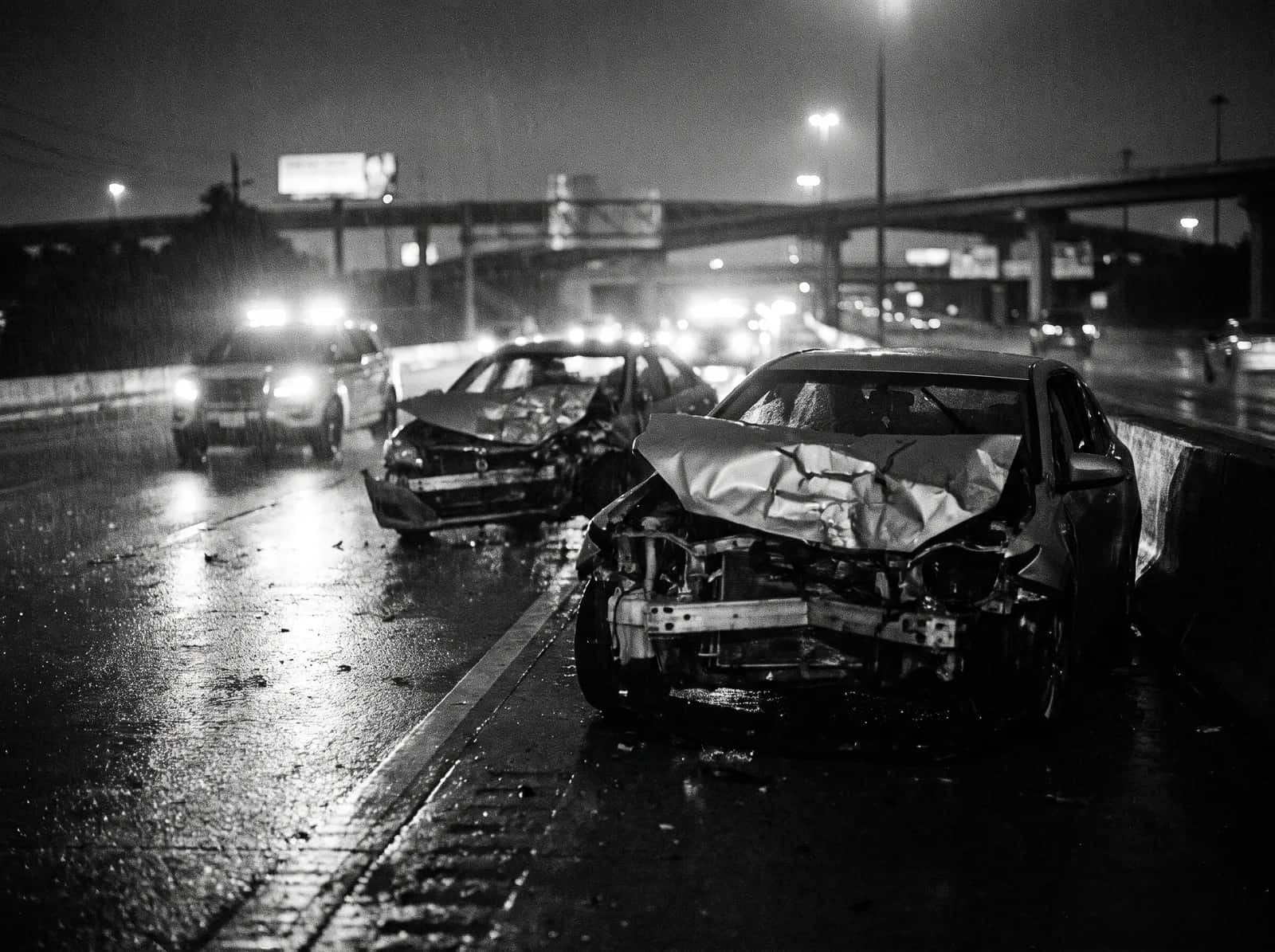

In Texas, when the at-fault driver has no insurance or too little, your own uninsured/underinsured motorist coverage pays what they should have paid, and your insurer will fight it like any other claim. Owsley Law Firm handles UM/UIM claims through settlement or suit and charges no fee unless it wins. Report the crash to your insurer and call.
Why are so many Texas drivers uninsured or underinsured?
Texas requires only 30/60/25 liability coverage under Transportation Code section 601.072: $30,000 per injured person, $60,000 per crash, and $25,000 for property damage. Some drivers carry nothing at all. A serious injury can exhaust a minimum policy in the first hospital stay, which leaves the injured person looking for other coverage.
Texas uses an online verification system, TexasSure, to check whether vehicles have insurance, but coverage can lapse, policies can be cancelled, and some drivers simply drive without it. Even insured drivers commonly carry only the minimum, which means a crash causing surgery or long-term care will often exceed their limits.

Do I have uninsured motorist coverage?
Almost certainly, unless you signed a written rejection. Insurance Code section 1952.101 requires Texas insurers to offer UM/UIM coverage with every auto policy, and section 1952.152 requires personal injury protection (PIP) unless the policyholder rejects it in writing; the required amount under section 1952.153 is $2,500 per person, and it pays medical bills and lost wages regardless of fault. Both must be rejected in writing to be excluded. Your declarations page shows your limits; the firm reviews it at no charge.
UM/UIM coverage generally protects you as a driver, a passenger, a pedestrian, or a cyclist, and it often protects members of your household as well.
What is the difference between uninsured and underinsured coverage?
Uninsured motorist coverage pays when the at-fault driver has no insurance or cannot be identified, as in a hit and run. Underinsured motorist coverage pays the difference when the at-fault driver has insurance but not enough to cover your damages, up to your own UIM limits. In a serious injury case, both the at-fault driver’s policy and your UIM coverage are often needed.
Stacking several sources is common. A passenger hurt in a friend’s car, for example, may recover from the at-fault driver’s policy, then the UIM coverage on the car they were riding in, and then their own household UIM coverage, depending on the policies’ terms.
Will my own insurance company treat me fairly?
It is your company, but in a UM/UIM claim it stands in the shoes of the driver who hit you. It can dispute fault, question your injuries, and argue about what the claim is worth. Texas law requires the injured person to establish the other driver’s liability and the amount of damages before the insurer must pay, which often means filing suit against your own carrier. A recorded statement to your own insurer can be used in that dispute.
Check before you sign anything. Many auto policies contain provisions about settling with the at-fault driver without notice to your UIM carrier, and a release signed in the wrong order can complicate the UIM claim. The firm coordinates the settlement with the at-fault driver’s insurer and the notice to your own carrier so one does not undercut the other.
What other insurance might pay?
The firm looks for every policy that may apply before settling for the minimum.
Health insurance and Medicare or Medicaid may pay medical bills in the meantime, but they often have a right to be repaid from your recovery. Those liens are negotiated as part of the settlement so more of the recovery stays with you.
- A policy on the vehicle the at-fault driver was using, if they did not own it
- An employer’s commercial policy if the driver was working
- A household member’s policy that covers you
- Rideshare company coverage if either driver was logged into the app
- A dram shop claim if a bar overserved the driver
- Health insurance and PIP for early medical bills
How is a UM/UIM claim valued?
The same way a claim against the at-fault driver would be: medical expenses already incurred and those expected in the future, lost wages and earning capacity, physical pain, mental anguish, physical impairment, and disfigurement. Texas law generally limits recoverable medical expenses to the amounts actually paid or incurred under Civil Practice and Remedies Code section 41.0105. Your recovery from UM/UIM coverage is capped at your policy limits, and any amount paid by the at-fault driver’s insurer is generally credited against your UIM coverage.
What should I do after being hit by an uninsured driver?
Call police and make sure a report is made, even for what seems like a minor crash, because the report documents the other driver’s lack of insurance. Get the other driver’s name, license, plate, and any insurance information they claim to have. Seek medical care promptly, report the crash to your own insurer, and ask for a copy of your declarations page. Before giving a recorded statement to your own company about a UM claim, talk to a lawyer, because the statement can be used to dispute fault or injuries.
How long do I have?
The general deadline to sue the at-fault driver is two years from the crash under Civil Practice and Remedies Code section 16.003. Your policy also contains notice requirements for UM/UIM claims, which are much shorter. Report the crash to your insurer promptly, and have the policy reviewed before deadlines run.
Do not assume the deadline for a claim against your own insurer is the same as the deadline against the driver. Contract claims and notice provisions can run on different schedules, and missing one can cost coverage you paid for.
Common questions
What clients ask about uninsured motorist accidents.
Do I have uninsured motorist coverage?
Almost certainly, unless you signed a written rejection. Ask for your declarations page. The firm reviews it at no charge.
Does my insurer have to pay my UM claim?
Once the other driver’s fault and your damages are established. Insurers often dispute both, which is why these claims are handled like litigation from the start.
What is underinsured motorist coverage?
Coverage that pays the difference when the at-fault driver’s policy is too small for your damages, up to your own limits.
Does UM coverage apply if I was a passenger?
Often yes. The policy on the vehicle you were riding in, and your own household policy, may both provide UM/UIM coverage, depending on their terms.
Can I use my PIP and still make a UM claim?
Yes. PIP pays early medical bills and lost wages regardless of fault. A UM/UIM claim covers the larger losses the at-fault driver should have paid.