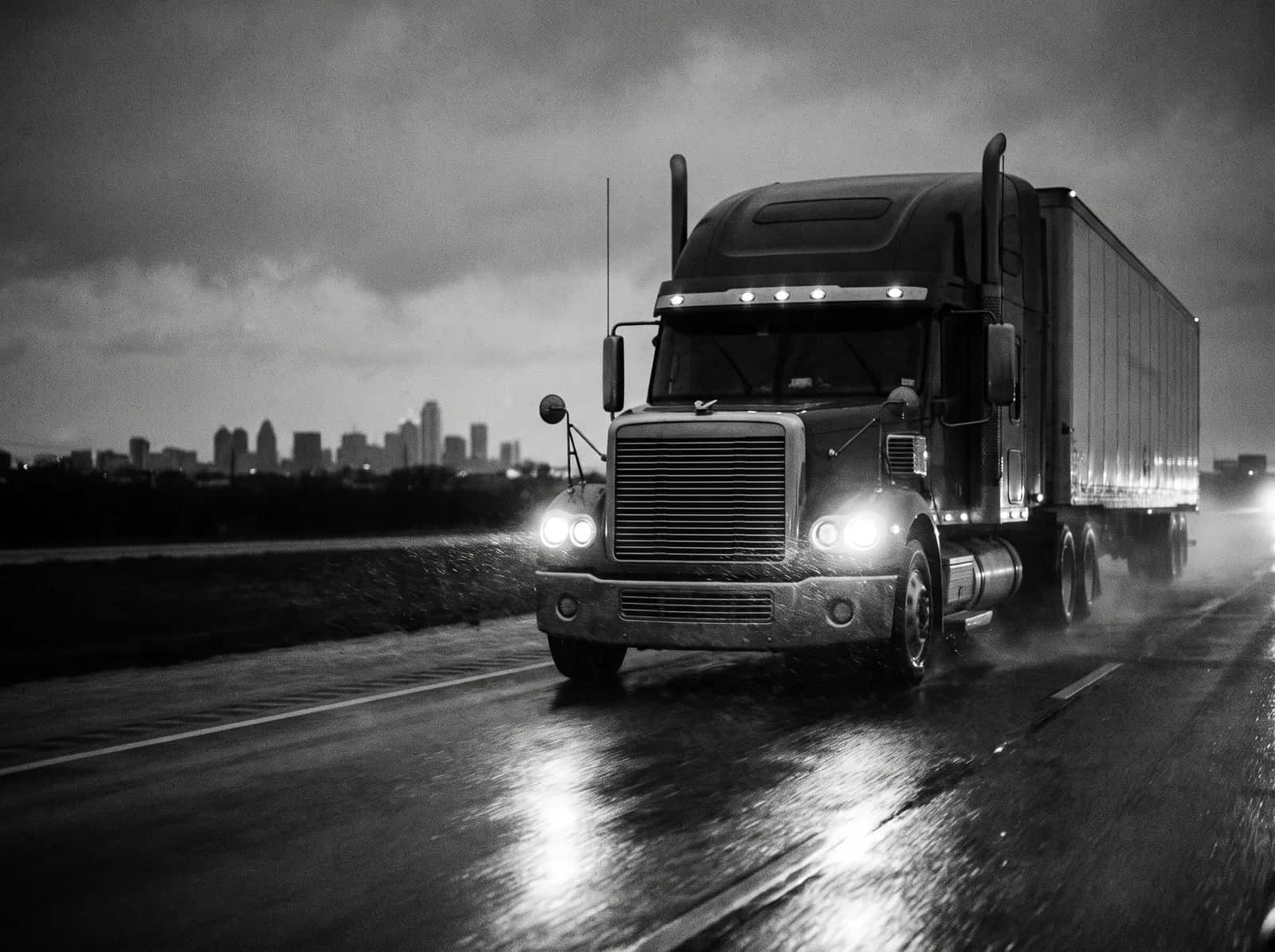

In Texas, a person hurt by an 18-wheeler can usually claim against the driver, the motor carrier, and often the trailer owner, shipper, or maintenance company. Federal safety rules set the standard of care, carriers must carry far more insurance than a passenger car, and the evidence that proves fault starts disappearing within days. Owsley Law Firm handles these cases and charges no fee unless it wins.
Why is an 18-wheeler crash different from a car accident?
A loaded tractor-trailer can weigh up to 80,000 pounds on the interstate, many times the weight of the car it hits. That weight changes everything about the case: the injuries are more severe, the stopping distances are longer, and the physical evidence on the road is more complex to read.
The legal structure is different too. A car crash usually involves one driver and one insurance policy. An 18-wheeler crash can involve a driver, a motor carrier, a separate trailer owner, a freight broker, a shipper that loaded the cargo, and a shop that last serviced the brakes. Each may carry its own insurance, and each will point at the others.

What federal rules apply to an 18-wheeler crash?
Interstate trucks are governed by the Federal Motor Carrier Safety Regulations, and Texas applies most of the same rules to trucks that never leave the state through Chapter 644 of the Transportation Code. A violation does not automatically decide a case, but it is strong evidence of what a careful carrier should have done.
- 49 CFR Part 391: who is qualified to drive, medical certification, and the driver qualification file
- 49 CFR Part 392: driving rules, including bans on driving while ill, fatigued, or impaired
- 49 CFR Part 393: brakes, lighting, rear guards, and cargo securement
- 49 CFR Part 395: hours of service and electronic logging devices
- 49 CFR Part 396: inspection, repair, and maintenance records
- 49 CFR Part 382: drug and alcohol testing
Who can be held responsible?
Under the doctrine of respondeat superior, a motor carrier is generally responsible for the negligence of a driver acting within the course and scope of the job. The carrier may also be directly liable for its own conduct: hiring a driver it should not have hired, pushing schedules that cannot be met legally, or skipping maintenance.
Other parties enter the case depending on the facts. A shipper that overloaded or poorly secured a trailer, a broker that selected a carrier with an obvious safety problem, a leasing company that supplied a defective trailer, or a parts manufacturer whose component failed can each share responsibility. Texas assigns percentages of fault among all of them under Chapter 33 of the Civil Practice and Remedies Code.
What evidence matters most, and how fast does it disappear?
The most important evidence in a truck case is held by the defense. Engine control module data can show speed, braking, and throttle in the seconds before impact. Electronic logging device records show hours of service. Dash cameras, dispatch messages, GPS tracking, and the driver qualification file show what the company knew.
Federal rules require carriers to keep many of these records for only months, and some electronic data can be overwritten in normal operation. A preservation letter sent early puts the carrier on notice that destroying evidence can carry consequences in court. Waiting to see how treatment goes before calling a lawyer is often how the best evidence is lost.
- Engine control module (black box) download
- ELD and hours-of-service records
- Driver qualification file and drug and alcohol test history
- Inspection and maintenance records for the tractor and trailer
- Bills of lading, weigh tickets, and dispatch communications
- Dash camera and nearby business or TxDOT camera footage
How much insurance does an 18-wheeler carry?
Federal rules set minimum liability coverage for interstate carriers in 49 CFR 387.9. For general freight, the minimum is $750,000. Carriers hauling oil must carry at least $1,000,000, and certain hazardous materials require $5,000,000. Many carriers carry more than the minimum through umbrella or excess policies.
Those numbers matter because serious truck injuries routinely exceed the limits of an ordinary auto policy. Identifying every policy, including the trailer owner's and any broker's coverage, is part of the early work in the case.
Does Texas law change how truck cases are tried?
Yes. Chapter 72 of the Civil Practice and Remedies Code, adopted in 2021, applies to lawsuits against commercial motor vehicle operators and their employers. On request, the trial can be split so that liability and compensatory damages are decided first, with any claim for exemplary damages tried separately. An employer can also stipulate that the driver was working at the time, which affects how certain claims against the company are presented.
These rules make early, careful case building more important, not less. The firm builds truck cases expecting a well-funded defense from the first day.
How long do I have to file an 18-wheeler lawsuit in Texas?
Most personal injury claims must be filed within two years of the crash under section 16.003 of the Civil Practice and Remedies Code, and most wrongful death claims within two years of the death. Claims involving a government vehicle carry much shorter notice deadlines. Two years passes quickly in a case that requires expert analysis of the truck, the road, and the carrier's records.
Common questions
What clients ask about 18-wheeler accidents.
Can I sue the trucking company and not just the driver?
Usually, yes. A carrier is generally responsible for a driver working within the scope of the job, and it can also be directly responsible for unsafe hiring, training, scheduling, or maintenance.
What if the truck driver was an independent contractor?
Carriers often label drivers as contractors, but federal rules treat the carrier operating under its own authority as responsible for the vehicle. The label does not end the inquiry, and the lease and operating authority are reviewed in every case.
Will the trucking company's insurer call me?
Often within days. Carriers and their insurers send investigators quickly. You do not have to give a recorded statement, and speaking with a lawyer first protects the claim.
What if I was partly at fault?
Texas allows recovery as long as you are not more than 50 percent responsible, reduced by your share of fault. Carriers frequently argue the car driver was at fault, which is why the physical and electronic evidence matters.
How much does it cost to hire the firm?
Nothing up front. Owsley Law Firm handles 18-wheeler cases on a contingency fee and charges no fee unless it wins.