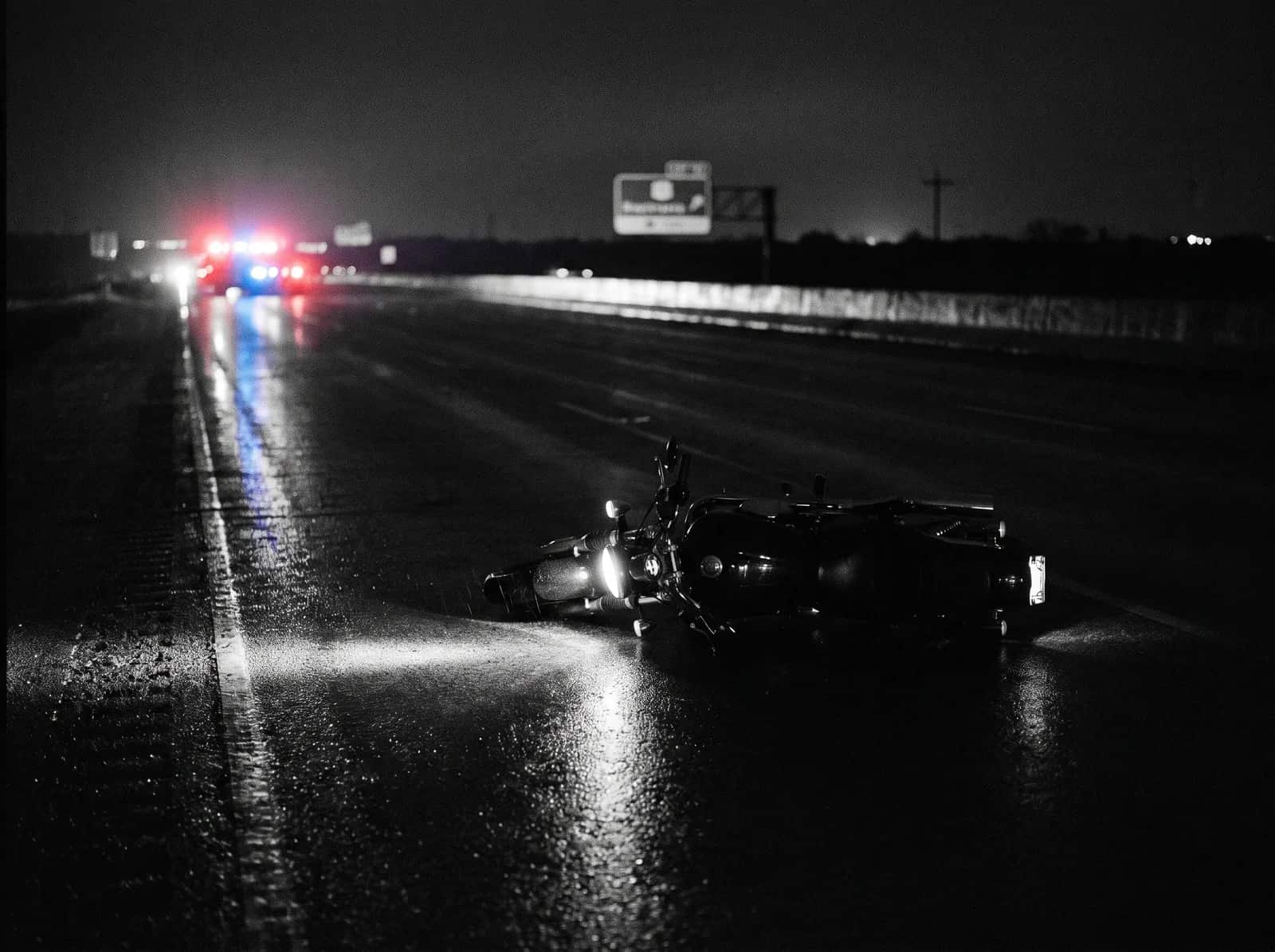
In Texas, a driver turning left must yield to oncoming traffic, and a motorcycle is oncoming traffic. When a car turns across a rider’s path at an intersection or into a driveway, the turning driver is usually at fault, even if the driver says the rider came out of nowhere. Owsley Law Firm handles left-turn motorcycle cases and charges no fee unless it wins.
Who is at fault when a car turns left in front of a motorcycle?
The turning driver, in most cases. Texas traffic law requires a driver turning left at an intersection or into an alley or driveway to yield the right-of-way to vehicles approaching from the opposite direction that are close enough to be a hazard. A motorcycle has the same right-of-way as any other vehicle.
The common defense is that the motorcycle was speeding or hidden. Those are factual claims that have to be proved, and evidence such as scene measurements, video, and the motorcycle’s damage pattern often shows the rider had the right-of-way and no time to stop.
Why do drivers turn in front of motorcycles?
A motorcycle is narrow, and its approach speed is harder to judge than a car’s. Drivers looking for a gap in car traffic often look straight past a rider. That is an explanation, not an excuse: the law requires the turning driver to look and yield.
- Misjudging the motorcycle’s speed and distance
- Looking for cars and not registering the motorcycle
- A view blocked by a truck or SUV in the opposite turn lane
- Rushing a yellow light or a gap in heavy traffic
- Distraction at the moment of the turn
Does it matter if I was going a little over the speed limit?
It can affect the percentage of fault, but it rarely flips the case. Texas uses proportionate responsibility under Chapter 33: a jury assigns each party a share of fault, your recovery is reduced by your share, and you recover nothing only if you are more than 50 percent responsible. A rider slightly over the limit who was cut off by a turning driver is usually far below that line.
Insurers know this and still lead with the speeding argument, because even a small fault percentage reduces what they pay. Physical evidence is how the firm answers it.
What evidence proves a left-turn crash?
Left-turn cases are won with physical evidence, because the driver and the rider often remember the light and the timing differently. The firm moves quickly to collect it.
- Intersection and traffic signal timing records
- Video from businesses, buses, and other drivers’ dashcams
- Skid marks, debris field, and points of impact
- Helmet camera footage, if the rider had one
- Witness accounts from drivers behind the motorcycle
- The crash report diagram and the officer’s findings
What injuries are typical in left-turn motorcycle crashes?
A rider who strikes the side of a turning car is often thrown over the hood. Leg and pelvic fractures, wrist and arm fractures from the fall, shoulder injuries, and head and spinal injuries are common. Road rash and burns from the motorcycle are frequent too.
Many of these injuries need surgery and long rehabilitation, and some leave permanent limits on work. A claim should account for future care and lost earning capacity, not just the first hospital bill.
Does not wearing a helmet hurt my claim?
Not wearing a helmet is not the cause of a left-turn crash, so it does not make you at fault for the collision. Texas allows riders 21 and older to ride without a helmet if they completed an approved motorcycle safety course or are covered by a health insurance plan that pays for motorcycle crash injuries, under Transportation Code section 661.003.
An insurer may argue that a helmet would have reduced a head injury. That argument, if made, goes to the head injury damages and requires medical proof. It has no bearing on a broken leg or other injuries.
Where do left-turn motorcycle crashes happen in Houston?
Wide arterials with long turn lanes and fast through traffic are where these crashes concentrate: Westheimer Road, FM 1960, Bellaire Boulevard, Gessner, and the frontage roads along I-10, I-45, and US-290 where drivers turn across multiple lanes. The location matters for finding video and for knowing which agency wrote the report.
The deadline to file suit is generally two years from the crash under section 16.003.
How much insurance may be available?
Texas requires drivers to carry at least $30,000 in liability coverage per injured person. A rider with fractures and surgery can exceed that quickly. When the turning driver’s coverage runs out, the rider’s own underinsured motorist coverage may pay the difference up to its limit, and personal injury protection or medical payments coverage on the motorcycle policy can help with early bills regardless of fault.
If the turning driver was working at the time, such as driving a company truck or making deliveries, the employer’s commercial policy may apply and is often much larger. The firm asks that question in every left-turn case, because the answer changes what the claim can realistically recover.
Common questions
What clients ask about left-turn crashes.
The driver got a ticket for failure to yield. Does that prove my case?
It helps, but a ticket is not the same as a civil finding of fault. The evidence behind the ticket, such as the officer’s observations and witness statements, is what matters in the claim.
The driver says the sun was in their eyes. Is that a defense?
Generally not. A driver who cannot see oncoming traffic should not turn until they can.
My motorcycle was totaled. Is the bike part of the claim?
Yes. Property damage, including the motorcycle, gear, and helmet, is recoverable along with the injury claim.
The other driver had only minimum coverage. What now?
Your own uninsured and underinsured motorist coverage on your motorcycle policy may apply. The firm reviews it early.
What does it cost to hire the firm?
Nothing up front. Owsley Law Firm works on contingency and charges no fee unless it recovers for you.