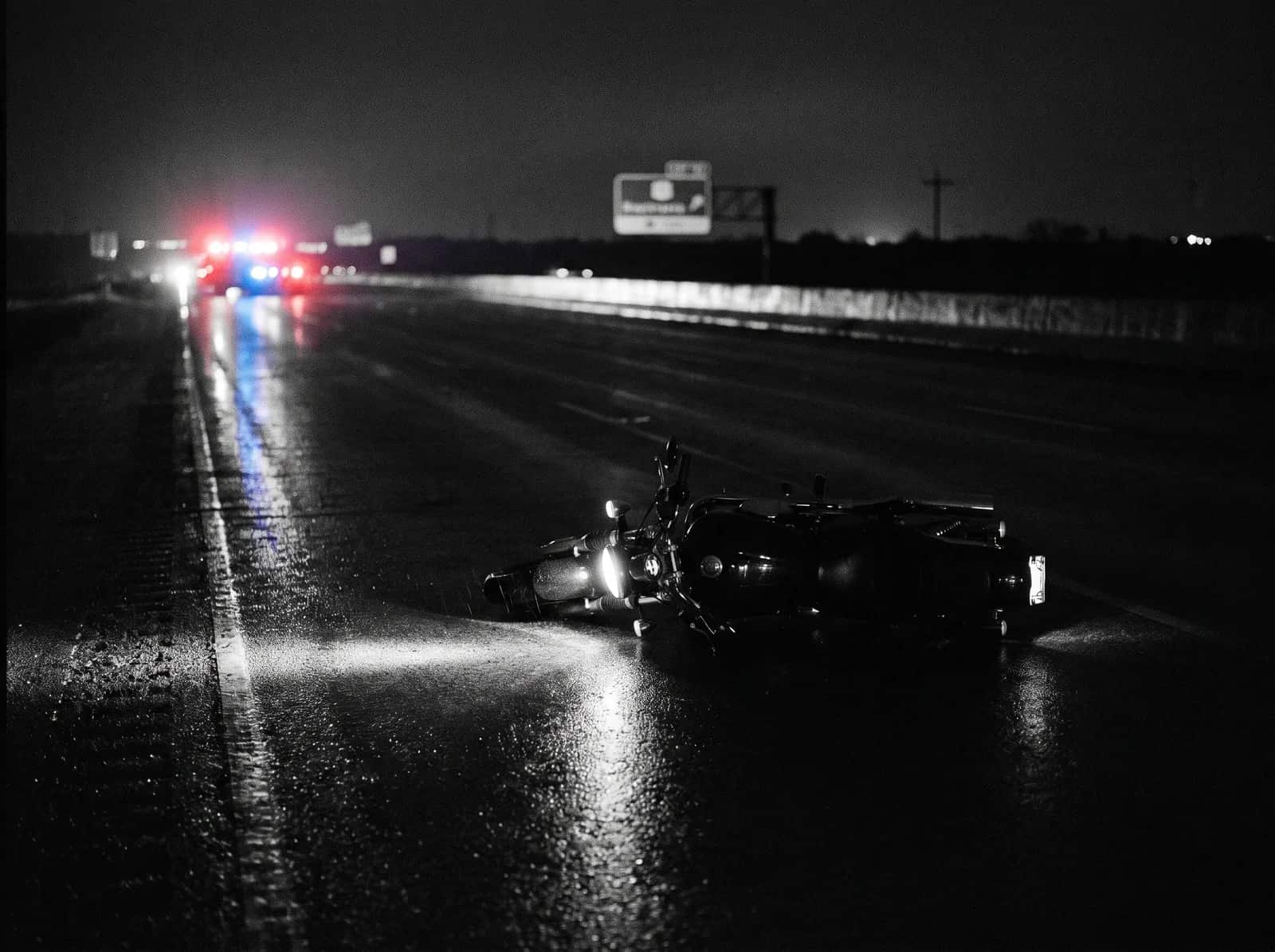

A passenger hurt on a motorcycle in Texas can claim against whoever caused the crash: the driver of another vehicle, the motorcycle operator, or both. Passengers are rarely at fault, and several insurance policies may apply, including the operator’s motorcycle policy and the passenger’s own auto policy. Owsley Law Firm handles motorcycle passenger claims and charges no fee unless it wins.
Can a motorcycle passenger sue the rider?
Yes, if the rider’s negligence caused or contributed to the crash. Texas still has a narrow guest statute, Civil Practice and Remedies Code section 72.001: a passenger riding for free who is closely related to the rider (within the second degree, such as a spouse, parent, child, or sibling) can recover only if the crash was intentional or caused by heedless or reckless conduct. A friend, partner, or other unrelated passenger can bring an ordinary negligence claim. For an unrelated passenger, the claim is paid by the rider’s insurance, which exists for exactly this situation.
If the crash was entirely another driver’s fault, the passenger’s claim runs against that driver, and the rider is a witness and fellow claimant rather than a defendant.

Which insurance policies can pay a motorcycle passenger?
A passenger may have access to more coverage than the rider. The firm checks each layer.
- The at-fault driver’s liability insurance
- The motorcycle operator’s liability insurance, if the operator shares fault
- Uninsured and underinsured motorist coverage on the motorcycle policy
- The passenger’s own auto policy, including UM/UIM and PIP
- A household family member’s auto policy, depending on its terms
Do the Texas helmet rules apply to passengers?
Yes. Under Transportation Code section 661.003, riders and passengers under 21 must wear a helmet. Those 21 and older may ride without one if they completed an approved safety course or are covered by a health insurance plan that pays for motorcycle crash injuries.
Not wearing a helmet does not cause a crash. An insurer may argue it made a head injury worse, but that argument requires medical proof and does not affect injuries to the legs, arms, or spine.
Why are passenger injuries often severe?
A passenger sits higher, has less to hold, and is often thrown farther than the rider. Passengers frequently suffer injuries to the legs from the motorcycle falling, fractures and shoulder injuries from landing, and burns from exhaust pipes and road surfaces.
Because the passenger did nothing to cause the crash, the claim focuses on proving the full extent of the injury: surgery, rehabilitation, scarring, time away from work, and permanent limits.
What if I am also the rider’s spouse or family member?
A family relationship does not bar the claim outright, but for a close relative riding for free it raises the standard to intentional, heedless, or reckless conduct under section 72.001. Some policies contain household or family member exclusions that limit coverage, and their enforceability depends on the policy and Texas law. The firm reads the policy itself rather than accepting an adjuster’s summary.
If the rider was hurt too, the two claims are handled together where possible, with the focus on the other driver who caused the crash.
What should a passenger do after a crash?
Get medical care the same day and tell the provider you were on a motorcycle. Get the other driver’s information and the crash report number. Photograph your injuries over the following days as bruising and swelling develop. Keep damaged gear and clothing.
Do not give a recorded statement to any insurer about the rider’s speed or riding before getting advice. Your words can be used to shift fault among the people involved.
How long does a passenger have to file?
Two years from the crash to file a lawsuit under section 16.003. Uninsured motorist policies require prompt notice, which can be much sooner. If the passenger is a minor, different rules on the deadline can apply, so ask early.
How are damages divided when the passenger, the rider, and another driver all have claims?
When a crash injures both the rider and the passenger, the two often share the same goal: proving the other driver caused it. Both claims draw on the same liability policy, and when that policy is small, it may not cover both people’s injuries in full. Underinsured motorist coverage on each person’s own policy can then matter a great deal.
If the evidence shows the rider shares some fault, the passenger’s claim can reach both the other driver and the rider’s liability coverage, each in proportion to fault. The firm explains how the coverage layers apply to each person so no available policy is overlooked and no one gives a statement that undercuts another family member’s claim.
Does the passenger have to prove the rider was careless?
Only if the claim is against the rider. If the other driver caused the crash, the passenger’s claim against that driver requires proof of that driver’s negligence, and the rider’s conduct matters only if the other side argues the rider shared fault. If the rider’s own mistake caused the crash, such as speeding into a curve or riding impaired, the passenger’s claim runs against the rider’s liability coverage.
Either way, the passenger is rarely assigned fault. That is why passenger claims often turn on coverage and damages rather than on who caused the crash.
Common questions
What clients ask about motorcycle passengers.
I do not own a car. Do I have any coverage of my own?
Possibly through a household family member’s policy. The firm checks every policy in your home.
Can I claim against both the other driver and the rider?
Yes, if both share fault. Texas assigns each a percentage, and each pays according to that share.
Will suing the rider affect our relationship?
The claim is paid by insurance, and the rider’s insurer provides a defense. Many families handle these claims without conflict.
What if the rider was intoxicated?
That is strong evidence of the rider’s fault. If a bar overserved the rider, a dram shop claim may also be possible.
What does the firm charge?
Nothing unless it wins. The initial review is free.