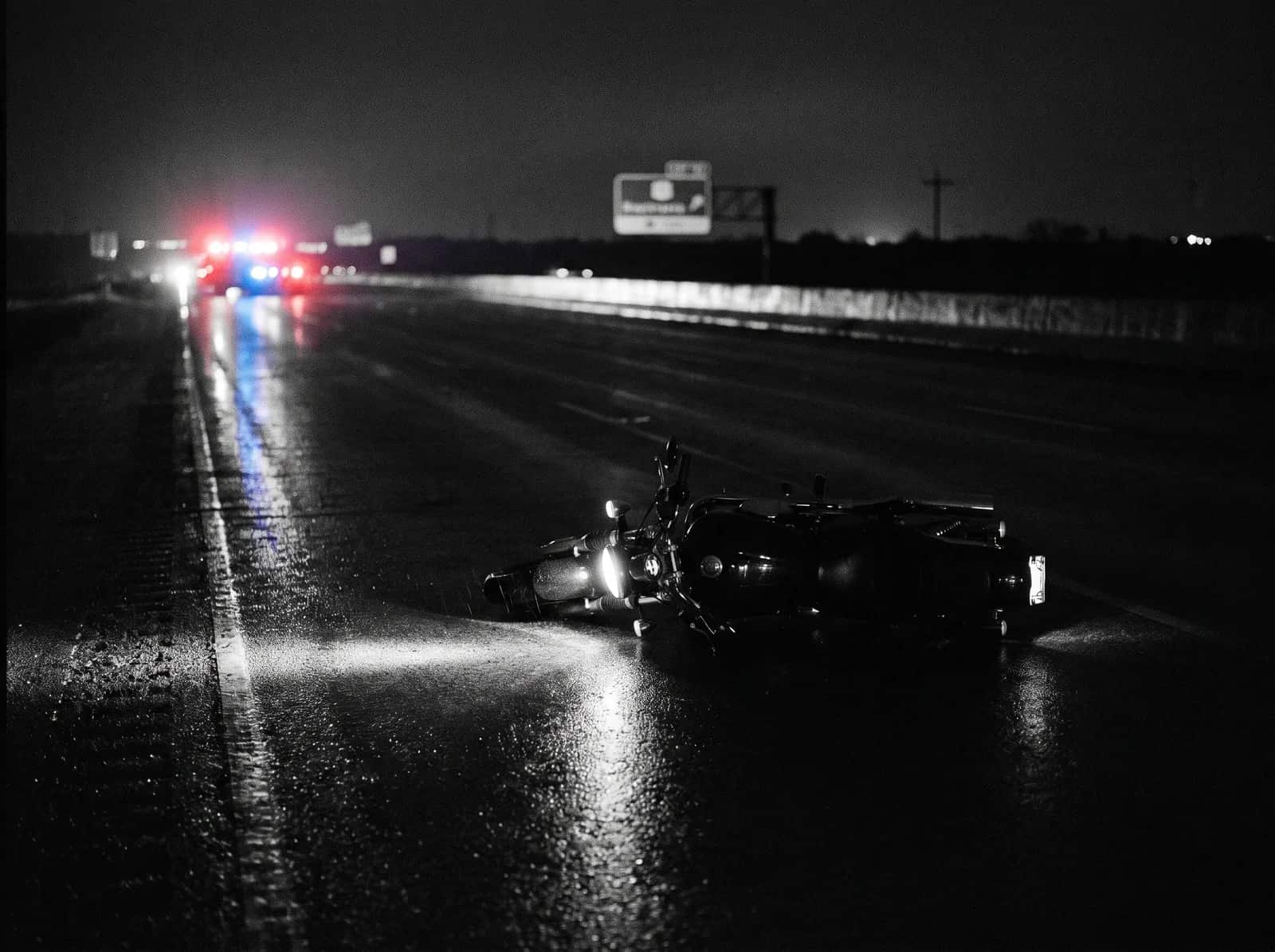

In Texas, a rider hurt by a driver who failed to yield has the same right to recover as anyone else, helmet or not. Owsley Law Firm rebuilds what happened from the physical evidence and charges no fee unless it wins. Keep the motorcycle and your gear exactly as they are and call.
Understanding the claim
What does a Texas motorcycle accident lawyer do for you?
Motorcyclists have the same right to the road as every other driver. Yet riders are often blamed before the available evidence is fully examined.
The physical consequences of a motorcycle crash can be devastating. The legal presentation must connect the collision evidence with the full medical and financial impact.
Building the record
What evidence proves a motorcycle accident claim?
The relevant evidence depends on the crash. The firm evaluates every available source and moves to preserve it before it is repaired, overwritten, or discarded.
- Helmet and protective-equipment condition
- Roadway marks and debris fields
- Nearby camera and dashcam footage
- Vehicle visibility and lighting evidence
- Reconstruction and medical evidence
Texas law
Which Texas laws decide a motorcycle accident case?
Texas helmet law and what it means for your claim
Texas Transportation Code section 661.003 requires helmets for riders under 21. Riders 21 and over may ride without one if they have completed a safety course or carry qualifying health insurance. Not wearing a helmet is not negligence by itself, and it never excuses a driver who failed to yield. Insurers still argue it; the medical evidence usually answers them.
Fault and the bias against riders
Texas follows modified comparative fault, called proportionate responsibility, under Chapter 33 of the Civil Practice and Remedies Code. Your recovery is reduced by your percentage of fault, and if a jury puts you at more than 50 percent, you recover nothing (section 33.001). Insurers use this rule aggressively, which is why the evidence work in the first weeks matters so much.
Riders are blamed at the scene more often than drivers because they are the ones on the ground. A careful reconstruction of the collision, including the other driver’s sight lines, speed, and phone records, is how that bias gets corrected.
Insurance
Texas requires drivers to carry only 30/60/25 liability coverage: $30,000 per injured person, $60,000 per crash, and $25,000 for property damage (Transportation Code section 601.072). A serious injury exhausts that quickly, so the firm looks for every other policy that may apply: the driver’s employer, a vehicle owner, an umbrella policy, and your own uninsured and underinsured motorist coverage.
Texas insurers must offer uninsured/underinsured motorist coverage and personal injury protection with every auto policy, and you keep both unless you rejected them in writing (Insurance Code sections 1952.101 and 1952.152). Many people have this coverage without knowing it. It can be the difference between a token settlement and a full recovery when the at-fault driver has minimum limits or no insurance.
Deadlines
Texas Civil Practice and Remedies Code section 16.003 gives most injury claims two years from the date of the crash. Claims against a city, county, or the state carry much shorter notice deadlines under the Texas Tort Claims Act, sometimes as little as six months, and Houston and San Antonio require notice within 90 days by charter.
What to do now
What should you do after a motorcycle accident?
- Accept transport to the hospital; road rash, fractures, and head injuries are routinely underestimated at the scene.
- Preserve the motorcycle, your helmet, and your riding gear exactly as they are. They are evidence.
- Photograph the scene, the other vehicle, and any road hazard such as gravel, potholes, or missing signage.
- Get witness names; drivers who say they never saw you have admitted the essential fact.
- Do not give a recorded statement to the other driver’s insurer.
- Call the firm. Motorcycle cases are won on early evidence.
In Houston: Houston riders face heavy freeway merging on I-45 and I-10, aggressive lane changes on the 610 Loop, and left-turn collisions at intersections throughout Harris County.
Types of cases
What kinds of motorcycle accident cases do we handle?
Serious consequences
What injuries can you recover for?
A claim should address the injury’s immediate and long-term effects. Medical evidence, work limitations, future care, and changes to daily living may all be relevant.

Injury guides
How your injury shapes a motorcycle accident claim.
Answered in depth
Questions people ask about motorcycle accidents.
Common questions
Frequently asked questions
Does helmet use affect a Texas claim?
Helmet use may become an issue depending on the injuries and facts, but it does not automatically excuse another driver’s negligence.
What if a driver says they did not see me?
Failure to see a visible motorcycle can support, rather than defeat, a negligence claim.
Should the motorcycle be preserved?
Yes. The motorcycle and protective equipment may contain important physical evidence.
Can lost riding ability be part of the case?
The claim may consider physical limitations and loss of normal activities when supported by the evidence.