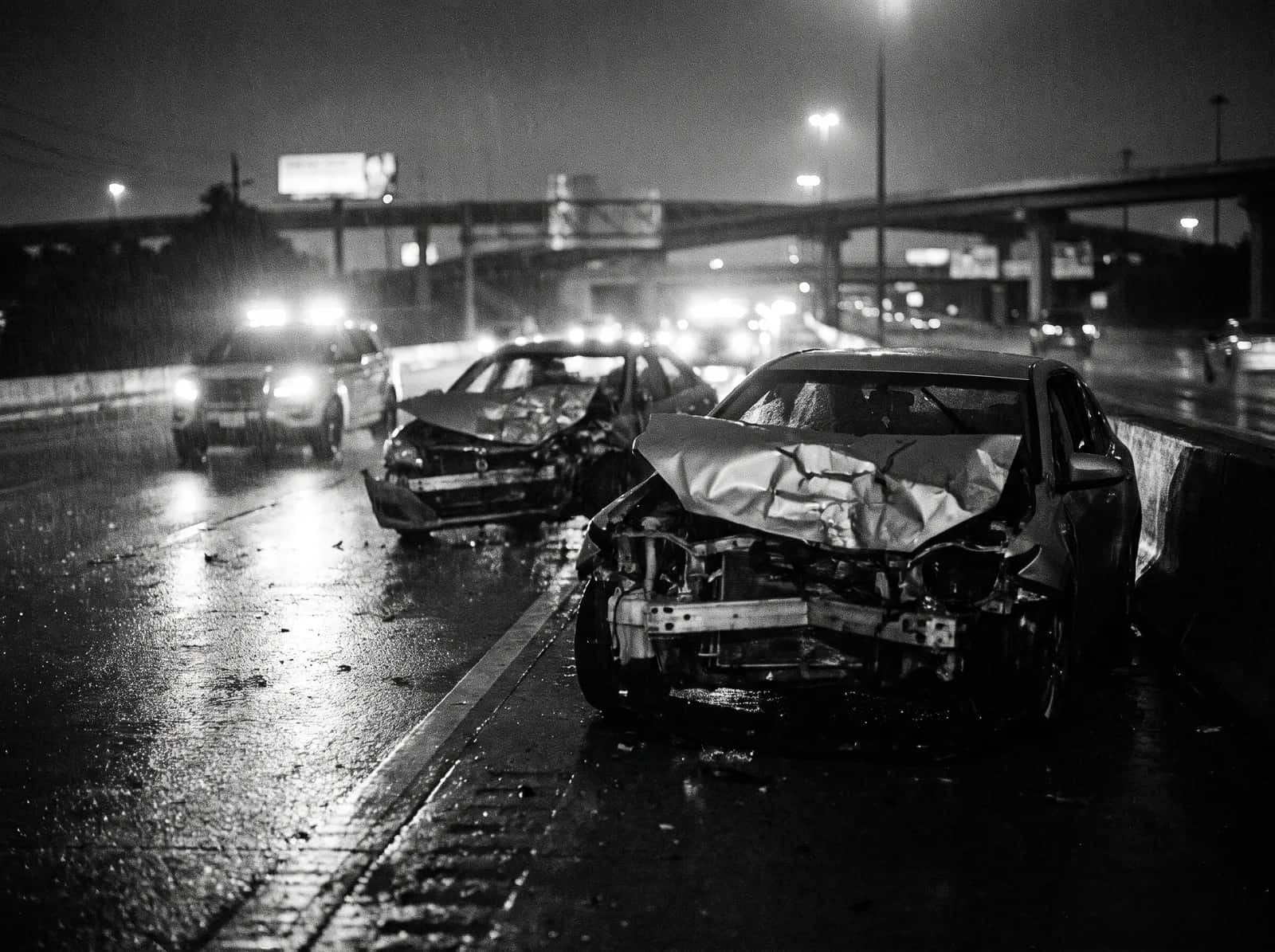

In Texas, a head-on collision is almost always the fault of the driver who crossed the center line or entered the wrong lane, because section 545.051 of the Transportation Code requires drivers to stay on the right half of the road. These crashes cause severe injuries, so the case turns on finding every policy and documenting long-term harm. Owsley Law Firm charges no fee unless it wins.
Why are head-on collisions so dangerous?
In a head-on crash, the speeds of both vehicles combine. Two cars traveling 50 miles an hour meet with a force far greater than a rear-end impact at the same speed, and the front crumple zones of both vehicles absorb energy that would otherwise be spread out. The result is often a crushed footwell, a deployed airbag at close range, and injuries to the chest, pelvis, legs, and head.
Head-on crashes on Texas two-lane highways and rural farm-to-market roads are a particular problem because there is no median and passing happens across the oncoming lane. In cities, they happen on undivided arterials, at freeway exit ramps entered the wrong way, and when a driver drifts while distracted or impaired.
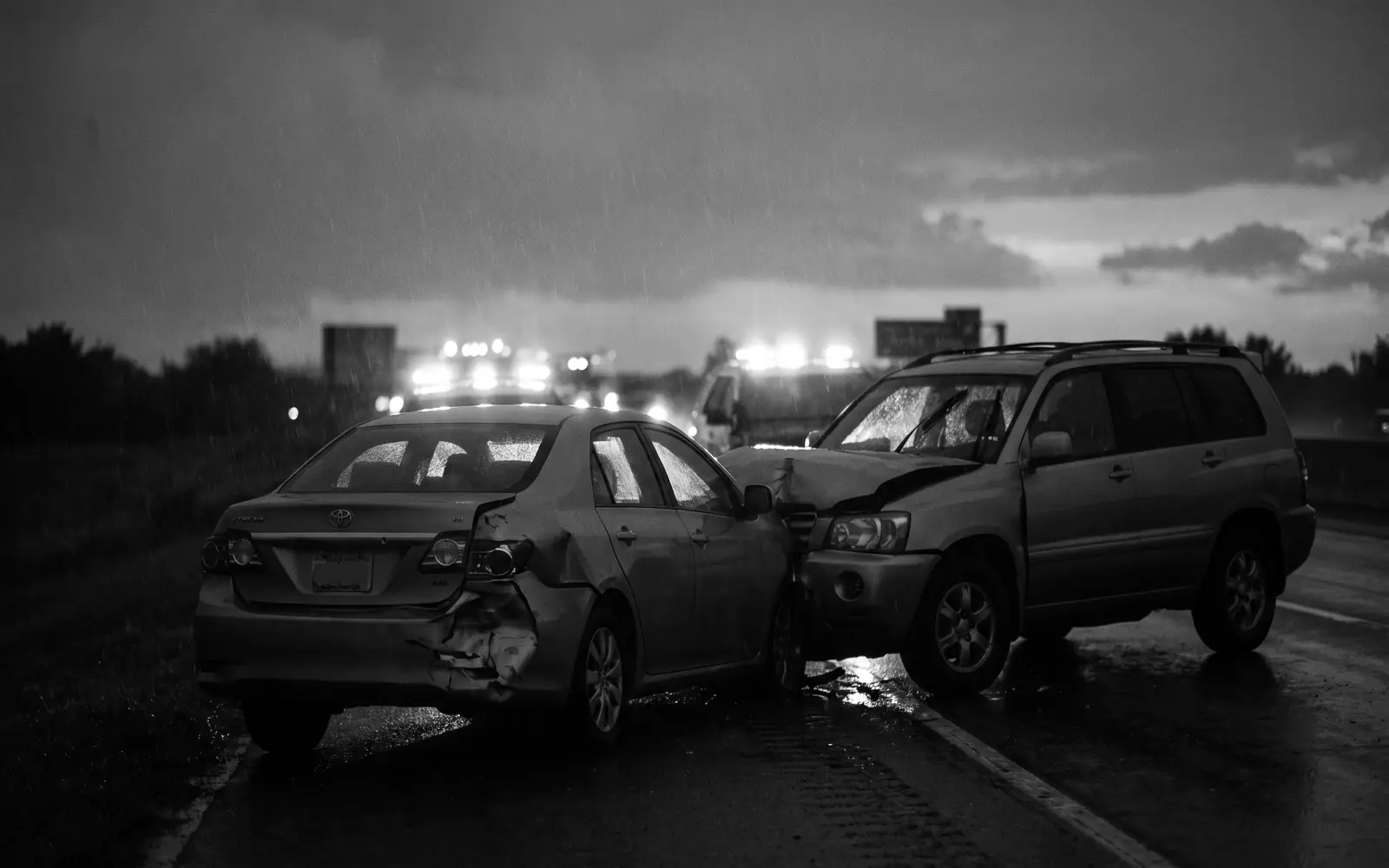
Who is at fault in a Texas head-on crash?
Section 545.051 requires a driver to stay on the right half of the roadway, with narrow exceptions for passing, obstructions, and one-way roads. A driver who crosses into the oncoming lane has violated that duty, and the violation is strong evidence of negligence. Passing is governed by its own rules, and a driver who passes in a no-passing zone or without a clear view of oncoming traffic carries the blame for the resulting crash.
Insurers sometimes argue that the other driver could have avoided the crash by braking or steering away. Under Chapter 33 proportionate responsibility, a jury assigns each party a percentage of fault, and a person found more than 50 percent responsible recovers nothing. In a true head-on collision, the driver who was in their own lane rarely carries meaningful fault, but the argument has to be answered with evidence rather than ignored.
What causes head-on collisions?
The cause matters because it can add defendants and open more insurance.
- Distracted driving, especially phone use, that lets a car drift across the center line
- Drunk or drugged driving, which can support a dram shop claim against the bar that overserved the driver
- Unsafe passing on two-lane highways
- Fatigue, including commercial drivers past their hours-of-service limits
- Wrong-way entry onto a divided highway or freeway ramp
- Tire blowouts or steering failures that may point to a product defect or poor maintenance
- Road design problems, such as a curve with no warning sign, that may involve a government entity
What evidence proves a head-on collision claim?
The physical evidence settles most head-on cases: where the vehicles came to rest, gouge marks and debris showing the point of impact, and the event data recorders in modern cars, which capture speed, braking, and steering input in the seconds before the crash. That data can be overwritten or lost when a vehicle is salvaged, which is why the firm moves quickly to preserve both vehicles.
Other evidence includes the Texas Peace Officer’s Crash Report (form CR-3), witness statements, dash camera and nearby business video, 911 call records, phone records when distraction is suspected, and toxicology results when impairment is suspected. In a serious crash, a reconstruction expert may be needed to explain the evidence to a jury.
What injuries do head-on collisions cause?
The injuries tend to be severe and multiple: traumatic brain injury, fractures of the femur, pelvis, ankle, and wrist, chest and internal injuries from the seat belt and steering column, spinal injuries, and facial injuries from the airbag. Many people need surgery, a hospital stay, and months of rehabilitation, and some never return to the work they did before.
Because the injuries are serious, the case is about the future as much as the past. Future surgeries, future lost earning capacity, home modifications, and long-term pain and physical impairment all belong in the claim, and each needs medical and sometimes economic support.
How much is a head-on collision case worth?
No honest lawyer can put a number on a case before the injuries are understood. The value depends on the medical bills paid or incurred, lost wages and lost earning capacity, the severity and permanence of the injuries, fault, and above all the available insurance. Texas requires only 30/60/25 minimum liability coverage under Transportation Code section 601.072, which is far below the cost of a serious head-on crash.
That is why the firm looks for every source of recovery: the at-fault driver’s policy, an employer’s policy if the driver was working, a bar or restaurant under the dram shop law, a vehicle or tire manufacturer, and your own uninsured and underinsured motorist coverage. Insurance Code section 1952.101 requires insurers to offer UM/UIM coverage unless you rejected it in writing, so many people have more coverage than they realize.
What should you do after a head-on crash?
Get medical care first and follow through with it. Photograph the vehicles and the scene if you can, and get the names of witnesses. Keep the vehicle from being salvaged or repaired until it has been inspected. Report the crash to your own insurer, but do not give a recorded statement to the other driver’s insurer before you have advice. Write down what you remember while it is fresh.
Most Texas injury claims must be filed within two years under section 16.003 of the Civil Practice and Remedies Code, and claims against government entities have much shorter notice deadlines. In a head-on case the evidence work should start in the first days, not the last months.
Common questions
What clients ask about head-on collisions.
Is the driver who crossed the center line always at fault?
Almost always. Section 545.051 requires drivers to stay on the right half of the road. Narrow exceptions exist, such as a driver forced over by an obstruction or by another vehicle, and if a third driver caused the swerve, that driver may share or carry the blame.
What if the at-fault driver died in the crash?
The claim can be brought against the driver’s estate, and the driver’s liability insurance still applies. Your own UM/UIM coverage may also be available if the policy limits are too low.
Can I recover if I was not wearing a seat belt?
Yes, but since the Texas Supreme Court's 2015 decision in Nabors Well Services v. Romero, evidence that you were not wearing a seat belt can be used to apportion responsibility for your injuries. It can reduce recovery but does not bar it.
What if the other driver was drunk?
The driver is liable, exemplary damages may be available under Chapter 41 if gross negligence is shown, and the bar or restaurant that overserved the driver may be liable under the Alcoholic Beverage Code Chapter 2 dram shop law.
How long do I have to file a head-on collision lawsuit?
Generally two years from the date of the crash under section 16.003. If a government vehicle or road condition was involved, formal notice may be due within six months or less.