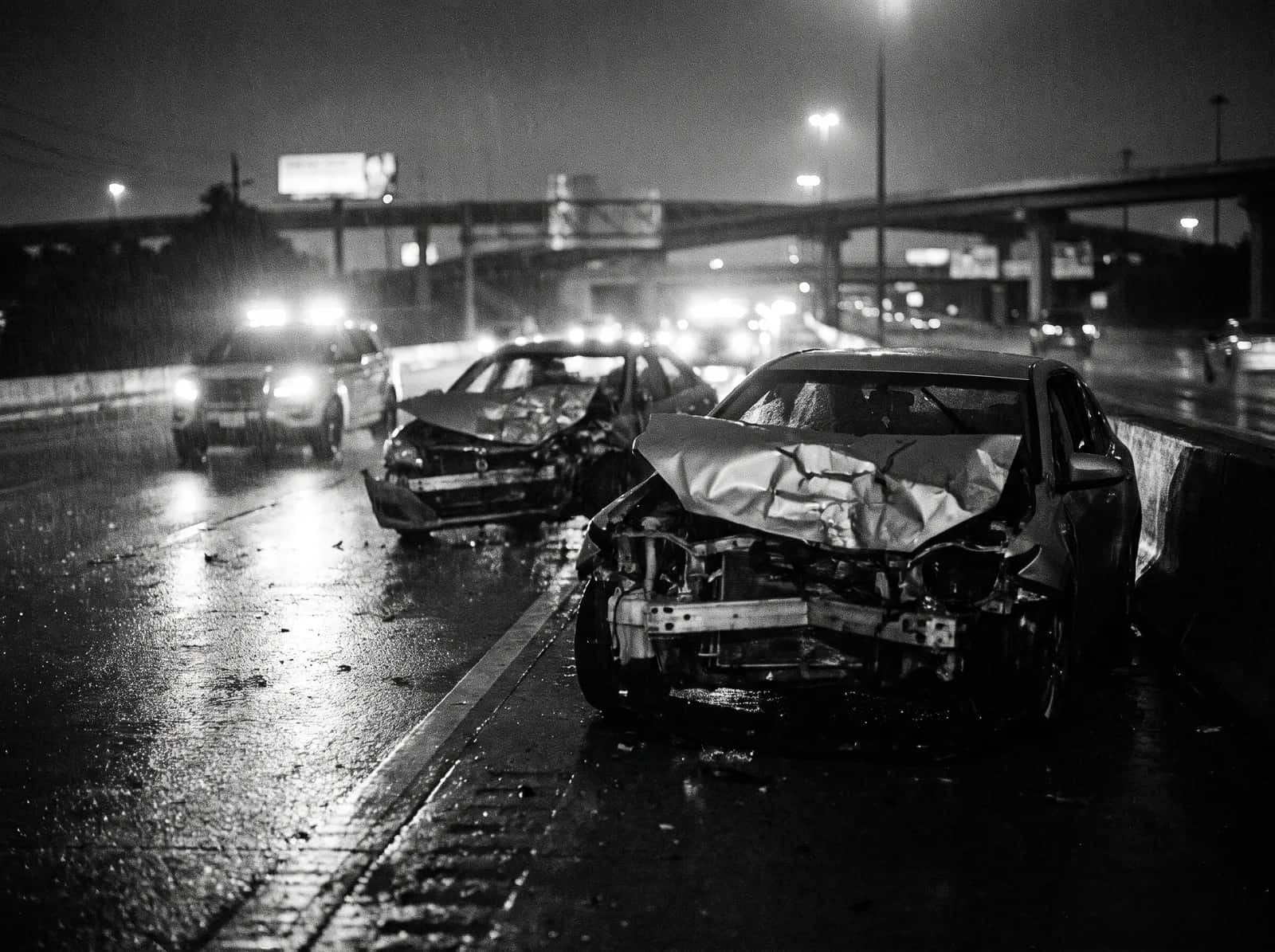

In Texas, a person hurt by a driver who fled the scene can usually recover through their own uninsured motorist coverage, and the fleeing driver can often be identified through video and vehicle debris. Owsley Law Firm pursues both paths and charges no fee unless it wins. Report the crash to police immediately and call.
Is leaving the scene of a crash illegal in Texas?
Yes. Texas Transportation Code sections 550.021 through 550.023 require a driver involved in a crash to stop, remain at the scene, give their name, address, vehicle registration, and insurance information, and render reasonable assistance to anyone injured, including arranging transport to medical care. Leaving the scene of a crash that injures someone is a serious crime.
For your civil claim, the flight itself is powerful evidence. A jury can consider that a driver who ran knew they had done something wrong.
What should I do right after a hit and run?
The first hour shapes the claim. If you are able, or someone with you is:
- Call 911 and ask for a police report, even if the injuries seem minor
- Write down everything you remember about the vehicle: color, make, damage, partial plate, direction of travel
- Photograph the scene, debris, and paint transfer on your vehicle
- Ask nearby businesses and homes about cameras before footage is overwritten
- Get medical care the same day and tell the provider it was a crash
- Notify your own insurer promptly, because uninsured motorist claims require it
Who pays if the hit-and-run driver is never found?
Usually your own uninsured motorist (UM) coverage. Insurance Code section 1952.101 requires Texas insurers to offer UM/UIM coverage with every auto policy, and it is part of your policy unless you rejected it in writing. A driver who cannot be identified is treated as uninsured.
Policy language matters. Texas Insurance Code section 1952.104 requires actual physical contact with the unidentified vehicle when the driver is unknown, and policies typically require a prompt police report, so evidence of contact, such as paint transfer and damage, is important. Personal injury protection under section 1952.152 pays early medical bills and lost wages regardless of fault while the larger claim is resolved.
If you were a passenger in someone else’s car, the UM coverage on that car may apply first, and your own household policy may add coverage on top of it. The order in which policies pay depends on their terms, so every policy that might apply should be reviewed.
How can a hit-and-run driver be identified?
Many are. Police investigate, but they handle many cases at once, so the firm works alongside them. Pieces of a headlight, a mirror, or trim left at the scene can identify the make and model. Traffic and business cameras along the route can capture a plate. Body shops see damage that matches. Witnesses who followed the vehicle often have details they did not give at the scene.
Speed matters. Business video is commonly overwritten within days, and a damaged vehicle may be repaired quickly. The sooner canvassing begins, the better the chance of finding the driver.
What happens if the driver is found?
The claim proceeds against that driver and their insurer like any other crash. If the driver was intoxicated, a dram shop claim may exist against a bar that overserved them. If they were driving for work, their employer may be responsible. If they had no insurance, your UM coverage still applies. The firm pursues every available source, because serious injuries often exceed any single policy.
Sometimes the driver is identified weeks or months later, after a UM claim has already started. The two claims can proceed together, and your insurer may have the right to recover from the driver what it paid you. Coordinating them properly protects your recovery.
Is a UM claim against my own insurer easy?
Not always. Even though it is your insurer, a UM claim is adversarial. The company can dispute whether contact occurred, how badly you were hurt, and what the claim is worth. Texas law requires you to establish the other driver’s fault and your damages before the insurer must pay, which sometimes means filing suit against your own carrier. Recorded statements to your own insurer can be used in that dispute, so it is worth talking to a lawyer first.
The firm handles the claim the same way it would a claim against the other driver: documenting the crash and the contact, gathering complete medical records, and presenting the full value of the injury. If your insurer refuses to pay fairly, the claim can be filed as a lawsuit.
What damages can I recover after a hit and run?
The same damages as any crash: medical bills, future medical care, lost wages and earning capacity, pain and mental anguish, physical impairment, and property damage. Through your UM coverage, recovery is limited to your policy limits, which is why the firm looks for every other source as well: a household policy, an identified driver’s insurer, an employer, or a business that overserved the driver. Your PIP benefits pay early bills regardless of fault and do not reduce what the at-fault driver owes. Keeping complete medical records and documenting missed work from the start makes each of these claims stronger.
How long do I have to file?
The general deadline to sue an identified driver is two years from the crash under Civil Practice and Remedies Code section 16.003. UM claims carry their own policy notice requirements, which are often much shorter, so do not wait to report the crash to your insurer.
Common questions
What clients ask about hit and run accidents.
What should I do right after a hit and run?
Call 911, get medical care, note everything you remember about the vehicle, and look for cameras at nearby businesses. Report the crash to your own insurer promptly, because UM claims require it.
Can I recover if the driver is never found?
Usually yes, through your own uninsured motorist coverage. Texas insurers must offer it with every policy and you have it unless you rejected it in writing.
Does my UM coverage apply if I was walking or biking?
Often yes. UM coverage generally follows the insured person, so it can apply when you are hit as a pedestrian or cyclist, depending on your policy’s terms.
What if there was no physical contact with the other car?
Texas Insurance Code section 1952.104 requires actual physical contact before uninsured motorist coverage pays for an unknown driver. If a driver forced you off the road without touching you, that coverage is generally unavailable for the unknown driver, so identifying the driver, and every other policy that may apply, becomes the priority.
Can police find the driver?
Sometimes, especially with video and debris. The firm works alongside the police investigation to identify the vehicle while protecting your UM claim in case the driver is never found.