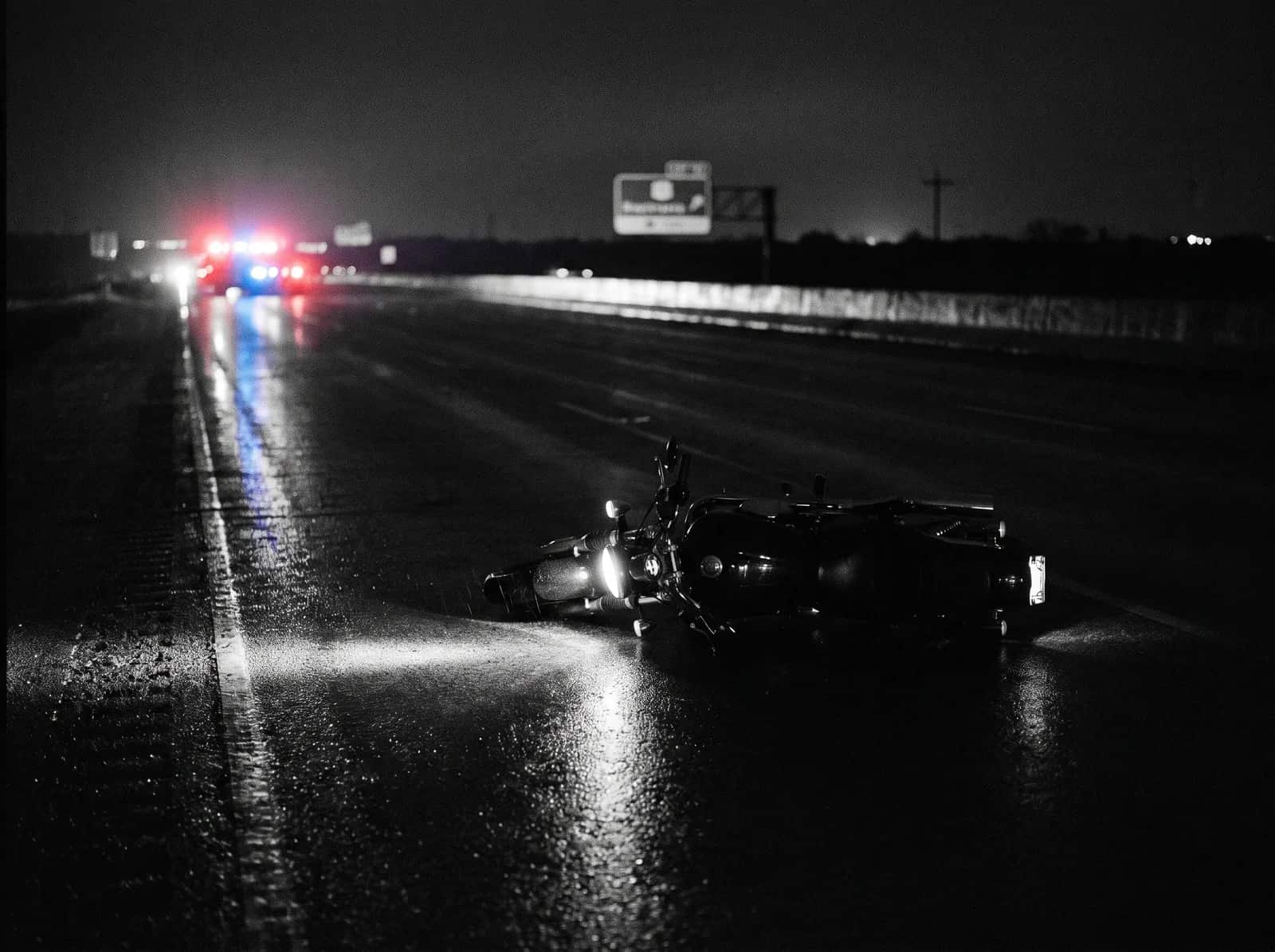

When a motorcycle crash in Texas is caused by a pothole, loose gravel, road debris, an uneven lane edge, or a missing warning sign, the responsible party may be a government agency, a road contractor, or a truck that dropped its load. Claims against government units have strict limits and notice deadlines as short as six months. Owsley Law Firm investigates these crashes and charges no fee unless it wins.
Who is responsible for a road hazard that causes a motorcycle crash?
It depends on the hazard and who controls the road. A pothole on a city street, a drop-off at the edge of a state highway, gravel left by a construction crew, and a ladder that fell from a pickup are each different claims against different parties.
- The city, county, or TxDOT, for roads they own and maintain
- A construction contractor, for work zones, steel plates, and uneven lanes
- A utility company, for trenches and patches it left
- A truck or trailer owner, for cargo or debris that fell from the vehicle
- A property owner, for hazards on private roads and lots
Can I sue the city or TxDOT for a pothole?
Sometimes, under the Texas Tort Claims Act. That law allows certain claims against government units, including some claims for premise defects and special defects on roads, but it limits who can be sued, what must be proved, and how much can be recovered. For an ordinary premise defect, the claimant generally must show the government unit actually knew of the dangerous condition.
The Act also requires written notice of the claim within six months of the injury, and some city charters require notice even sooner. Missing that deadline can end a strong claim, so the owner of the road should be identified immediately.
What about construction zones?
Construction zones on I-45, I-10, and the 610 Loop in Houston, and on I-35 across Central Texas, create lane shifts, steel plates, grooved pavement, and uneven lane edges that are manageable in a car and dangerous on two wheels. Contractors working on these projects have their own duties to maintain safe conditions and adequate warnings.
Claims against private contractors are not subject to the Tort Claims Act limits, which is one reason the firm identifies every company working in the zone.
What if debris fell from a truck?
A rider who hits a tire tread, ladder, furniture, or gravel that came from another vehicle may have a claim against that vehicle’s driver and owner. Commercial trucks must secure their cargo under federal rules. The challenge is identifying the vehicle, which is why witnesses, dashcams, and traffic camera footage matter.
If the vehicle cannot be identified, your uninsured motorist coverage may apply in limited circumstances. Texas Insurance Code section 1952.104 requires actual physical contact between the unidentified vehicle and the insured or the insured’s property, and whether debris thrown from a vehicle counts depends on the facts, so the details have to be documented carefully.
What evidence should I preserve?
Road conditions change fast. Crews patch potholes, sweep gravel, and remove debris, sometimes within hours. Photograph the hazard from several angles with something for scale, and photograph the road approaching it to show what was visible. Keep the damaged tire, rim, and gear.
The firm requests maintenance records, prior complaints, and work orders for the road, which can show what the responsible party knew and when.
Will the insurer blame the rider?
Usually. Expect arguments that the rider was going too fast for conditions or should have seen the hazard. Texas assigns fault in percentages under Chapter 33, and recovery is reduced by the rider’s share and barred above 50 percent. A hazard that was hidden, unmarked, or in a lane the rider had to use is strong evidence against that argument.
How long do I have to act?
For claims against government units, written notice is generally due within six months, and some cities require less. For private parties, the deadline to file suit is generally two years under section 16.003. Because you often do not know at first who owns the road, treat the shorter deadline as the real one.
What injuries do road hazard crashes cause?
A sudden loss of traction or a front wheel caught in a pothole usually throws the rider forward over the handlebars or drops the motorcycle on its side. Wrist, arm, and collarbone fractures, shoulder injuries, head injuries, and road rash are typical. Single-vehicle crashes can also involve a guardrail or curb, which adds to the force of the impact.
Because there may be no other driver, riders sometimes assume there is no claim. That is often wrong. A hazard someone created or failed to fix is a basis for a claim, and the rider’s own policy may provide personal injury protection or medical payments coverage regardless of fault while the investigation proceeds.
What if the hazard was on private property?
Hazards in parking lots, private roads, apartment complexes, and business driveways are the property owner’s responsibility. Texas premises liability law generally requires an owner to make safe or warn of dangerous conditions the owner knew or reasonably should have known about, depending on the visitor’s status. Uneven pavement, unmarked speed bumps, loose gravel, and oil slicks at fuel stations are common examples.
Claims against private owners are not subject to the Tort Claims Act’s notice rules or caps. The general two-year deadline under section 16.003 applies, but the condition itself can be repaired quickly, so photographs taken right away are critical.
Common questions
What clients ask about road hazard crashes.
How do I know who maintains the road where I crashed?
State highways are generally TxDOT’s, while city streets and county roads belong to local governments. Frontage roads and interchanges can be confusing, so the firm confirms ownership from records.
Is there a cap on claims against the government?
Yes. The Texas Tort Claims Act limits damages against government units. The limits depend on the type of government unit involved.
The pothole was there for months. Does that help?
Yes. Prior complaints and repair requests can help show the government unit knew of the hazard, which is often required.
Can I claim my damaged motorcycle?
Property damage is part of the claim, though recovery against government units is limited by the Tort Claims Act. Against private parties, the motorcycle and gear are recoverable.
Does the firm charge for a review?
No. The review is free, and Owsley Law Firm charges no fee unless it recovers for you.