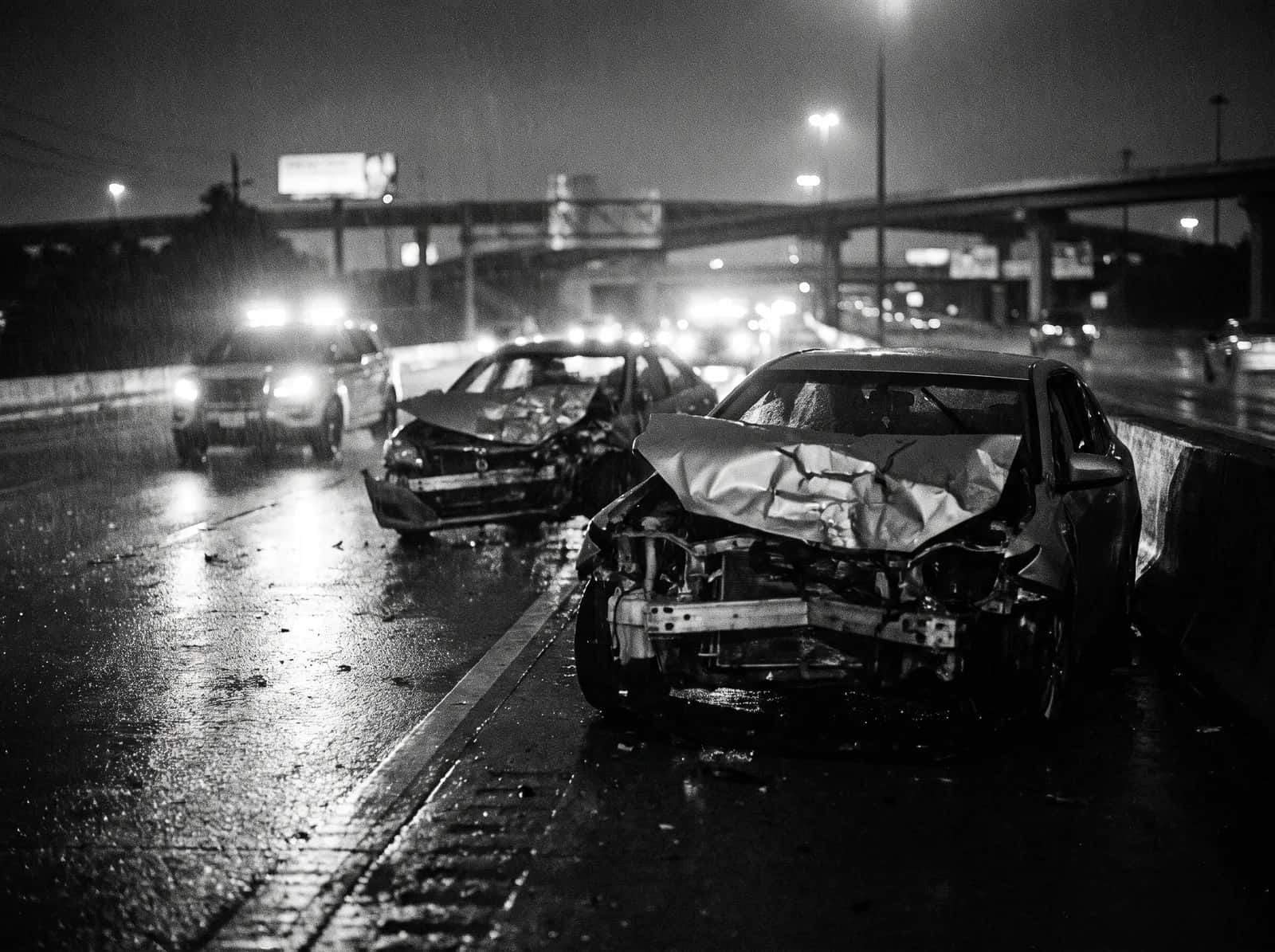
Usually yes. A drunk driver's liability insurance generally still pays for the injuries the driver caused, up to the policy limits, because drunk driving is treated as negligence, not an intended injury. Whether the policy also covers punitive damages depends on its wording and Texas public policy.
People are often surprised that a drunk driver's insurer still has to answer for the crash. Liability insurance exists to pay for harm the insured causes by careless driving, and Texas law treats a crash caused by an intoxicated driver as negligence, which can also support a gross negligence finding, rather than an intentional injury. Auto policies commonly exclude injury the insured caused intentionally, but a drunk driver who crashes usually did not intend to hurt anyone, so that kind of exclusion generally does not fit. The practical result is that the drunk driver's liability coverage is normally the first source of payment for your medical expenses, lost income, pain, and other compensatory damages, up to the policy limits.
The limits are the real problem. Texas requires only 30/60/25 liability coverage under Transportation Code section 601.072, which means $30,000 per injured person and $60,000 per crash for bodily injury. Serious injuries can exceed that quickly, and some drunk drivers carry no insurance at all. That is why the other sources matter: your own uninsured and underinsured motorist coverage, the vehicle's owner if someone knowingly let an unsafe driver use it, an employer if the driver was working, and a bar or restaurant that overserved the driver. An insurer may also contest coverage for reasons that have nothing to do with drinking, such as a lapsed policy or an excluded driver, so the policy itself should be checked.
Exemplary, or punitive, damages are different. Texas allows them for gross negligence proven by clear and convincing evidence and found by a unanimous jury, and Civil Practice and Remedies Code section 41.008 removes the usual cap when the claim is based on conduct described as intoxication assault or intoxication manslaughter. Whether the drunk driver's insurer must pay those damages is not automatic either way. In Fairfield Insurance Co. v. Stephens Martin Paving (2008), the Texas Supreme Court said the question turns first on the policy's language and then on whether Texas public policy permits coverage in that setting. Policies differ, so the answer comes from the policy, and punitive damages can be hard to collect from an individual.
A bar, restaurant, or club can share responsibility under the dram shop law. Alcoholic Beverage Code section 2.02 allows a claim when it was apparent to the provider at the time of service that the person was obviously intoxicated to the extent of presenting a clear danger to himself and others, and the intoxication was a proximate cause of the damages. Businesses that serve alcohol usually carry their own liability coverage, which can matter a great deal when the driver's policy is small. Receipts, tabs, and surveillance video from the bar can disappear quickly, so the driver's timeline that night should be reconstructed early. A separate page explains when you can sue a bar for a drunk driving accident.
The criminal case can help the civil one, within limits. Breath or blood test results, officer observations, and video gathered by police are often usable evidence. A guilty plea can generally be offered against the driver, but under Texas Rule of Evidence 803(22) a prior conviction is admissible in a civil case to prove the underlying facts only if it was a felony, so a misdemeanor DWI conviction does not itself prove fault, and Texas Rule of Evidence 410 keeps a no-contest plea out of a civil case. The civil claim does not wait for the criminal case, and the two-year deadline still runs. Owsley Law Firm looks for every policy and responsible party in drunk driving crashes and charges no fee unless it wins.
What to do, step by step
- Get the police report and note any DWI arrest.
- Identify the drunk driver's insurer and the vehicle's owner.
- Check your own uninsured and underinsured motorist coverage.
- Ask where the driver had been drinking and have a lawyer pursue those records quickly.
When the driver's policy is too small, a properly built demand within the policy limits can expose the insurer to an excess verdict if it unreasonably refuses, under the Stowers doctrine.
If the driver borrowed the car, the owner's policy may cover the driver as a permissive user, and the owner may face a separate negligent entrustment claim if the owner knew the driver was unsafe.
Mistakes that cost people money
- Assuming insurance will not pay because the driver was drunk.
- Accepting the driver's policy limits without checking other coverage.
- Waiting until bar video and receipts are gone.
Related questions
Can the insurer deny coverage because the driver was drunk?
Drunk driving alone generally is not a reason to deny liability coverage; intentional injury exclusions usually do not fit a drunk driving crash.
Is there a cap on punitive damages in a drunk driving case?
Texas removes the usual cap when the claim is based on conduct described as intoxication assault or intoxication manslaughter.
Does a DWI conviction prove the civil case?
Not by itself. A misdemeanor conviction is not admissible to prove fault, though a guilty plea and the evidence behind the case can be.
Sources
Sources this page relies on
Read next