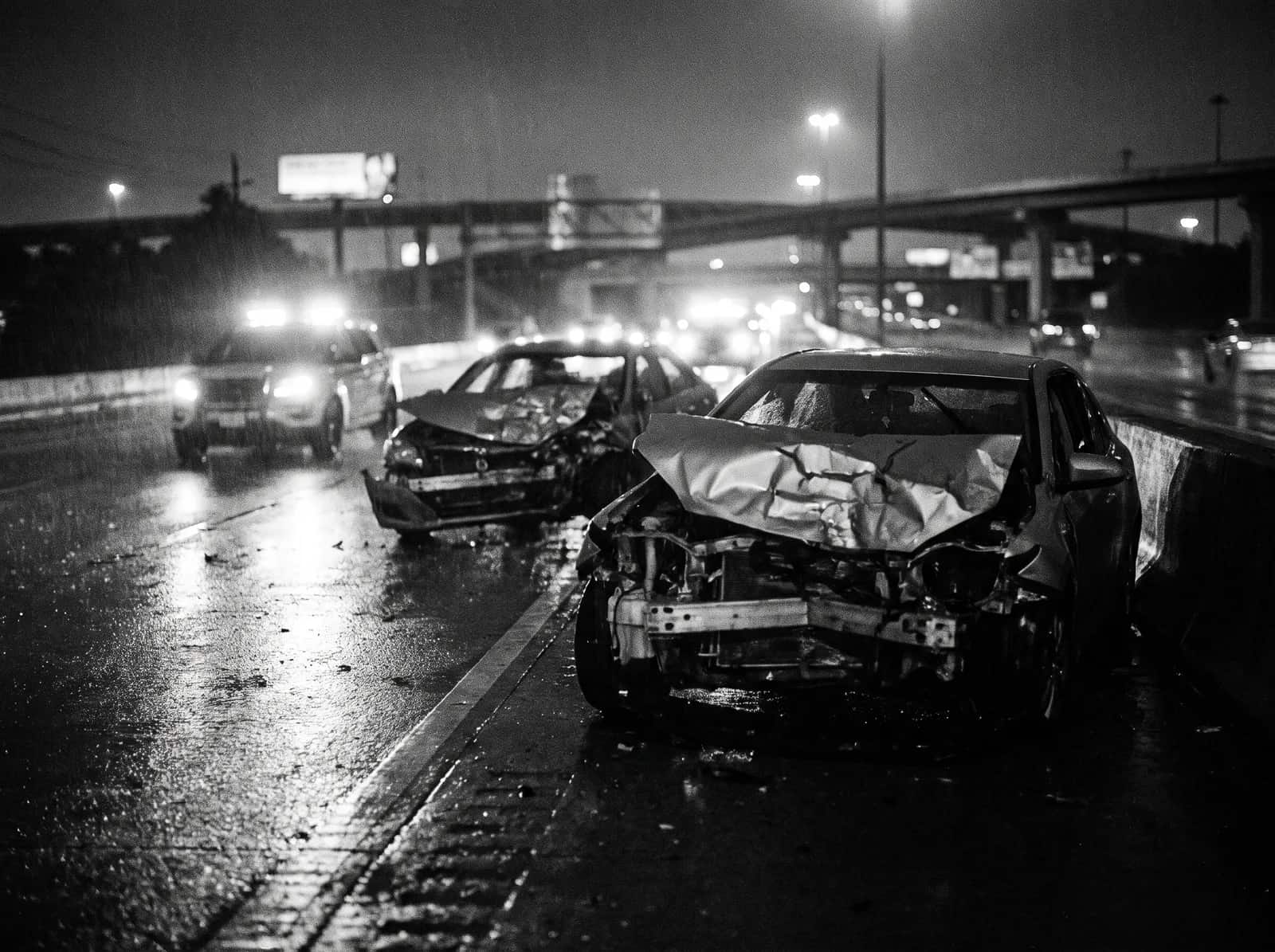
If State Farm insures the driver who hit you, you are a third-party claimant and the adjuster's job is to protect State Farm's policyholder, not you. If State Farm is your own insurer, Texas prompt-payment deadlines and your PIP and UM coverage come into play. Owsley Law Firm handles both kinds of claims against State Farm at no fee unless it wins.
State Farm sells through local agents, so many Texans know their State Farm agent by name. That relationship matters less than people expect once a crash happens. The agent sold the policy. A claims team decides what gets paid, and when you are hurt by a State Farm driver, that team works for the company and its insured.
State Farm's own claims page has separate paths for its customers, for non-customers, and for other insurers, which is a useful reminder that the rules change depending on which side of the policy you are on. This guide walks through both sides under Texas law.
How do I file a car accident claim with State Farm in Texas?
State Farm customers can file online, in the State Farm app, or by phone at any hour. If you are not a State Farm customer and their driver hit you, use the non-customer claim path and get a claim number.
Once a claim is opened, State Farm's app and online account let its customers check status, upload documents, set up direct deposit, and message the claims team. Non-customers will mostly deal with an assigned adjuster by phone and email, so write down the claim number, the adjuster's name, and every date you talk.
Report the facts, not your opinion of fault or your injuries. A quick, factual report gets the claim moving. The details about your injuries belong in medical records, which take time to develop.
- Date, time, and exact location of the crash
- The State Farm driver's name, policy number, and plate
- Police report number and the agency that responded
- Photos of the vehicles, the scene, and any visible injuries
- Names and numbers of witnesses

Does my State Farm agent handle my claim?
Usually not. Agents sell and service policies. Adjusters on State Farm's claims team investigate and decide what to pay.
Your agent can help you report a claim and find your coverage, and a good agent is worth calling. But the person who evaluates an injury claim, decides whether your treatment was reasonable, and makes a settlement offer is an adjuster you have probably never met.
If you were hit by a State Farm driver, remember that driver's agent works for their customer. Friendly conversations with the other driver's agent or adjuster are still part of the company's investigation.
What if State Farm insures the driver who hit me?
You make a liability claim against their policy. State Farm decides whether its driver was at fault and how much your injuries are worth, up to the policy limit.
Texas requires at least 30/60/25 liability coverage, which means $30,000 for one injured person, $60,000 for everyone injured, and $25,000 for property damage. A serious injury can exceed $30,000 quickly, so the at-fault driver's limits are one of the first things to learn.
Texas does not let a third-party claimant sue the other driver's insurer for unfair claim handling. The Texas Supreme Court made that clear in Allstate Insurance Co. v. Watson (1994). Your leverage against State Farm as the other driver's carrier is the strength of your claim against its driver, including a lawsuit when the offer does not reflect your damages.
What deadlines does State Farm have to follow?
For claims under your own State Farm policy, the Texas Insurance Code sets deadlines. Those prompt-payment deadlines do not apply when you claim against another driver's policy.
On a first-party claim, an insurer generally must acknowledge it and begin investigating within 15 days of notice, accept or reject it within 15 business days after receiving everything it reasonably requested, and pay within 5 business days after agreeing to pay. Late payment can trigger 18 percent annual interest plus attorney's fees under Insurance Code section 542.060.
PIP has its own rule: benefits must be paid no later than 30 days after the insurer receives satisfactory proof of the claim. If PIP benefits are not paid when due, section 1952.157 allows a suit for the benefits plus a 12 percent penalty, interest, and attorney's fees.
Do I have to use a State Farm repair shop?
No. The Texas Department of Insurance says insurers can give you a list of preferred shops but cannot require you to use one.
A shop in an insurer's network may be convenient, and some customers like the simplicity. But you can choose the shop you trust. If the shop finds hidden damage after teardown, it can ask the adjuster to raise the estimate.
Keep the repair question separate from the injury claim. Accepting payment for your car does not settle your bodily injury claim unless you sign a release that says so, so read anything you are asked to sign.
Should I give State Farm a recorded statement?
If you are a State Farm customer, your policy likely requires you to cooperate. If State Farm insures the other driver, you are generally not required to give their adjuster a recorded statement.
A recorded statement taken days after a crash, while you are hurting and before you have seen a doctor more than once, can be used later to argue that you said you were fine or that you were partly at fault. Short answers like "I'm okay" become exhibits.
It is reasonable to tell the other driver's adjuster that you will provide information in writing, or that your lawyer will contact them. That does not slow the property damage side of the claim.
Can State Farm blame me for part of the crash?
Yes. Texas uses proportionate responsibility, so any percentage of fault assigned to you reduces your recovery, and more than 50 percent bars it.
Fault arguments are common in lane-change, left-turn, and intersection crashes on Houston roads where both drivers say they had the right of way. A small percentage shift can change the value of a case meaningfully.
Evidence answers fault arguments: dashcam or nearby business video, the crash report, witness statements, vehicle damage patterns, and sometimes data from the vehicles themselves. Preserve it early, because video is often overwritten within days or weeks.
Which State Farm coverage applies
| Situation | Whose policy usually pays | What to know |
|---|---|---|
| A State Farm driver caused the crash and you were hurt | The State Farm driver's liability coverage | You are a third-party claimant. No contract with State Farm, so no first-party bad-faith claim. |
| You are insured by State Farm and need medical bills paid now | Your own PIP (unless you rejected it in writing) | Paid regardless of fault, at least $2,500 per person if you have it. |
| The at-fault driver had no insurance or too little | Your State Farm UM/UIM coverage | A first-party claim against your own company, which can still be contested. |
| Your car needs repair and you want it fixed now | Your collision coverage, or the other driver's liability | Collision means a deductible, usually recovered later from the at-fault carrier. |
What evidence proves it
- State Farm claim number and adjuster contact information
- The Texas crash report (CR-3) and the responding agency
- Photos and video of the scene, the vehicles, and your injuries
- Medical records and bills from your first visit forward
- Proof of lost wages from your employer
- Your own declarations page showing PIP, UM/UIM, and collision limits
- Every written offer, denial, or request from State Farm
Mistakes that cost people money
- Treating the other driver's State Farm agent or adjuster as your advocate
- Giving a recorded statement to the other driver's carrier before you know the extent of your injuries
- Signing a release when you meant to settle only the property damage
- Waiting weeks to see a doctor, which invites an argument that something else caused the injury
- Assuming the policy limits are enough without asking
Frequently asked questions
Can I sue State Farm directly if their driver hit me?
Generally no. In Texas you sue the at-fault driver, and the driver's insurer defends and pays within its limits. Texas does not give third-party claimants a direct unfair-claim-handling suit against the other driver's insurer.
How long does a State Farm injury claim take in Texas?
Property damage often resolves in weeks. Injury claims usually take longer because the value is not clear until treatment ends or a doctor can say what care you will need. A claim that becomes a lawsuit takes longer still.
Will filing a claim with my own State Farm policy raise my rate?
That depends on the company's rating rules and your history. Texas has no statute guaranteeing rates stay flat after a not-at-fault crash, so ask your agent how claims are treated.
What if State Farm says my injuries are not from the crash?
That is a causation dispute. It is answered with prompt treatment records, consistent symptoms, imaging where appropriate, and a doctor's opinion connecting the injury to the crash.
Does State Farm have to pay my medical bills as they come in?
Not on a liability claim. The at-fault driver's insurer usually pays once, at settlement. Your own PIP, health insurance, or med pay can cover bills in the meantime.
How long do I have to file a lawsuit?
Two years from the date of the crash for most Texas injury claims under Civil Practice and Remedies Code section 16.003. Waiting on an adjuster does not stop that clock.
This page is general information about Texas law and is not legal or medical advice. Every case depends on its own facts. Contact the firm for a free review of yours.
Keep reading