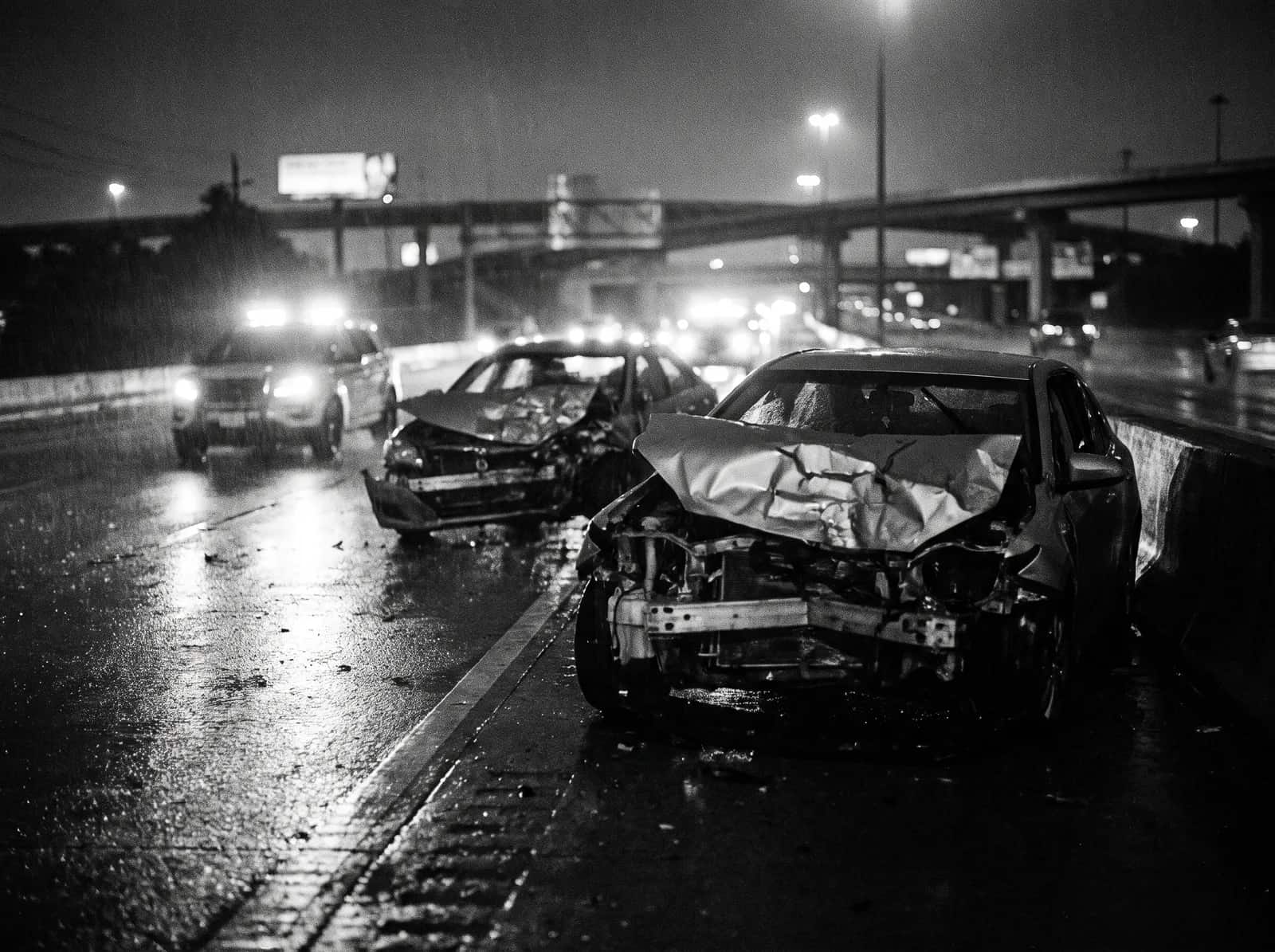

In Texas, a driver may move out of a lane only when the move can be made safely under Transportation Code section 545.060, so the driver who changed lanes into another vehicle is usually at fault in a sideswipe crash. These crashes often push a car into a barrier or other traffic and cause more harm than the paint damage suggests. Owsley Law Firm charges no fee unless it wins.
Who is at fault in a sideswipe or lane-change crash?
Section 545.060 requires a driver on a road divided into lanes to drive as nearly as practical entirely within a single lane and not move from that lane until the driver can do so safely. A driver who merges into a car already in the next lane, or drifts across the line, has usually violated the statute.
When both drivers moved into the same lane at the same time, or one driver was in a blind spot while speeding, fault may be shared. Chapter 33 proportionate responsibility lets a jury divide fault, and a person found more than 50 percent responsible recovers nothing. The evidence of who moved first and who was where is what decides these cases.
Why are lane-change crashes so common on Houston freeways?
Houston’s freeways combine high speeds, heavy volume, and constant merging. The Katy Freeway’s managed lanes and frequent exits, the weaves on the 610 Loop, the merges on Beltway 8, and the long construction zones on I-45 all force lane changes at speed. Large trucks have big blind spots, and a car beside a trailer may be invisible to the driver.
A sideswipe at freeway speed can spin a car into a barrier, across lanes, or into the path of a truck. The initial contact may be light, but the crash that follows can be severe.
What evidence proves a lane-change crash?
Sideswipe cases often come down to two drivers telling opposite stories, so objective evidence carries the case.
- Dash camera footage, increasingly common in both cars and trucks
- TxDOT and toll road camera footage on freeways and managed lanes
- The location of the damage on each vehicle, which shows the angle of contact
- Event data showing steering input and speed
- Independent witnesses, including other drivers who stopped
- Telematics and camera data from commercial vehicles
- The crash report diagram and narrative
What if a truck merged into my car?
When a commercial truck merges into a car, the claim is against the driver and usually the trucking company, which is responsible for its driver’s conduct on the job. Trucking companies often have forward and side-facing cameras and electronic logging data showing hours of service. Federal rules also govern driver training and qualifications. That evidence can be overwritten, so the firm sends preservation demands quickly. Truck policies are also far larger than the Texas minimums.
What injuries do sideswipe crashes cause?
The direct contact may cause only minor damage, but the secondary crash often causes the injuries: neck and back injuries from being spun or pushed, head injuries from striking the window or pillar, and fractures when the car hits a barrier or another vehicle. Shoulder and arm injuries are common when the driver braces against the wheel. Some injuries, especially disc injuries and concussions, may not be obvious for a day or two, which is why prompt medical care matters.
What if the other driver blames me for the lane change?
In many sideswipe cases each driver says the other one moved. The damage pattern is often decisive: paint transfer and scrape marks that run front to back or back to front show the direction of travel, and the location of damage shows which car came across the line. A car with damage beginning at the front corner was usually moving into the other car’s lane. Event data can show which driver steered in the seconds before the crash.
Do not argue at the scene and do not sign a statement that describes the crash in the other driver’s terms. Under Chapter 33, even a shared-fault finding allows recovery if your share is 50 percent or less, but the evidence should be gathered before anyone’s memory hardens around a story.
How much is a sideswipe accident claim worth?
The claim includes medical bills paid or incurred, future treatment, lost wages, pain, mental anguish, physical impairment, and property damage, including loss of use of the vehicle. The value turns on the injuries and how long they last. A minor sideswipe that leads to a spinout and a barrier strike can produce serious injuries, and the claim should be valued on the whole crash, not the first contact.
Insurance determines what is collectible. A commercial vehicle policy is usually much larger than the Texas 30/60/25 minimum, and your own UM/UIM coverage can fill gaps when the other driver carried only the minimum.
What should you do after a sideswipe crash?
Move to safety if you can, call 911, and get the crash documented. Photograph both vehicles closely, including the paint transfer and the exact location of the damage. Get the other driver’s insurance and the name of any company the vehicle belongs to. Ask witnesses for their contact information. See a doctor promptly even if you feel all right. Do not give a recorded statement to the other driver’s insurer before getting advice, and remember the two-year filing deadline under section 16.003.
Common questions
What clients ask about sideswipe and lane-change crashes.
Who is at fault when two cars merge into the same lane?
Both drivers had a duty to check that the lane was clear, so fault is often shared. Video, damage patterns, and witnesses usually show which driver moved first.
Is a sideswipe a minor accident?
Not always. The contact may look minor, but a sideswipe at freeway speed can cause a loss of control and a much more serious crash.
What if the driver who sideswiped me kept going?
That is a hit-and-run. Report it to police right away. Your uninsured motorist coverage can apply when the at-fault driver cannot be identified, subject to your policy terms.
Do I need a police report for a sideswipe crash?
It is strongly recommended. A crash report records the drivers, insurance, and the officer’s observations, all of which help prove the claim.
Can a lane-change crash with a truck be worth more?
Truck cases often involve larger insurance policies and a company that is responsible for its driver. The value depends on the injuries, fault, and coverage.