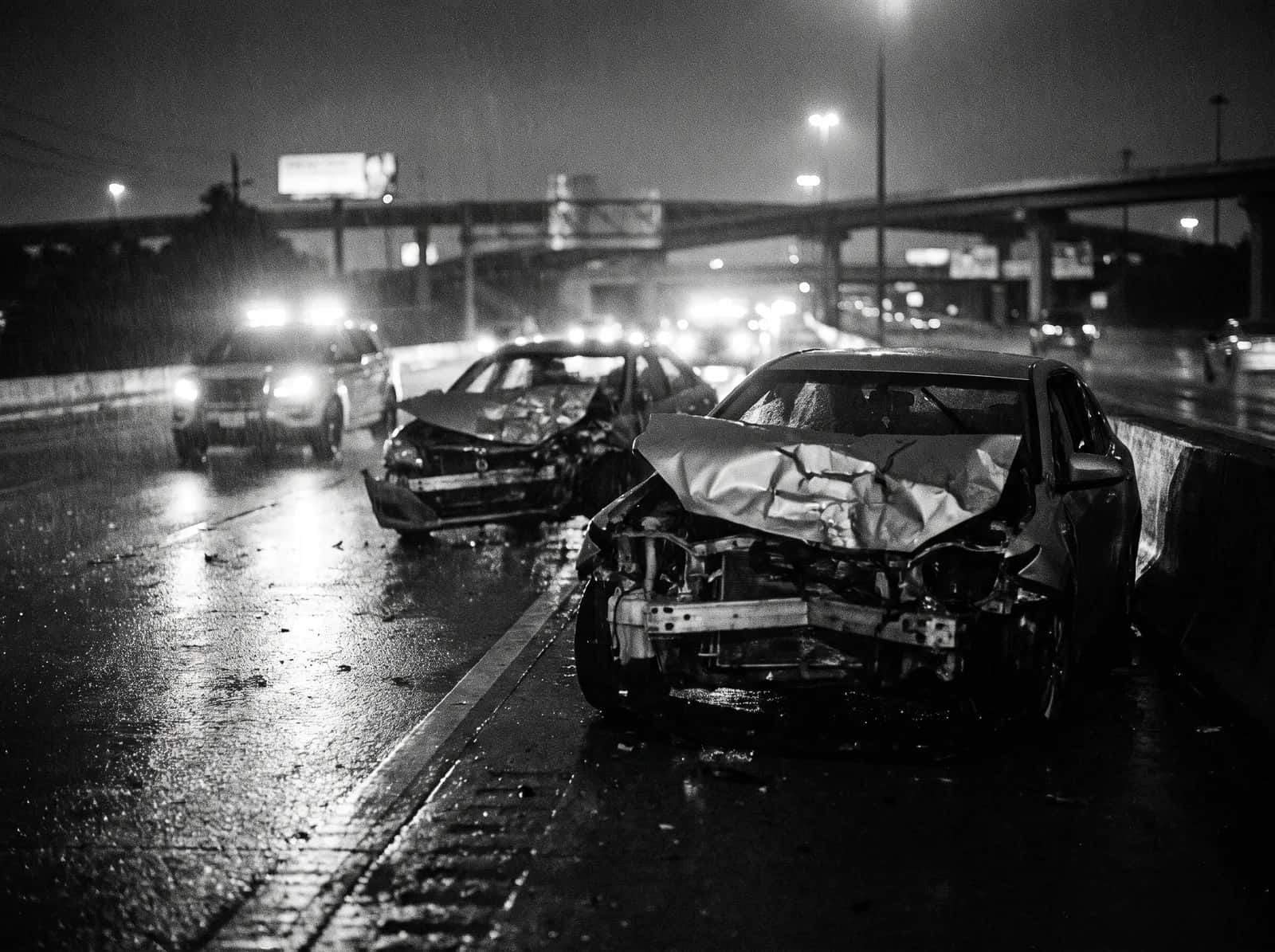

Yes, when anyone is injured or killed or a vehicle cannot be normally and safely driven. Texas requires the drivers to notify police immediately. Even in smaller crashes, a police report is one of the most useful pieces of evidence for an injury claim.
The rule is in Transportation Code section 550.026. A driver in a crash that injures or kills someone, or damages a vehicle so it cannot be normally and safely driven, must immediately notify the local police department if the crash happened in a city, or the sheriff's office or the Department of Public Safety outside city limits. In Houston, that usually means Houston Police inside the city and the Harris County Sheriff or a constable in unincorporated areas.
Officers then write the official report. Under Transportation Code section 550.062, an officer who investigates a crash involving injury, death, or apparent property damage of $1,000 or more must file a written report with TxDOT within 10 days. That report, the CR-3, is what insurers and lawyers rely on for the parties, insurance, diagram, and the officer's observations.
Drivers also have duties at the scene. Texas law requires you to stop, give your name, address, vehicle registration, and liability insurer, and provide reasonable assistance to anyone injured. On a freeway in a metropolitan area like Houston, if every vehicle in a damage-only crash can be normally and safely driven, Transportation Code section 550.022 requires the drivers to move to the frontage road, a cross street, or another suitable spot to exchange information.
If police do not come, document everything yourself: photos, the other driver's license and insurance card, witness names, and the exact location. TxDOT no longer keeps the old driver's crash report form (CR-2), so keep your own record.
A report is not the final word on fault, and errors can be corrected. Owsley Law Firm obtains the report for clients at no charge and charges no fee unless it wins.
What to do, step by step
- Call 911 if anyone is hurt or the cars cannot be driven.
- On a Houston freeway, if no one is hurt and the cars can be driven, move to the frontage road or a cross street.
- Exchange name, address, registration, and insurance with the other driver.
- Ask the officer for the report number and the investigating agency.
Officers must file the report with TxDOT within 10 days, and copies can then be bought through TxDOT's online crash report system or requested from the investigating agency.
If police did not respond to a minor crash, a later report can sometimes be made with the local agency. Ask the agency what it accepts.
The report is evidence, not a verdict. Statements in it can be wrong, witnesses can be missing, and officers do not decide fault for an injury claim.
What happens if you leave without stopping? Texas treats it seriously. Under Transportation Code section 550.021, a driver in a crash that results or is reasonably likely to result in injury or death must stop, return if needed, check whether anyone needs aid, and remain until the information exchange is complete. Leaving the scene of a crash involving death is a second-degree felony, and one involving serious bodily injury is a third-degree felony. Other injury crashes carry up to five years in prison or a year in county jail, a fine of up to $5,000, or both. For an injured person, a hit-and-run makes the police report even more important, because it may be the only official record that a crash with an unknown driver happened.
What if you hit a parked car or a fence? There is still a reporting duty, but it runs to the owner rather than the police. Under Transportation Code section 550.024, a driver who damages an unattended vehicle must stop and either find the owner and give the driver’s and owner’s names and addresses, or leave a written note in a conspicuous place with that information and a statement of what happened. Section 550.025 imposes a similar duty when a driver damages a structure, fixture, or landscaping next to a highway. Violations are Class C misdemeanors when damage is under $200 and Class B misdemeanors at $200 or more.
Does it matter if the crash happened in a parking lot? It can. Transportation Code section 550.041 allows a peace officer notified of a crash with injury, death, or apparent damage of at least $1,000 to investigate and file charges without regard to whether the crash occurred on property covered by the rest of the chapter, except in privately owned residential parking areas and paid parking lots. In practice, an officer may or may not come to a store parking lot crash with no injuries, so the same advice applies: photograph everything, get the other driver’s information and insurance, and find out whether the property has cameras before the footage is overwritten. Section 550.067 also lets a city require drivers to file their own report with a city department by ordinance, so ask the local police whether that applies.
Can a police report be changed after it is filed? A material change can be made only by the officer who wrote it, or by a written supplement that clearly names the person who originated the change, under Transportation Code section 550.068. That is why the practical route for an error is to contact the investigating agency, explain the mistake, and provide the evidence, such as photos or a witness statement, and ask whether the officer will supplement the report. Insurers will rely on the report as written until it is changed, so a correction is worth pursuing early.
For example, suppose two drivers collide on a side street in the Heights. One complains of neck pain, and both cars can be driven. The drivers argue about whether to call police, and one says it is not worth it. In this hypothetical, because someone is hurt, section 550.026 requires the drivers to notify the local police department immediately, regardless of how minor the damage looks. If the officer comes, the report records the parties, insurance, and observations. If the officer does not come, the drivers still must exchange information, and the injured driver should document the scene, see a doctor, and keep a record of who was called and when. The illustration explains the duty, not any claim’s outcome.
Which edge cases come up most? A crash involving a commercial truck or a government vehicle often brings additional investigators and records, and a claim against a government entity has its own notice deadline under the Tort Claims Act. A driver who was too hurt to call should not worry that the duty was missed; someone else at the scene usually calls, and a later report can be discussed with the agency. And under Transportation Code section 550.066, a person’s response to certain information requested on the crash report form is not admissible in a civil trial, so the report is a starting point for the evidence, not the whole of it.
Mistakes that cost people money
- Agreeing with the other driver to leave police out of an injury crash.
- Leaving the scene without exchanging information.
- Not getting the report number before the officer leaves.
Related questions
Do I need a police report to file a claim?
Not always, but it helps significantly. Without one, photos, witness statements, and your own written account carry more weight.
How long do I have to report a crash?
When injury, death, or a disabled vehicle is involved, the law says immediately. Report to your own insurer as soon as possible too.
Who writes the report on a Houston freeway?
It depends on the location: Houston Police inside the city, the Harris County Sheriff or constables in unincorporated areas, and sometimes DPS on state highways.
Is it illegal not to call the police after a car accident in Texas?
When the crash injures or kills someone, or a vehicle cannot be normally and safely driven, Transportation Code section 550.026 requires immediate notice to the police, sheriff, or DPS depending on location. For damage-only crashes where the cars can be driven, the law requires stopping and exchanging information rather than calling police.
What do I do if I hit a parked car in Texas?
Under Transportation Code section 550.024, stop and either find the owner and give the name and address of the driver and the owner of the car that hit it, or leave a written note in a conspicuous place on the parked car with those names and addresses and a statement of what happened.
Will the police come to a parking lot accident in Texas?
They may. Transportation Code section 550.041 lets an officer investigate injury crashes and those with at least $1,000 in apparent damage regardless of the property, with exceptions for private residential parking areas and paid lots. Whether an officer responds to a minor crash depends on the agency.
Can a police accident report be corrected in Texas?
Yes, but only by the officer who prepared it, or by a written supplement that names the person who made the change, under Transportation Code section 550.068. Contact the investigating agency with the evidence that shows the error.
Sources
Sources this page relies on
Read next