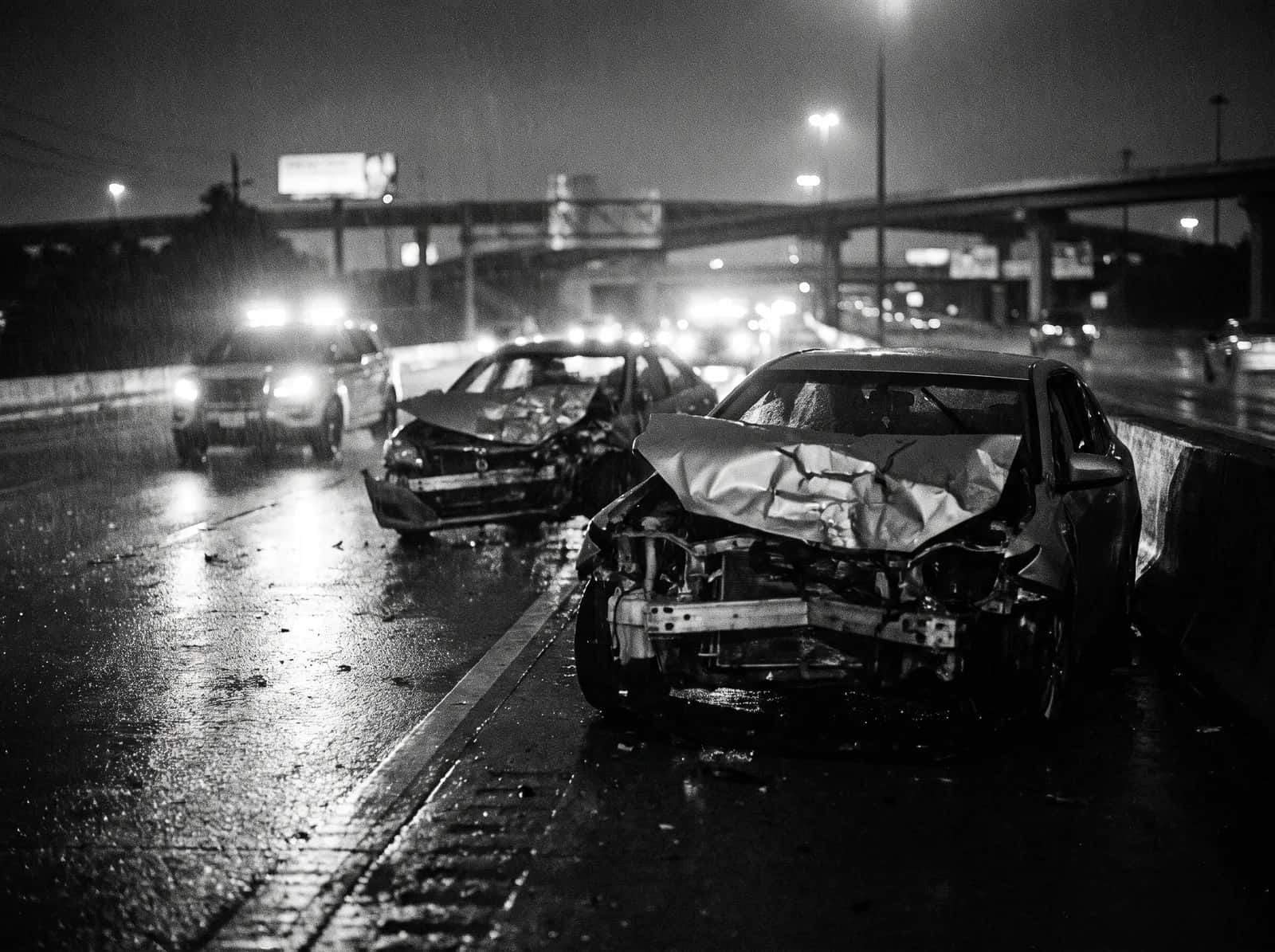
Stop and stay at the scene, call 911 if anyone may be hurt, exchange information, photograph the bike and the scene, keep your helmet and gear exactly as they are, and get medical care the same day. Texas law requires every driver and rider in an injury crash to stop and help.
Texas imposes the same scene duties on riders and drivers. Under Transportation Code section 550.021, the operator of any vehicle in a collision that results or is reasonably likely to result in injury or death must immediately stop at or as close to the scene as possible, determine whether anyone needs aid, and remain until the information exchange required by section 550.023 is complete. Leaving the scene of a crash involving serious bodily injury is a felony. Section 550.026 requires immediate notice to police or the sheriff when someone is injured or killed or a vehicle cannot be normally and safely driven, which describes many motorcycle crashes. If you can move, get out of live traffic first.
Get checked even if you rode away. Adrenaline can mask pain, and injuries such as fractures or a head injury are not always obvious at the scene. Tell the paramedics and the emergency doctor about every symptom, including headache, dizziness, or confusion, and mention whether your helmet struck the pavement. Same-day care protects your health and creates the medical record that ties the injuries to the crash. If you leave by ambulance before talking to the officer, ask a friend or family member to collect the other driver's details and photograph the scene, or get the crash report number later from the agency that responded. Keep every discharge paper and follow-up instruction you receive.
Preserve the physical evidence riders often throw away. Keep your helmet, jacket, gloves, and boots exactly as they are, because scuffs, cracks, and tears show where and how you hit. Photograph the motorcycle before it is moved or repaired, along with the other vehicle, skid marks, gouges in the pavement, debris, traffic signals, and the view from where the other driver was. Ask witnesses for names and phone numbers, and look for business, home, and traffic cameras nearby, since footage can be recorded over quickly. If your bike or helmet has a camera, or a GPS app recorded the ride, save the file. Do not let the bike be salvaged or repaired until it has been documented.
Expect questions about your helmet. Transportation Code section 661.003 requires helmets for riders and passengers under 21 and allows riders 21 and older to ride without one if they completed an approved motorcycle safety course or are covered by a health plan with benefits for motorcycle crash injuries. Lawful riding without a helmet does not bar your claim. If an insurer argues that not wearing one caused or worsened a head injury, that argument goes to your share of responsibility under Chapter 33 of the Civil Practice and Remedies Code, requires medical proof, and has nothing to do with fractures, road rash, or other injuries that a helmet would not have prevented. Keep proof of your course completion or health coverage.
Report the crash to your own insurer and check whether your motorcycle policy includes uninsured and underinsured motorist coverage or medical payments coverage. Do not give the other driver's insurer a recorded statement or accept an early offer while you are still treating, because motorcycle injuries can take months to fully understand. Other pages on this site cover how fault is decided in a motorcycle accident, whether you need a helmet to recover, and when to hire a lawyer. The general two-year deadline in Civil Practice and Remedies Code section 16.003 applies to a lawsuit. Owsley Law Firm represents injured riders across Texas, preserves the bike and gear evidence, and charges no fee unless it wins.
What to do, step by step
- Stop, check for injuries, and call 911.
- Exchange name, address, registration, and insurance information.
- Photograph the bike, the other vehicle, the road, and the view lines.
- Keep your helmet and gear exactly as they are.
- Get medical care the same day.
If the other driver leaves, note the plate, description, and direction of travel and report it to police. Uninsured motorist coverage can apply to a hit-and-run, though Texas requires actual physical contact for that coverage.
Riders who were lawfully riding without a helmet should keep their safety course certificate or proof of health coverage, because insurers often ask for it early.
Mistakes that cost people money
- Riding home without getting checked.
- Repairing or salvaging the bike before it is documented.
- Discarding a damaged helmet or jacket.
Related questions
Do I have to call police after a motorcycle crash?
Yes, if anyone is hurt or killed or a vehicle cannot be safely driven.
Should I keep my damaged helmet?
Yes. It shows impact points and can be important evidence.
Can I recover if I was partly at fault?
Yes, if your share is 50 percent or less, with your recovery reduced by that share.
Sources
Sources this page relies on
Read next