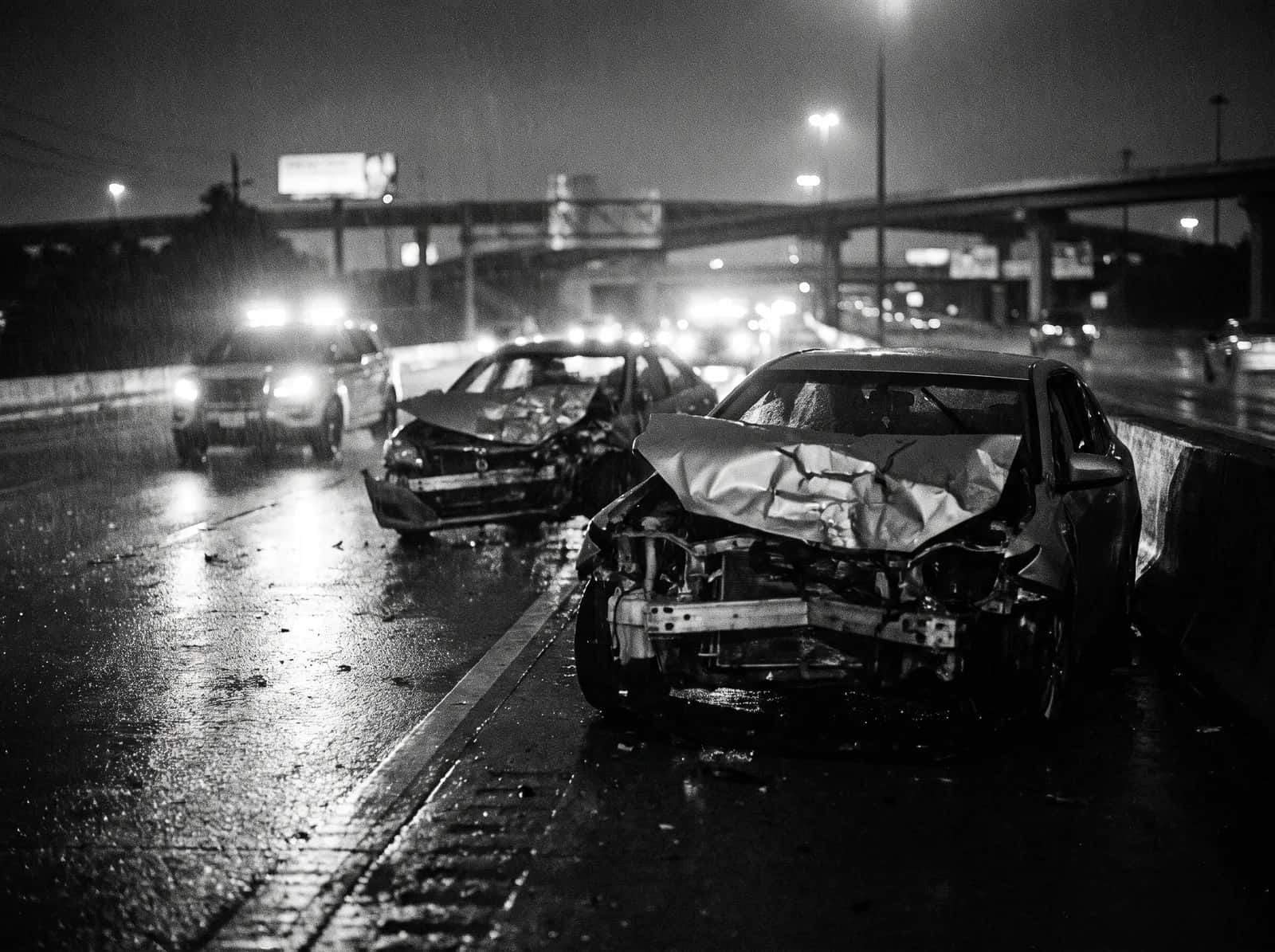

Get medical care the same day, photograph everything before the scene is cleared, get the HPD report number, report the crash to your own insurer without giving the other carrier a recorded statement, and call a lawyer before accepting any offer.
Houston scenes are cleared fast, especially on the freeways, so the first minutes matter. Photograph the vehicles, the road, skid marks, debris, the signals, and your injuries. Get names and numbers from witnesses; passing drivers who stopped rarely come back.
Get examined the same day even if you feel fine. Adrenaline hides injuries, and a gap between the crash and the first visit is the insurer’s favorite argument. Memorial Hermann, Ben Taub, and Houston Methodist handle serious injuries; an urgent care visit starts the record for lesser ones.
Ask the officer for the crash report number. Houston Police Department reports, on Texas form CR-3, are available through the TxDOT Crash Report Online Purchase System in about ten days.
Report the crash to your own insurer, as your policy requires, but decline a recorded statement to the other driver’s carrier. Keep every bill and receipt. Stay off social media about the crash. Then call Owsley Law Firm. Both Houston offices are minutes from the courthouse, the consultation is free, and there is no fee unless the firm wins.
What to do, step by step
- Move to safety if you can, call 911, and ask for medical help even if you feel fine.
- Photograph the vehicles, the plates, the road, signals, debris, and your injuries before the scene is cleared.
- Get names, phone numbers, and insurance details from every driver, and contact information from witnesses.
- Ask the officer for the crash report number and the agency that investigated it.
- See a doctor the same day, and follow the treatment plan.
- Report the crash to your own insurer, decline a recorded statement to the other driver's carrier, and call a lawyer.

Texas law sets the baseline. Transportation Code Chapter 550 requires drivers involved in a crash to stop, exchange information, and render reasonable aid, and it requires a report to police when there is an injury or death. If no officer investigates, there is no longer a driver's own crash report to file with TxDOT (that requirement was repealed in 2017), so photograph everything, exchange information, and report the crash to your insurer. Leaving before exchanging information can be a crime, so stay until it is done.
In Houston, the agency that responds depends on where you are. The Houston Police Department covers streets inside the city, the Harris County Sheriff and constables cover unincorporated areas, and DPS often handles the freeways outside city limits. The report number should come from whoever worked the scene, and the report is later available through the TxDOT online system.
Vehicle towing in Houston deserves a mention. If your car is towed to a storage facility, storage charges accumulate daily and facilities are regulated under Occupations Code Chapter 2303, which caps the daily storage fee. Retrieve personal belongings promptly, ask for paperwork, and tell your lawyer where the vehicle is, because it may contain event data that needs to be preserved before repairs or salvage.
Finally, the first days shape the claim. Keep a simple record of symptoms, missed work, and expenses. Avoid posting about the crash or your recovery online, since insurers review social media. And do not sign anything from an insurer before you understand what it releases.
Should you move your car on a Houston freeway? Usually, if it can be driven. When a crash happens on a main lane, ramp, shoulder, median, or adjacent area of a freeway in a metropolitan area and every vehicle involved can be normally and safely driven, Transportation Code section 550.022 requires each driver to move as soon as possible to a designated collision investigation site, the frontage road, the nearest suitable cross street, or another suitable location to exchange information. A car can be normally and safely driven only if it does not need towing and can run under its own power in the usual manner without further damage or hazard. If you can do it safely, take a few photos of where the cars came to rest before you move.
What information do you have to exchange? Transportation Code section 550.023 requires each driver in a crash involving injury or an attended vehicle to give their name and address, the registration number of the vehicle, and the name of their liability insurer, and to show a driver’s license if asked. Under section 601.053, a driver must also show evidence of financial responsibility on request. Photograph the other driver’s license, insurance card, and plate rather than copying them by hand, and note whether the driver is in a company vehicle, a rideshare, or a city or METRO vehicle, because each changes who pays and which deadlines apply.
What if the other driver leaves, or your parked car was hit? A driver who strikes an unattended vehicle must stop and either find the owner or leave a written note with the driver’s and owner’s names and addresses and a statement of what happened, under Transportation Code section 550.024. If the driver is never identified, your uninsured motorist coverage can still apply, but Insurance Code section 1952.104 requires actual physical contact between the unknown driver’s vehicle and you or your property. Report a hit and run to the police right away and ask nearby businesses to keep any video before it is recorded over.
How do the insurers handle the first weeks? Your own insurer pays personal injury protection without regard to fault, and Insurance Code section 1952.156 requires PIP benefits to be paid within 30 days after the insurer receives satisfactory proof of the claim. The other driver’s insurer is different: the Texas prompt payment deadlines do not apply when another driver’s insurer is paying, though it must act in good faith. That adjuster may call within days asking for a recorded statement. You can decline and send facts in writing instead. For repairs, Insurance Code section 1952.301 says the other driver’s insurer may not require you to use a particular repair shop.
How and when do you get the crash report? Officers must submit the report to TxDOT within ten days under Transportation Code section 550.062, and reports filed with TxDOT can be bought online through the Crash Report Online Purchase System. Under section 550.065 the fee is $6, or $8 for a certified copy, and the full report is released to people directly concerned, including the drivers, vehicle owners, and their insurers. Read every field, including the diagram and the contributing factor codes, because adjusters rely on them for a first call on fault.
For example, suppose a driver is rear-ended in stop-and-go traffic on the Katy Freeway near the Beltway. Both cars still run, so the drivers move to the frontage road, exchange names, registration numbers, and insurers, and photograph each other’s licenses and insurance cards. The driver feels neck stiffness that evening and is seen at an urgent care clinic the next morning, then reports the crash to her own insurer and opens a PIP claim. She buys the CR-3 once it posts and gives the other insurer written facts instead of a recorded statement. How her claim resolves would depend on the medical records and the evidence of fault. This illustration is hypothetical and is not a prediction of any result.
Mistakes that cost people money
- Leaving the scene before exchanging information and getting the report number.
- Declining medical care because adrenaline hides the pain.
- Letting a towing company take the vehicle without knowing where it went.
- Posting photos or comments about the crash or your activities on social media.
Related questions
Do I have to call the police for a minor crash in Houston?
You must report to police when there is an injury, death, or significant damage. Even in a minor crash, a report creates an official record of the parties and insurance that protects you later.
Which hospital should I go to after a Houston crash?
For serious injuries, emergency responders will take you to the appropriate trauma center. For lesser injuries, any emergency room or urgent care that documents your symptoms starts the medical record, which is what matters most.
Should I move my car after a crash?
If it is safe and the car is drivable, moving it out of traffic is reasonable and often required. Photograph the positions first if you can, and never put yourself at risk to preserve a scene.
How do I get a police report for a car accident in Houston?
Ask the officer for the report number and the name of the agency. Reports filed with TxDOT can be bought online through the Crash Report Online Purchase System. Under Transportation Code section 550.065 the fee is $6, or $8 certified, and the full report goes to people directly concerned, such as the drivers, owners, and their insurers.
What if the driver who hit me in Houston has no insurance?
Your own uninsured motorist coverage can pay if you did not reject it in writing under Insurance Code section 1952.101, and PIP pays medical bills and lost income regardless of fault. Write down the driver’s name, license number, and plate, and make sure the crash is reported to the police.
How long do I have to file a claim after a car accident in Houston?
A lawsuit for injury or property damage generally must be filed within two years of the crash under Civil Practice and Remedies Code section 16.003. Your own policy requires prompt notice, and a claim against the City of Houston requires a written notice within 90 days under the city charter.
Can I leave the scene if nobody was hurt?
Only after exchanging information. Transportation Code sections 550.022 and 550.023 require drivers to stop and stay until they have given their name, address, registration number, and insurer, and shown a license if asked. Leaving first is an offense, and it is a Class B misdemeanor when the damage to all vehicles is $200 or more.
Sources
Sources this page relies on
- TxDOT Crash Report Online Purchase System
- Tex. Transp. Code ch. 550
- Tex. Occ. Code ch. 2303
- Tex. Transp. Code § 550.022
- Tex. Transp. Code § 550.023
- Tex. Ins. Code § 1952.104
- Tex. Transp. Code § 550.024
- Tex. Ins. Code § 1952.156
- Tex. Ins. Code § 1952.301
- Tex. Transp. Code § 550.062
- Tex. Transp. Code § 550.065
- Tex. Ins. Code § 1952.101
- Tex. Civ. Prac. & Rem. Code § 16.003
Read next