TxDOT's schedule for the I-35 Capital Express Central project in Austin shows segments under construction from 2024 and work in the downtown and University segments planned through 2033. Long work zones change how crashes happen and who may share responsibility.
TxDOT updated the schedule for its I-35 Capital Express Central project in September 2026. The project covers I-35 from US 290 East to SH 71/Ben White Boulevard through central Austin. According to TxDOT, it will lower the mainlanes, add two non-tolled managed lanes in each direction, and remove the upper decks, along with new east-west crossings and more than 19 miles of shared-use paths.
TxDOT's segment schedule lists the Martin Luther King Jr. Boulevard bridge segment for 2024 to 2026, the Lady Bird Lake segment for 2025 to 2033, the drainage tunnel and pump station for 2025 to 2029, and the Downtown and University segments for 2027 to 2033. In other words, drivers on I-35 through Austin should expect lane shifts, closures, and changing ramps for years.
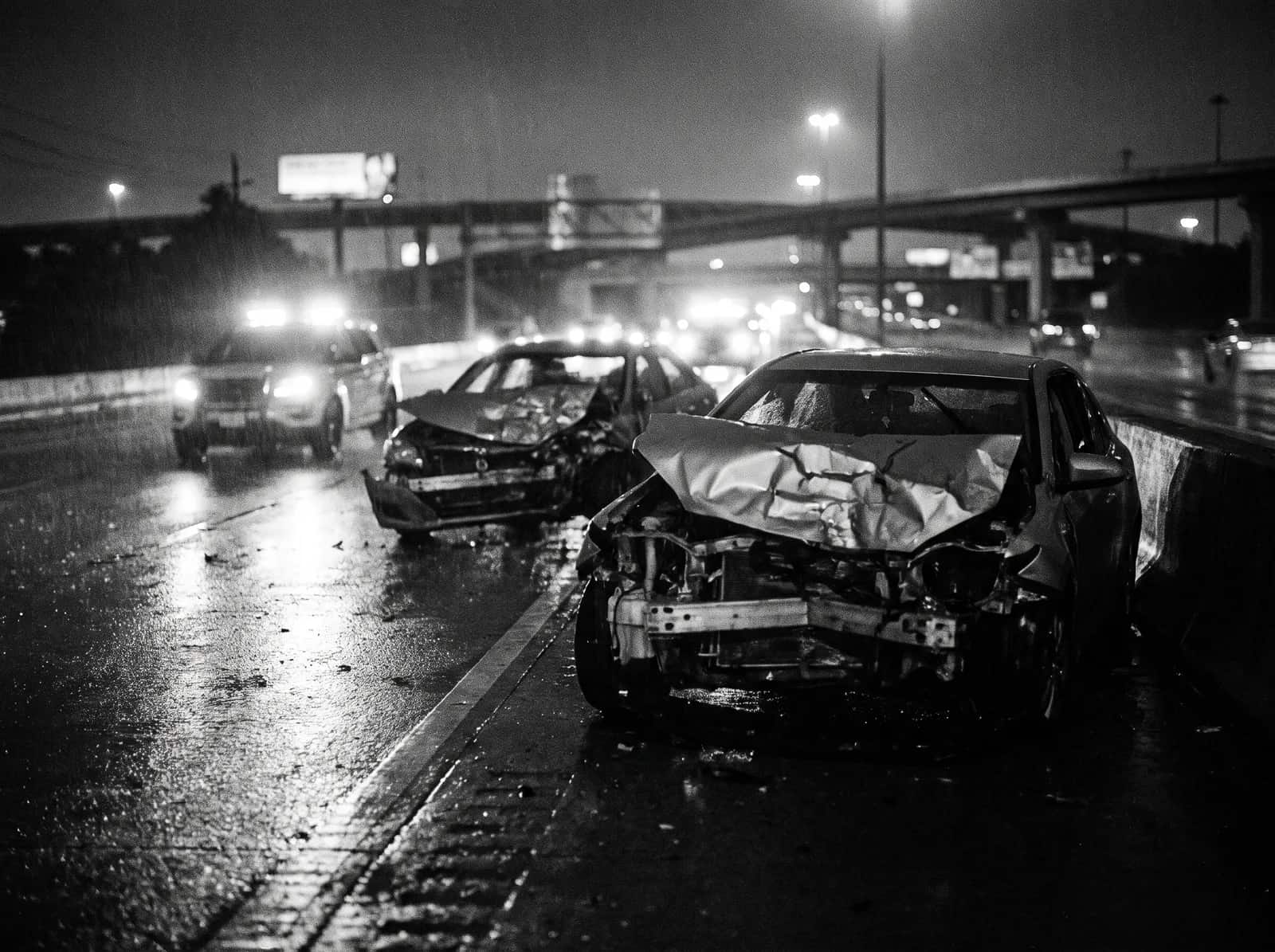
Work zones change how crashes happen. Lanes narrow, shoulders disappear, exits move, and traffic slows suddenly. Rear-end collisions and sideswipes in construction zones are common, and a crash there can involve more than one responsible party. The driver who hit you is the usual starting point, but a contractor whose traffic control was unsafe may share fault.
Texas also treats work zones seriously in its traffic law. Under the work zone fine law, Transportation Code section 542.404, the minimum and maximum fines for most traffic offenses double in a construction or maintenance work zone when workers are present. That does not change the injury claim directly, but a citation in a work zone can be useful evidence of how the crash happened.
If the crash involved a road condition rather than another driver's conduct, the claim can become a claim against a government entity or its contractor. Claims against the State of Texas and its agencies run through the Texas Tort Claims Act, which limits the damages a government body pays and generally requires written notice within six months. Contractors are handled under their own rules. These claims turn on records that change as the project moves: traffic control plans, daily logs, and photos of how the zone was set up that day.
Fault is shared by percentage in Texas. Under proportionate responsibility, a jury assigns each party a share of fault, your damages are reduced by your share, and you recover nothing only if your share is more than 50 percent. In a work zone, insurers often argue that the injured driver should have slowed down more, so the evidence of signs, lane markings, and sight lines matters.
What to do after an I-35 work zone crash: photograph the signs, cones, barriers, and lane markings as they were, not just the cars; note the nearest cross street or mile marker; get the crash report number from the officer; and write down whether workers or equipment were present. The scene may look different the next morning.
Travis County's own numbers show what is at stake. TxDOT's 2025 county data counted 15,939 reported crashes in Travis County, 136 fatal crashes, and 143 people killed. Many of the most serious crashes happen on the freeways that carry the most traffic, and I-35 is the spine of the county.
Insurance is often the next problem. Texas requires only 30/60/25 in liability coverage under Transportation Code section 601.072, which is $30,000 per injured person, $60,000 per crash, and $25,000 for property damage. In a serious work zone crash, the at-fault driver's policy may not be enough, so your own uninsured and underinsured motorist coverage and PIP matter, and a contractor's commercial policy may be available if the contractor shares fault.
Owsley Law Firm handles Austin crash cases from its Houston offices and meets Austin clients by appointment. There is no fee unless we win. Call any time; the team answers 24/7.
Related
Read next
Sources