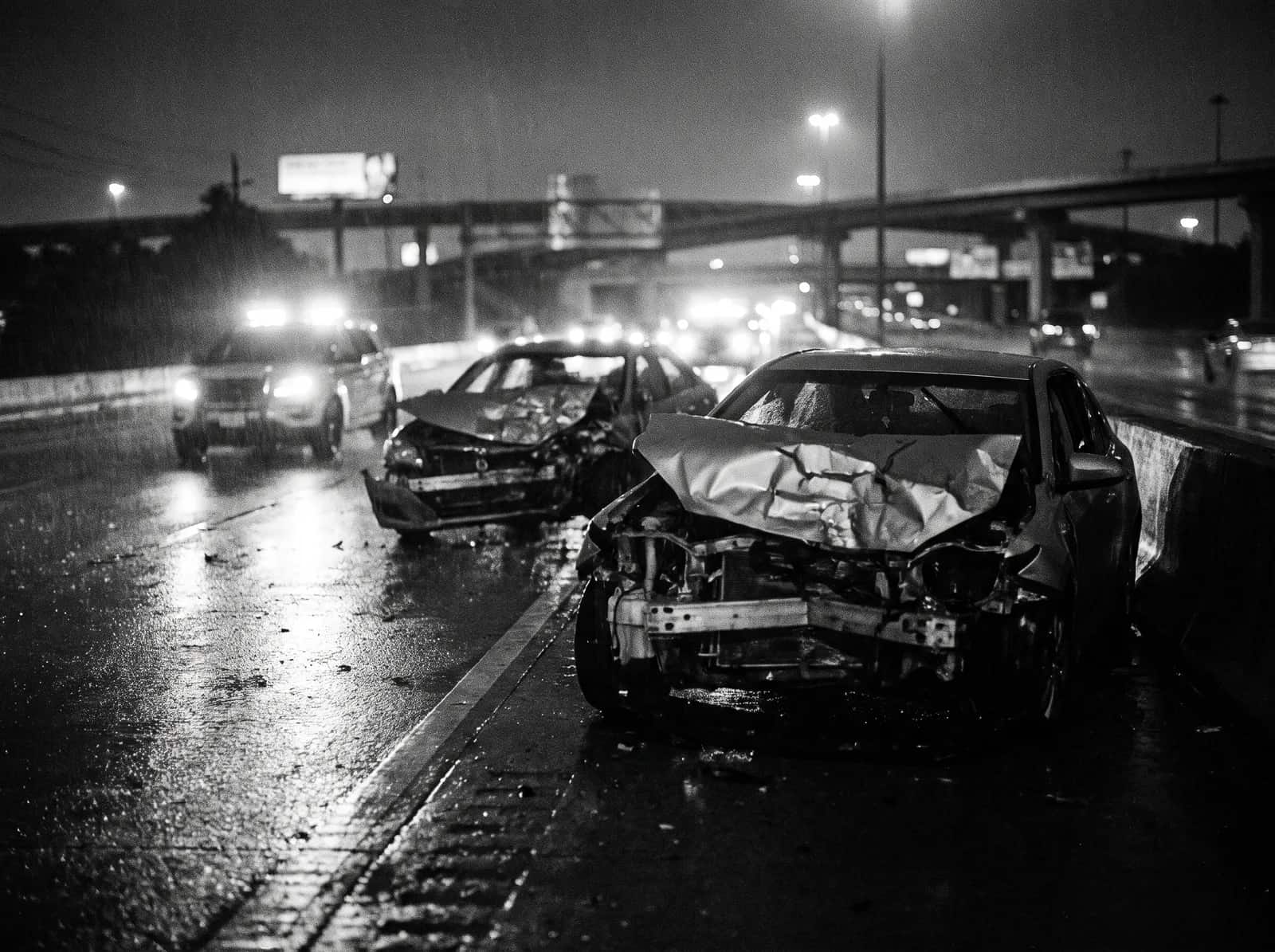

In Texas, a construction zone crash can be a claim against the driver who caused it, a contractor that set up the work zone unsafely, and in limited cases a government entity under the Texas Tort Claims Act. Work zones on I-45, I-10, and other Texas highways bring lane shifts, narrow lanes, and sudden stops. Owsley Law Firm investigates every responsible party and charges no fee unless it wins.
Why are construction zones so dangerous?
Work zones force drivers to do several difficult things at once: slow down from highway speed, follow shifting lanes, merge, and watch for workers and equipment. Lanes may be narrower, shoulders may be gone, and pavement may change abruptly. Rear-end crashes from sudden stops and sideswipes in narrowed lanes are common. Houston has had major long-term projects on I-45, the 610 Loop, I-10, and US-290, and work zones are part of daily driving.

Who can be liable for a work zone crash?
More than one party may share responsibility.
- The driver who was speeding, following too closely, distracted, or changed lanes unsafely
- The general contractor or subcontractor responsible for traffic control
- A company whose equipment, debris, or materials were left in a travel lane
- A trucking company whose driver caused the crash
- A government entity such as TxDOT, a county, or a city, but only within the narrow limits of the Texas Tort Claims Act
What duties do contractors have?
Contractors working on Texas roads must follow traffic control plans and standards for signs, barrels, barriers, lane closures, and flaggers. Common failures include lane shifts with inadequate warning, missing or misplaced signs and barrels, abrupt pavement drop-offs left unprotected, steel plates that are loose or raised, and debris or equipment left in a lane overnight. A contractor that creates a dangerous condition may be liable for crashes it causes. Contracts, daily logs, inspection records, and traffic control plans are key evidence.
What about claims against TxDOT or a city?
Claims against government entities are limited by the Texas Tort Claims Act, Chapter 101 of the Civil Practice and Remedies Code. A government entity may be liable for certain premises defects and for failing to correct a missing or malfunctioning traffic sign or signal within a reasonable time after notice, under section 101.060. Damages are capped, and formal notice of the claim is generally required within six months under section 101.101, with some city charters requiring shorter notice. Contractors performing the work are generally not protected by these caps.
What evidence matters after a work zone crash?
Work zones change from day to day, so the condition at the time of the crash has to be documented fast. Photograph the signs, barrels, lane markings, and any drop-off or debris. The firm requests the traffic control plan, the contractor’s daily logs and inspection records, the project contract, video from TxDOT cameras and nearby vehicles, the crash report, and event data from the vehicles involved.
What if a highway worker was hurt?
Highway workers injured by a passing driver usually have a workers’ compensation claim through their employer and may also have a third-party claim against the driver who struck them. Texas law requires drivers to move over or slow down for stopped emergency and TxDOT vehicles under Transportation Code section 545.157, and fines for many traffic offenses double in a marked construction zone when workers are present.
How much is a construction zone crash claim worth?
The value depends on the injuries, the medical bills, lost wages, lasting impairment, fault, and the insurance or other resources available. Construction zone cases can involve several defendants, including a driver with minimum insurance and a contractor with substantial commercial coverage. Identifying the contractor’s role early can change the outcome, because government caps do not protect private contractors.
What injuries happen in work zone crashes?
Work zone crashes range from rear-end impacts in stopped traffic to high-speed crashes into barriers, equipment, and other vehicles. Rear-end impacts cause neck and back injuries and concussions. Crashes into concrete barriers or the back of a stopped truck can cause fractures, head injuries, and internal injuries. Motorcyclists face special danger from grooved pavement, loose gravel, and uneven lanes. The claim should account for the full course of treatment and any lasting limitations.
What should you do after a construction zone crash?
Move to safety if you can and call 911. Photograph the work zone layout before it changes. Get the name of the contractor, which is often on signs or equipment, and the names of any workers or flaggers who saw the crash. Get medical care and keep records. Do not give recorded statements to insurers for the other driver or contractor before getting advice. Note the short notice deadline for any government claim, along with the two-year filing deadline under section 16.003.
Common questions
What clients ask about construction zone crashes.
Can I sue the construction company for a work zone crash?
Yes, if the contractor’s setup, signs, or conditions contributed. Contractors are not shielded by the damages caps that protect government entities.
Can I sue TxDOT for a construction zone accident?
Only within the Texas Tort Claims Act, which waives immunity in limited situations, caps damages, and requires formal notice, generally within six months.
Who is at fault for a rear-end crash in a work zone?
Usually the driver who struck from behind, for following too closely or speeding for conditions. A sudden unmarked lane closure can shift some fault to the contractor.
What if a steel plate or pothole in the work zone caused my crash?
That points to the contractor and possibly the government entity. Photograph it immediately, because it may be fixed quickly.
How long do I have to file?
Two years under section 16.003 for most claims, but notice to a government entity is generally due within six months, and some cities require it sooner.