
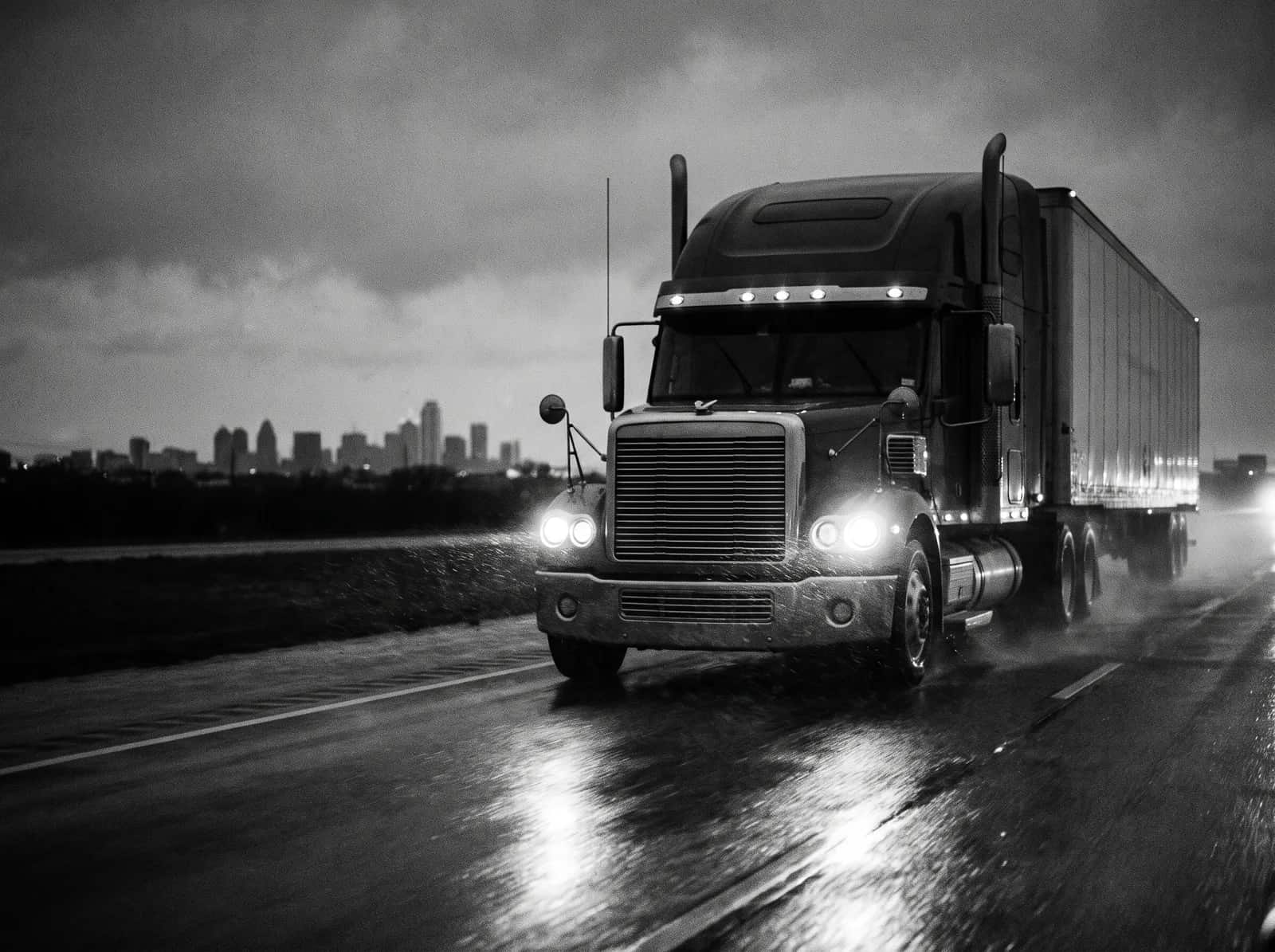

In Corpus Christi, a person hurt in a truck accident caused by someone else can recover medical costs, lost income, and pain under Texas law. Owsley Law Firm handles Corpus Christi truck accidents from its Houston offices, comes to you, and charges no fee unless it wins. Call before you speak with any insurer.
Truck Accidents in Corpus Christi
Where do Corpus Christi truck accidents happen?
Refinery Row and the Port of Corpus Christi put tankers and container trucks on I-37, US-181, and SH-44 around the clock.
Corpus Christi truck cases come from Refinery Row and the port. Tankers and container trucks run I-37, US-181 over the Harbor Bridge, and SH-44 to the west around the clock, and crosswinds on the bridge and the causeway make rollovers and jackknifes more common than inland. SPID’s commuter traffic meets that freight at the Crosstown interchange. The firm’s Corpus Christi truck cases most often begin on I-37 through Refinery Row or on the Harbor Bridge approaches.
Corridors where Corpus Christi truck accidents cluster
- SH-358 South Padre Island Drive between the Crosstown and Airline Road
- Crosstown Expressway (SH-286) at SPID
- I-37 through Refinery Row and the Harbor Bridge approach
- US-181 across the Harbor Bridge to Portland
- Ocean Drive and Shoreline Boulevard downtown
- SH-44 and Leopard Street on the west side
Cases from Corpus Christi
What does a Corpus Christi truck accident case look like?
A tanker truck leaving Refinery Row on I-37 rear-ends a commuter at the Harbor Bridge approach.
How often are commercial trucks involved in Nueces County crashes?
TxDOT recorded 323 crashes involving commercial motor vehicles in Nueces County in 2024, with 3 deaths and 5 suspected serious injuries. The freight behind those trucks moves through one of the country's busiest energy ports.
TxDOT's 2024 commercial motor vehicle table counts 323 crashes in Nueces County, including 3 fatal crashes, 5 people with suspected serious injuries, 42 with suspected minor injuries, and 59 with possible injuries. Those numbers are smaller than in Harris or Dallas County, but a truck crash rarely produces a minor claim: an 80,000-pound vehicle against a passenger car causes the fractures, spinal injuries, and brain injuries that change a person's working life.
In its 2025 year-end figures, the port put total ship channel volume at 203.4 million tons, of which crude oil made up 127.4 million. Pipelines and ships carry most of that, but the terminals, refineries, and plants along the channel still depend on trucks for equipment, chemicals, aggregate, and finished products, and those trucks use I-37, US 181, SH 44, and SH 35.
TxDOT also recorded 378 work zone crashes in Nueces County in 2024, with 4 deaths. Several major highway projects in the area put trucks, lane shifts, and commuters in the same space, which is a common setting for truck crashes.
Which Corpus Christi roads carry the port's oversize and overweight loads?
Texas law lets the Port of Corpus Christi Authority issue oversize and overweight permits for cargo on its own roads and, with state authorization, on listed highways, including US 181, SH 35, and SH 361 north of the bay.
Transportation Code Chapter 623, Subchapter O, allows the Port of Corpus Christi Authority to issue permits for oversize or overweight vehicles carrying cargo on roads it owns and maintains in Nueces and San Patricio counties. Subchapter P, in section 623.303, allows the Texas Transportation Commission to authorize the port to issue permits on listed highways, including US 181 from Burleson Street in Corpus Christi to Midway Road in San Patricio County, SH 35 from Burleson Street to FM 3512, and SH 361 from SH 35 to FM 1069 in Ingleside.
A permit is a record. The statute requires it to state the kind of cargo, the maximum weight and dimensions of the equipment, the kind and weight of each commodity, the conditions of the permit, and where the cargo was loaded, and the port must report its permits to the state. After a crash with a heavy-haul truck, the permit shows whether the load and the route were within what was allowed, and a truck that exceeded its permit or left the permitted route raises its own questions.
Many of these routes cross the county line. A crash on US 181 past the Nueces Bay Causeway, or on SH 35 or SH 361 toward Gregory, Portland, or Ingleside, happens in San Patricio County, which affects the investigating agency and where the case can be filed.
Why do Laredo freight trucks run SH 44 through Robstown?
TxDOT calls SH 44 a primary connecting route between the inland Port of Laredo and the seaport of Corpus Christi, and federal law added SH 44 from Freer to Corpus Christi to the future I-69 system in 2015.
TxDOT's SH 44 Robstown route study explains that the FAST Act, signed December 4, 2015, added SH 44 from Freer to Corpus Christi to the I-69 System in Texas, and that the segment through Robstown does not meet interstate standards. TxDOT studied route options for upgrading SH 44 between FM 1694 and CR 81 because operating conditions through Robstown impede freight between the two ports.
For a person hurt on SH 44, that means the truck may belong to a carrier based in Laredo, San Antonio, or elsewhere, hauling freight between a border crossing, a warehouse, and the port. Robstown Police reported 179 crashes in 2024, and crashes on SH 44 outside the city limits can fall to other agencies. The carrier's home base, its USDOT number, and whether the trip crossed state lines all affect which rules apply and where the case can be filed.
Trucks on a route like this often run tight schedules between a border crossing and a terminal appointment. Dispatch records, terminal gate times, and the electronic logging device data show whether the driver was pushed to meet them.
What is happening on I-37 at the Nueces River, and why does it matter for truck crashes?
TxDOT is rebuilding a 2.3-mile stretch of I-37 from Redbird Lane to the US 77 interchange, carrying about 45,000 vehicles a day, in four phases with detours and ramp changes.
TxDOT's project page describes an $85.7 million project in Nueces and San Patricio counties that widens the I-37 mainlanes to four lanes in each direction, raises and widens the Nueces River bridges, rebuilds the cross-street bridge and the I-37 northbound bridge over southbound US 77, and reconfigures the entrance and exit ramps. TxDOT notes that this section is part of a major hurricane evacuation route and a southbound gateway into Corpus Christi, and that construction is expected to last about five and a half years.
Work zones combine the conditions that make truck crashes worse: narrowed lanes, shifting traffic, reduced shoulders, and sudden slowdowns that a loaded truck needs more distance to handle. A truck driver who follows too closely or enters a work zone too fast is responsible for the crash that results.
A contractor's traffic control can also be part of the case. On a TxDOT project, Civil Practice and Remedies Code section 97.002 protects a contractor that was complying with the contract documents material to the condition that caused the crash, so the traffic control plan, daily logs, and inspection records for the crash date are the evidence that decides whether the contractor shares responsibility.
Do federal or Texas hours-of-service rules apply to a Corpus Christi truck driver?
It depends on the trip. Interstate drivers follow 49 CFR Part 395, generally 11 hours of driving after 10 hours off. Drivers who stay within Texas follow state rules allowing 12 hours of driving after 8 hours off.
Under 49 CFR 395.3, a property-carrying driver in interstate commerce may drive up to 11 hours after 10 consecutive hours off duty, within a 14-hour window, with a 30-minute break after 8 hours of driving. Most trucks must record that time on an electronic logging device.
Texas Administrative Code, title 37, section 4.12, adopted by the Department of Public Safety, provides that the federal hours limits in 49 CFR 395.3 do not apply to intrastate commerce. Intrastate drivers may drive 12 hours after 8 consecutive hours off and may not drive after 15 hours on duty. A tanker shuttling between a terminal and a refinery inside Nueces County may be an intrastate trip, while a load headed to Louisiana or bound from out of state is interstate.
Either way, the records exist. Driver qualification files under Part 391, inspection and maintenance records under Part 396, and post-crash drug and alcohol testing under Part 382 can show whether the carrier followed the rules. Carriers must keep hours-of-service records for at least six months, but dashcam video and engine data can be lost much sooner, so a preservation letter should go out right away.
- Electronic logging device data
- Driver qualification file and testing records
- Dispatch and terminal gate times
- Inspection and maintenance records
- Port or state oversize and overweight permits
- Dashcam and engine data
How much insurance does a truck in Corpus Christi have to carry?
For interstate for-hire carriers of general freight, at least $750,000 under 49 CFR 387.9. The oil and hazardous materials tiers, $1 million and $5 million, also reach private carriers. Intrastate carriers follow amounts set by the state.
Under 49 CFR 387.3 and 387.9, the federal minimums apply to for-hire carriers of property in interstate commerce, and the tiers for oil and certain hazardous materials also apply to carriers hauling those materials whether they are for-hire or hauling their own product. A company truck carrying its own tools across state lines may not be subject to the federal minimum at all.
Trucks that operate only within Texas must register with the state, and under Transportation Code section 643.101, the Texas Department of Motor Vehicles sets the required insurance amount by rule, at a level that cannot exceed the federal requirement and that depends on the class and size of the vehicle and what it carries. That is why the carrier's registration and filings are among the first records to pull.
These are minimums. Many carriers carry excess or umbrella coverage, and the shipper, the broker, or a contractor may have their own policies. Finding every one of them is part of the first weeks of the case.

Who besides the driver can be responsible for a Corpus Christi truck crash?
The motor carrier, the company that loaded the trailer, a maintenance provider, and a freight broker that chose an unsafe carrier can each share responsibility, depending on the facts.
A carrier is generally responsible for its driver's conduct on the job and for its own failures in hiring, training, scheduling, and maintenance. A terminal or contractor that overloaded a tanker or failed to secure a flatbed load can share responsibility for a rollover or a load shift on a ramp. A shop that did faulty brake work can be responsible for a brake failure.
Freight brokers arrange many of the loads moving through the Coastal Bend. The U.S. Supreme Court's May 2026 decision in Montgomery v. Caribe Transport II allows a negligent selection claim against a broker to go forward under state law, because federal law does not preempt it. The claim still turns on the facts, such as what the carrier's safety history showed when the broker picked it.
A company that only leased the truck is generally protected by the federal Graves Amendment from liability based on ownership alone. Sorting the roles of each company, and the contracts among them, is what reveals all of the insurance.
What should you do at the scene of a tanker or hazmat truck crash?
Get away from any leak, get medical care, and if it is safe, photograph the placard, the USDOT number, and the trailer. Exposure injuries need their own medical record.
Tankers and hazmat trucks carry a diamond-shaped placard with a four-digit number that identifies the material. The shipping papers in the cab show what was carried, who shipped it, and who loaded it. If you can do so safely, photograph the placard, the company name and USDOT number on the cab door, the trailer number, and the plates. If there is a spill, vapor, or fire, distance comes first.
Exposure can add injuries that a normal crash does not: chemical burns, breathing problems, and eye injuries. Tell the emergency department what you were near and what you smelled or touched, so the chart records the exposure. If an evacuation or shelter order followed the crash, keep a record of it.
A hazmat crash often brings more defendants, the carrier, the shipper that classified and packaged the material, and the company that loaded the tank, each with its own insurance. The carrier's own response team usually arrives quickly, so do not give a recorded statement to the carrier or its insurer before you have advice.
How does a Texas commercial truck trial work?
Under Chapter 72 of the Civil Practice and Remedies Code, a commercial vehicle defendant can ask for a two-phase trial, with compensatory damages first and exemplary damages second.
Section 72.052 requires the court to split the trial on a timely motion, filed by the later of 120 days after the defendant's answer or 30 days after a new claim is added against it. The jury decides liability and compensatory damages in the first phase and exemplary damages in the second.
If the employer stipulates in time that the driver was its employee acting within the scope of employment, section 72.054 generally makes its liability for the driver's ordinary negligence rest on that employment, and evidence on claims like negligent entrustment usually waits for the second phase. Section 72.053 still allows evidence in the first phase that the defendant violated a specific safety regulation or standard if the violation tends to prove a proximate cause of the injury.
Those rules shape how a Nueces County truck case is prepared from the first week: which records to request, which regulations the driver and carrier were bound by, and which violations can be connected to the crash itself.
Where are truck crash injuries treated, and how is fault divided?
CHRISTUS Spohn Hospital Corpus Christi Shoreline and Corpus Christi Medical Center Bay Area are Level II trauma centers on the current DSHS list. Fault is divided under Chapter 33 of the Civil Practice and Remedies Code.
The DSHS list, current as of October 1, 2026, also designates Driscoll Children's Hospital as Level III and CHRISTUS Spohn Hospital Corpus Christi South, Corpus Christi Medical Center Doctors Regional, and CHRISTUS Spohn Hospital Kleberg in Kingsville as Level IV. Patients needing a Level I center are often sent to University Hospital or Brooke Army Medical Center in San Antonio. Each hospital's records and bills, and the transport between them, belong in the claim, and each hospital's lien is limited under Property Code section 55.004.
Under section 33.001, an injured person recovers if 50 percent or less responsible, reduced by that share. Trucking insurers often argue that a car cut in front of the truck or stopped short. The truck's forward camera, engine data, and logging device often answer that. In a case with a driver, a carrier, and a broker, section 33.013 generally limits each defendant to its own share unless it is more than 50 percent responsible, so the allocation affects what can be collected.
Where is a Corpus Christi truck case filed?
Usually with the Nueces County District Clerk at 901 Leopard Street for a crash in the county, though a carrier's principal Texas office can create another venue, and some cases go to federal court in Corpus Christi.
Texas venue rules in Civil Practice and Remedies Code section 15.002 point first to the county where the crash happened, and also allow the home county of an individual defendant or the county of a company's principal Texas office. A carrier based in Laredo, San Antonio, or Houston can add a venue option. Crashes on the port permit routes north of the bay are in San Patricio County.
The Corpus Christi Division of the U.S. District Court for the Southern District of Texas covers Nueces, San Patricio, and eight other counties under 28 U.S.C. 124. A case against only out-of-state defendants worth more than $75,000 can be removed there, but not when a properly joined and served defendant, such as a Texas-resident driver, is a Texas citizen. The deadline to sue is generally two years from the crash under section 16.003.
How does the firm handle Corpus Christi truck cases, and what does it cost?
Preservation letters and record requests go out first. There is no fee unless the firm wins the case.
The first steps are letters to the carrier, any broker, and the shipper demanding that logging data, dashcam video, dispatch records, permits, and maintenance files be preserved; requests for the crash report; and a search for every policy, including the carrier's excess coverage and your own underinsured motorist coverage.
Owsley Law Firm handles Corpus Christi truck cases on a contingency fee, so there is no fee unless the firm wins the case. Clients may be responsible for case expenses, such as court costs, as set out in the written fee agreement. Steven Owsley has been licensed in Texas since 1985. The firm works with Coastal Bend clients from its Houston offices by phone, video, and mail, travels for depositions and court when the case requires it, and does not have an office in Corpus Christi.
Which truck rules apply on Corpus Christi roads
| Type of truck or trip | Hours rules | Minimum insurance |
|---|---|---|
| Interstate for-hire, general freight | 49 CFR Part 395: 11 hours driving after 10 off | $750,000 (49 CFR 387.9) |
| Interstate oil hauler, for-hire or private | 49 CFR Part 395 | $1,000,000 (49 CFR 387.9) |
| Certain hazardous materials, for-hire or private | 49 CFR Part 395 | $5,000,000 for listed hazmat (49 CFR 387.9) |
| Intrastate trip within Texas | 12 hours driving after 8 off; no driving after 15 on duty (37 TAC 4.12) | Set by Texas DMV rule (Transportation Code section 643.101) |
| Oversize or overweight load on a port route | Same as the underlying trip | Same as above; permit states cargo, weight, and dimensions |

What to do now
What should you do after a truck accident in Corpus Christi?
- Get examined the same day. Truck crashes cause injuries that surface late, and CHRISTUS Spohn Hospital Shoreline (Level II trauma) and Corpus Christi Medical Center, Bay Area take the serious ones from Corpus Christi.
- Photograph the truck's USDOT number, the company name on the door, the trailer, and the plates. On I-37 the rig is often towed within the hour.
- Move fast on the carrier's records. The truck's electronic logging data, dashcam video, and engine data sit with the trucking company, and federal rules only require hours-of-service records to be kept for six months, so a preservation letter should go out early.
- Get the Corpus Christi crash report. Corpus Christi Police Department reports are available through the TxDOT Crash Report Online Purchase System, usually within 10 days. The firm obtains it for clients at no charge.
- Do not give a statement to the trucking company's investigator or its insurer. They often start working the crash within hours; your own insurer only needs the basic facts.
- Know where the case goes. Corpus Christi truck accidents suits are filed in the Nueces County Civil District Courts, Nueces County Courthouse, or Nueces County Courts at Law depending on the crash location.
- Call the firm. Corpus Christi clients are handled from Houston by phone, video, and mail, and the firm travels to Corpus Christi for meetings, depositions, and court. The consultation is free.
Go deeper
More on truck accident claims in Corpus Christi and Texas.
Common questions
Corpus Christi truck accident questions
Which Corpus Christi roads have the most truck accidents?
I-37, US-181 and the Harbor Bridge, SH-44, and the Crosstown Expressway, with Refinery Row leading the count.
Are refinery truck crashes handled differently?
Hazardous-materials carriers carry higher federal insurance minimums and have rapid-response investigators. The firm’s preservation demand goes out the same week to protect the truck’s data and the load records.
What if a tanker from the Port of Corpus Christi hit me?
Federal law sets higher insurance minimums for trucks hauling oil and hazardous materials: at least $1 million for oil and up to $5 million for certain hazardous materials in bulk. Tankers serving the port and the I-37 refineries often fall in those categories. The placards on the tank and the shipping papers show what was hauled and which minimum applies.
Can a contractor be liable for a truck crash on the Harbor Bridge approaches?
Yes, if bad traffic control contributed. Narrowed lanes, sudden shifts, and missing warnings on the US-181 approaches can make a construction contractor share fault with the truck driver. Trucks need more distance to react to a lane change than cars. The contractor’s traffic control plan and daily logs for the crash date show how the zone was set up.
The truck that hit me was carrying an oversize load from the port. Does the permit matter?
Yes. A port or state permit states the cargo, weight, dimensions, and route allowed. A truck that exceeded its permit or left the permitted route raises questions about the carrier's conduct.
The driver said he never left Nueces County that day. Do federal hours rules still apply?
Not necessarily. Intrastate drivers follow Texas rules, which allow 12 hours of driving after 8 hours off and bar driving after 15 hours on duty. Violating those limits matters just as much.
I was hurt in the I-37 work zone near the Nueces River. Can the contractor be responsible?
Possibly. A TxDOT contractor that complied with the contract documents for the condition that caused the crash is protected, but one that did not can share responsibility with the truck driver.
The crash happened on SH 35 near Gregory. Is it still a Corpus Christi case?
It is a San Patricio County case for venue purposes, because the crash happened there. Other venues may be available depending on where the carrier is based.
Can a freight broker be sued for a truck crash in Corpus Christi?
Yes, when the facts show the broker negligently selected an unsafe carrier. The U.S. Supreme Court held in May 2026 that those claims are not preempted by federal law.
Should I give the trucking company's insurer a recorded statement?
You are not required to, and it is wise not to before getting advice. Report the crash to your own insurer with the basic facts.
Sources
Sources this page relies on
- TxDOT: 2024 Commercial Motor Vehicle Involved Crashes and Injuries by County
- Port of Corpus Christi: 2025 annual tonnage
- Transportation Code Chapter 623 (Port of Corpus Christi Authority permits)
- TxDOT: I-37 Redbird Lane to US 77 / Nueces River Bridge
- TxDOT: SH 44 Robstown route study
- Nueces County District Clerk
- Texas Administrative Code, 37 TAC 4.12 (intrastate hours of service)
- Civil Practice and Remedies Code Chapter 72 (commercial vehicle trials)