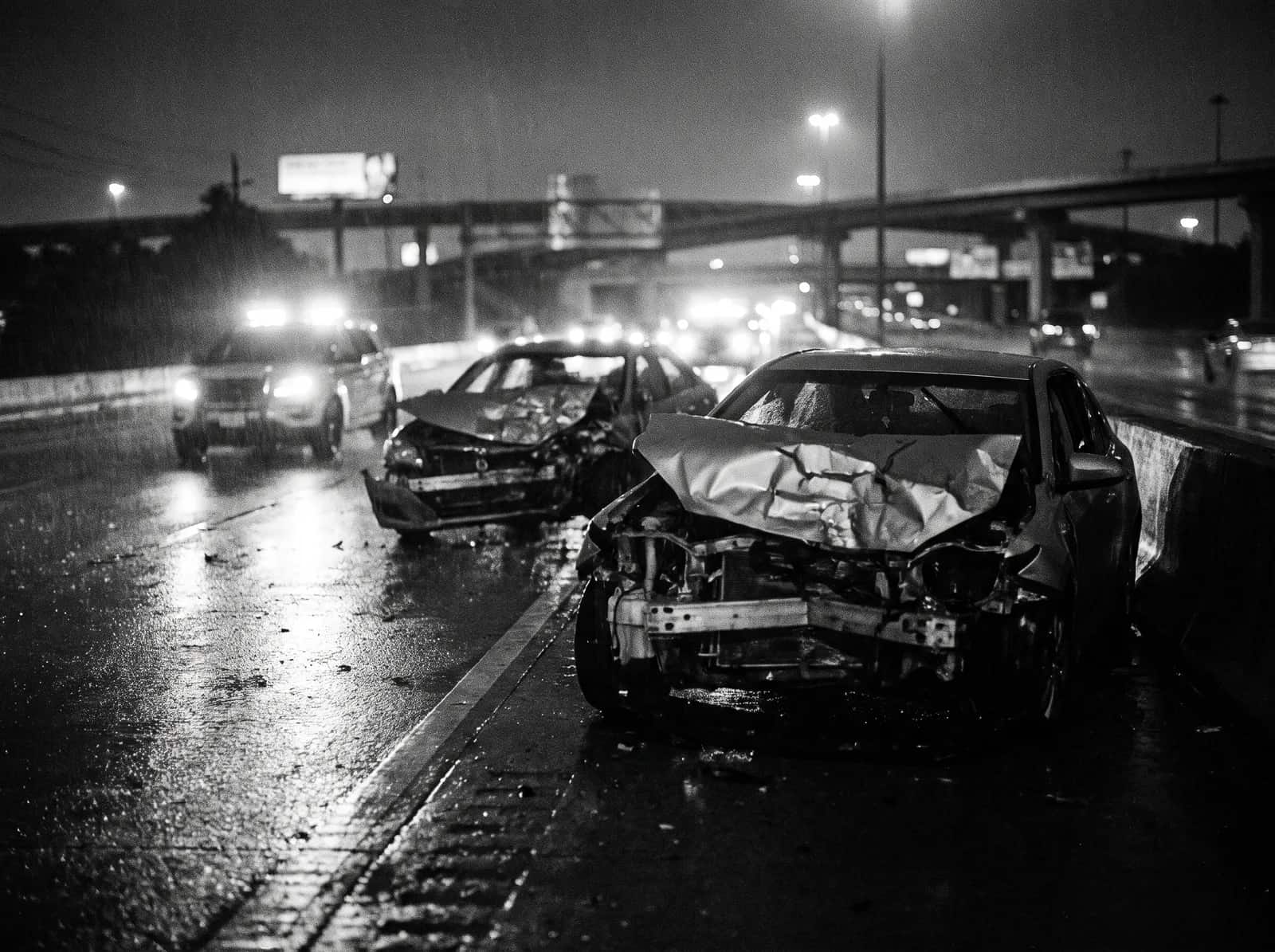

Texas Transportation Code section 545.060 requires drivers on laned roads to stay as nearly as practical within a single lane and to leave it only when the move can be made safely. In sideswipe and merge crashes, it is the rule that most often decides fault. Owsley Law Firm handles these claims statewide and charges no fee unless we win.
Sideswipes on Houston freeways often happen fast: a driver drifts, cuts over to make an exit, or merges into a car already in the lane. Each driver usually blames the other. Section 545.060 is the rule that sorts out who was supposed to yield.
The statute is short, but it covers more than lane changes. It also governs the center lane on three-lane two-way roads and lets officials post signs that ban lane changes on certain stretches. This page explains how each part applies after a crash.
What does section 545.060 require?
On a road with two or more marked lanes, a driver must stay as nearly as practical within one lane and may not leave it unless the move can be made safely.
The phrase that matters most is that a driver may not move from the lane unless that movement can be made safely. The burden is on the driver making the move to check that the space is clear. A driver who merges into another car generally failed that duty.
The rule also covers drifting. A driver who wanders over the line while distracted has not driven as nearly as practical within a single lane, even without intending to change lanes.

Who is at fault in a Texas sideswipe crash?
Usually the driver who left their lane. Fault can be shared if the other driver sped up into a closing gap or was also drifting.
In most sideswipes, the physical evidence shows which car crossed into the other’s lane: paint transfer, damage height and angle, and where the vehicles came to rest. Witnesses and dashcam video often settle the question.
Texas divides fault under Chapter 33. If both drivers moved toward the same space, a jury can split responsibility. An injured driver can still recover as long as their share is not greater than 50 percent, reduced by that share.
- Paint transfer and scrape direction
- Damage location on each vehicle
- Turn signal use, from witnesses or video
- Lane position at the point of impact
What about the center lane on a three-lane road?
On a three-lane road with two-way traffic, the center lane can be used only to pass when clear, to prepare for a left turn, or where signs allow.
Subsection (b) limits use of a shared center lane. A driver who uses it to travel long distances or to pass when oncoming traffic is near is outside the statute, and that fact weighs heavily in a head-on or left-turn crash.
Where the center lane is marked for left turns, a driver turning from it still has to yield to oncoming traffic under section 545.152.
Can a no-lane-change sign affect my claim?
Yes. Subsection (d) allows signs or markings that prohibit lane changes, and crossing them is strong evidence of fault.
Solid lines and posted no-lane-change zones are common near Houston interchanges and toll plazas. A driver who crossed one before the crash moved where the law said not to, which supports the injured driver’s claim.
What should you do after a sideswipe crash?
Photograph both vehicles and the lane markings before moving if it is safe, get witness contacts, and request the crash report.
Sideswipe claims are often word-against-word. Photos taken at the scene showing where each car sat, plus any dashcam footage, carry more weight than later recollection. Report the crash to your own insurer, and be careful with recorded statements to the other driver’s insurer.
How it is proven after a crash
- Dashcam or traffic camera video
- Photos of paint transfer and damage angles
- Lane marking and signage photos
- The CR-3 crash report
- Independent witness statements
Mistakes that cost people money
- Moving the vehicles before photographing lane position when it is safe to stay
- Agreeing that both drivers were equally at fault at the scene
- Waiting to request nearby business or traffic video
- Skipping medical care for shoulder, neck, or back pain
Frequently asked questions
Is merging into another car always the merging driver’s fault?
Usually. The statute puts the duty on the driver leaving the lane. Fault can be shared if the other driver sped up or drifted at the same time.
What if neither driver signaled?
Signal use is evidence, not the whole case. The question remains who moved into an occupied space. Both drivers’ conduct is weighed under Chapter 33.
Does this law apply to motorcycles?
Motorcycles have their own lane rule in section 545.0605, which gives a motorcycle full use of a lane and bans riding between lanes of traffic moving the same way.
Can I still recover if I was partly at fault?
Yes, as long as your share is not greater than 50 percent. Your recovery is reduced by your percentage of fault.
How long do I have to file a claim?
Generally two years from the crash under section 16.003, with shorter notice deadlines for claims against government vehicles.
This page is general information about Texas law and is not legal or medical advice. Every case depends on its own facts. Contact the firm for a free review of yours.
Keep reading