
The evidence extends beyond the crash report
A commercial collision may involve the truck driver, carrier, trailer owner, broker, shipper, maintenance company, manufacturer, or another contractor. Each may hold different records.
Records that may need to be preserved
The available evidence varies, but commercial operations can create records that do not exist in an ordinary passenger-vehicle claim.
- Electronic logging-device and hours-of-service data
- Engine-control and onboard-system information
- Driver qualification, training, and discipline records
- Inspection, maintenance, and repair history
- Dispatch, route, cargo, and company communications

Why timing matters
Retention periods and ordinary business practices can result in data being overwritten or documents being discarded. Prompt preservation requests and a focused investigation can help protect the record.
The preservation letter
A preservation letter, sometimes called a spoliation letter, is a written demand that the trucking company, its insurers, and related parties keep all evidence connected to the crash. It identifies the driver, the truck, the trailer, the date, and the categories of records at issue.
The letter does not create the duty to keep evidence, but it removes any excuse. If a party destroys or loses important evidence after receiving notice of a claim, Texas courts can instruct the jury about it or impose other sanctions. Sending it quickly, before routine retention schedules erase data, is one of the most important steps in a truck case.

Electronic data from the truck
Modern commercial trucks record far more than passenger cars. The engine control module can store speed, braking, throttle, and hard-braking events. Electronic logging devices record driving time and duty status. Many fleets add dashcams, forward-facing collision mitigation systems, and GPS or telematics platforms that track routes and speeds.
This data can show whether the driver was speeding, braked late, or had been driving beyond the hours allowed. Because it lives on the truck and on the carrier's servers, retrieving it usually requires an early request and, in some cases, an agreed protocol or a court order for a neutral download.
- Engine control module and event data
- Electronic logging device records and supporting documents such as fuel and toll receipts
- Dashcam, driver-facing camera, and collision mitigation footage
- GPS, dispatch messages, and telematics data
- Cell phone records for the driver around the time of the crash

Hours-of-service and fatigue
Federal hours-of-service rules in 49 CFR Part 395 limit how long a property-carrying driver may drive and require rest breaks and off-duty periods. Fatigue is a leading concern in truck crashes, and violations can point to unrealistic dispatch schedules or pressure from the carrier.
Comparing logs to fuel receipts, bills of lading, toll records, and dispatch messages can reveal falsified or inaccurate entries. Those supporting documents are held by different parties, which is another reason a broad and prompt preservation request matters.

The driver qualification file and maintenance records
Carriers must keep a driver qualification file for each driver under 49 CFR Part 391. It typically includes the employment application, motor vehicle record checks, medical examiner's certificate, road test or license information, and past employer inquiries. Gaps in the file or a poor driving history can support a claim that the carrier hired or kept an unsafe driver.
Inspection, repair, and maintenance duties are set out in 49 CFR Part 396. Brake records, tire records, pre-trip and post-trip inspection reports, and repair invoices can show whether a mechanical failure was preventable. In some cases, the trailer or truck itself should be inspected before it is repaired, sold, or returned to service.
Who else may be responsible
A truck crash rarely involves only the driver. The motor carrier is usually responsible for the acts of its employee driver, and it may also be directly responsible for negligent hiring, training, supervision, or dispatch. Other parties can include the trailer owner, a freight broker that selected an unsafe carrier, a shipper or loader responsible for an improperly secured load, a maintenance contractor, or a parts manufacturer.
Each of these companies may hold different records and different insurance. Identifying them early affects both who receives preservation notices and how much insurance is available to pay a serious claim.
Insurance on commercial vehicles
Federal rules set minimum financial responsibility for many for-hire motor carriers. For general freight, 49 CFR 387.9 sets a minimum of $750,000, and the amounts are higher for certain hazardous materials. Those figures are far above the Texas minimum for passenger vehicles under Transportation Code section 601.072.
Many carriers also carry excess or umbrella coverage. A complete evaluation identifies every policy that may apply before any settlement discussion, because an early offer measured against a single policy can leave significant coverage untouched.
Scene, vehicle, and witness evidence
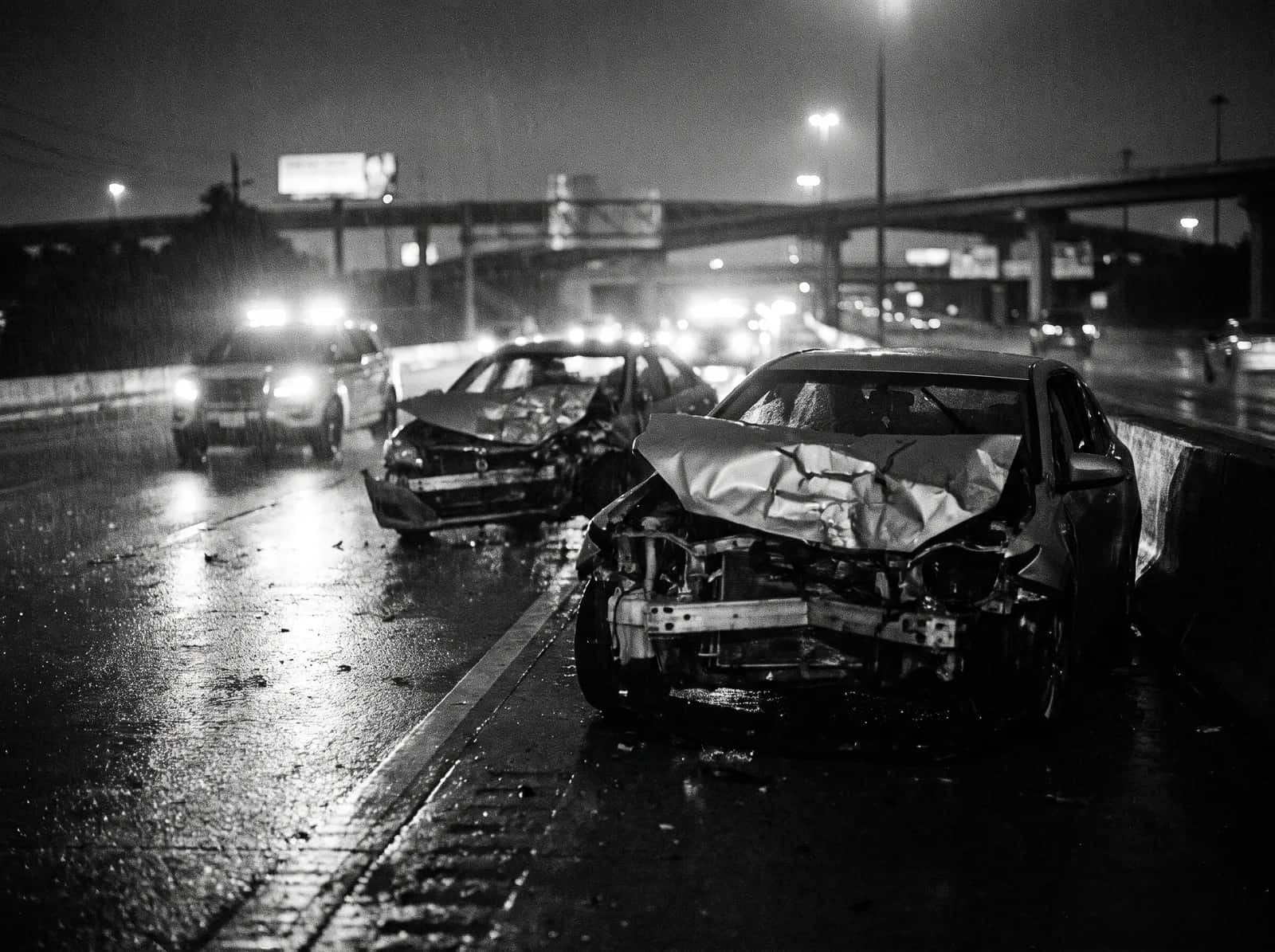
Truck crash scenes can produce evidence that does not appear in a normal car collision: gouge marks, debris fields showing how far cargo or parts traveled, tire marks from braking, and the final rest positions of a tractor and trailer. Photographs, measurements, and drone or survey images taken early can be preserved before the road is cleared.
Independent witnesses matter as well. Other drivers, nearby workers, and first responders may have seen the truck's speed, lane changes, or driver behavior. Their contact information is much easier to collect at the scene than weeks later, and the crash report, available through the TxDOT Crash Report Online Purchase System, can help identify them.
Common questions
Common questions
What is a spoliation or preservation letter in a truck accident case?
It is a written notice sent to the trucking company and its insurer demanding that they keep all evidence tied to the crash, including driver logs, electronic data, video, and maintenance records. It puts them on notice so that later loss or destruction of evidence can be challenged in court.
How long do trucking companies keep driver logs?
Federal rules generally require motor carriers to keep hours-of-service records for six months, so the record can disappear quickly. Other records, such as driver qualification files, must be kept longer. A prompt preservation letter is designed to stop routine deletion of anything relevant.
Can I sue the trucking company and not just the driver?
Yes, in many cases. A carrier is often responsible for its employee driver's negligence and may also be liable for its own negligent hiring, training, dispatch, or maintenance. Other companies, such as brokers or shippers, may be involved depending on the facts.
How much insurance does a commercial truck have?
For many for-hire carriers of general freight, federal rules under 49 CFR 387.9 require at least $750,000 in coverage, and hazardous materials carriers must carry more. Some carriers have additional excess policies. A full investigation identifies every policy that may apply.
This guide is not legal advice and does not create an attorney-client relationship. Deadlines and legal rights depend on the facts.
Discuss your circumstancesKeep reading