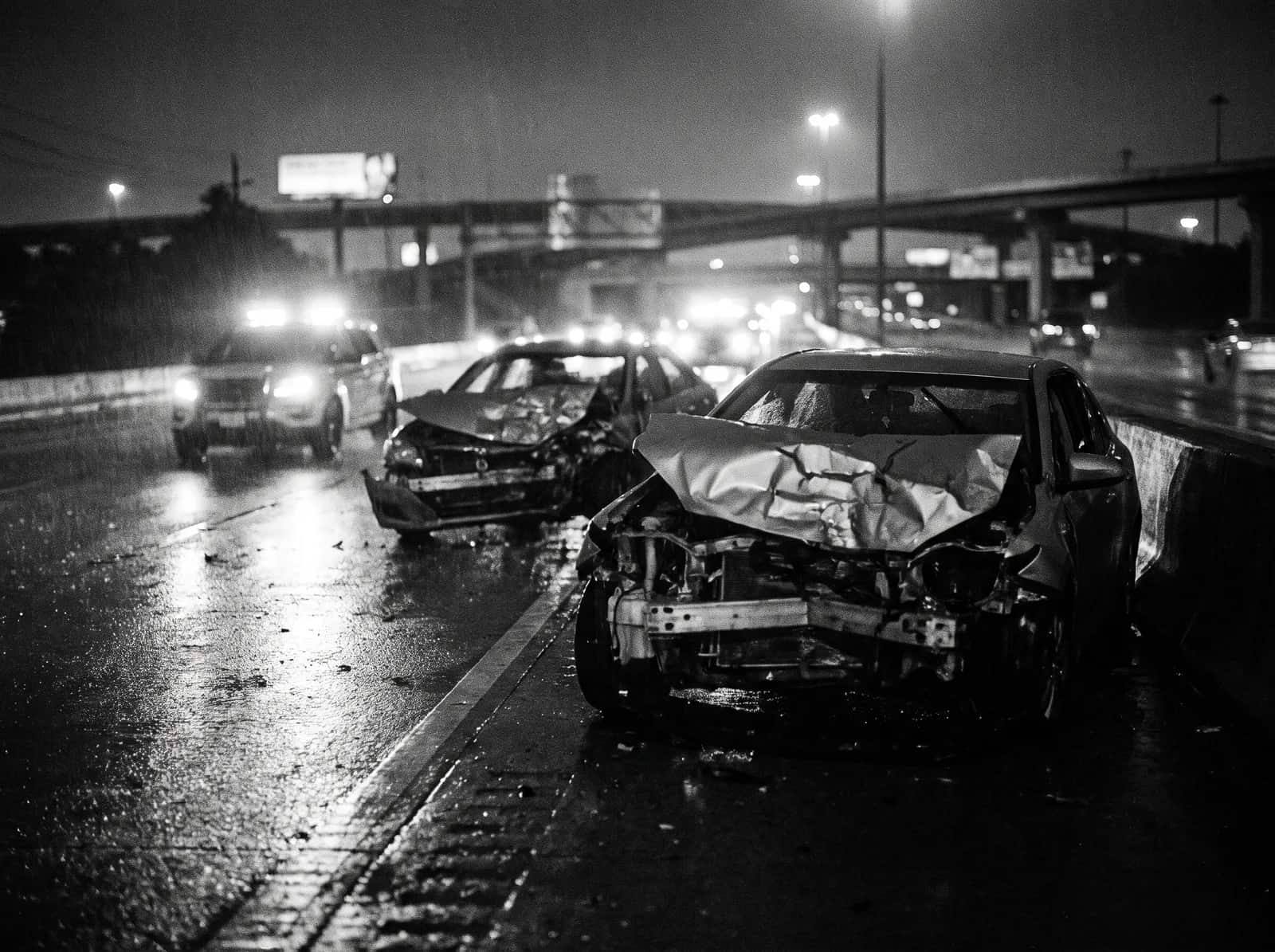

If a driver hit you while you were walking in Houston, you can claim against that driver’s insurance, and your own uninsured motorist coverage may help if the driver had little or none. Houston’s wide arterials and freeway frontage roads make these crashes severe. Owsley Law Firm handles Houston pedestrian cases and charges no fee unless it wins.
Why are Houston streets so dangerous for pedestrians?
Much of Houston was built for cars. Wide arterials like Westheimer, Bellaire, Richmond, and Bissonnet carry fast traffic past long blocks with few marked crossings. Freeway frontage roads put pedestrians beside drivers exiting at highway speed. Many neighborhoods have gaps in the sidewalk network, which pushes people into the street.
The City of Houston committed in 2019 to a Vision Zero goal of ending traffic deaths by 2030. The city’s own materials report that more than 200 people die in crashes on Houston roadways each year.
Where do Houston pedestrian crashes happen?
Pedestrian crashes concentrate where people walk near fast traffic.
Houston’s growth has put more people on foot in places built for cars: apartment communities beside six-lane arterials, transit stops on high-speed roads, and retail centers where shoppers cross busy driveways. Crashes in those settings often turn on visibility, speed, and whether the driver was looking for people on foot at all.
- Freeway frontage roads and their intersections
- Westheimer, Bellaire, and other wide arterials
- Bus stops along major METRO routes
- Downtown, Midtown, and Montrose at night
- Parking lots and driveways in busy retail corridors
Can a pedestrian be blamed for a Houston crash?
Yes. Texas Transportation Code Chapter 552 sets duties for pedestrians, such as yielding when crossing outside a crosswalk where required, and insurers use those rules to shift blame. Under Civil Practice and Remedies Code Chapter 33, your recovery is reduced by your share of fault, and it is barred if you are found more than 50 percent responsible.
That is why early evidence matters: video, lighting conditions, the driver’s speed, and whether the driver was distracted.
Drivers also have duties to pedestrians. Texas law requires drivers to yield to pedestrians in crosswalks under the conditions the statute sets, and every driver must exercise care to avoid hitting a person on the road. A driver looking at a phone or speeding on a wide arterial often bears most of the fault even when the pedestrian was outside a crosswalk.
What evidence helps a Houston pedestrian claim?
Many Houston businesses, apartment complexes, and gas stations have cameras, and METRO buses passing the scene may have recorded it. The firm requests that video early, along with the crash report and any 911 records.
Medical records matter as much as fault evidence. Pedestrian injuries are often severe: fractures, head injuries, and internal injuries that may need surgery at Memorial Hermann Texas Medical Center or Ben Taub Hospital.
What if the driver who hit me left the scene?
Hit-and-run pedestrian crashes are common in Houston at night. Texas law requires a driver involved in a crash that injures someone to stop and render aid (Transportation Code 550.021). If the driver is never found, your own uninsured motorist coverage may pay, but for an unknown driver Texas Insurance Code 1952.104 requires actual physical contact, which a pedestrian strike provides.
How is a Houston pedestrian claim valued?
Pedestrian injuries are usually severe because the body takes the full force of the car. Value depends on the medical treatment, including surgery and rehabilitation, lost income, future care, physical impairment, and disfigurement, which Texas recognizes as separate elements of damages. The driver’s liability coverage is often the limit, which makes your own underinsured motorist coverage important.
Texas allows recovery for medical expenses actually paid or incurred (Civil Practice and Remedies Code section 41.0105), so the bills that count are the amounts your providers accepted, not always the full charges.
What if a city road or missing sidewalk contributed?
Sometimes a pedestrian crash involves a road condition, such as a broken signal, a missing crosswalk, or a dark stretch near a bus stop. A claim against the City of Houston for a road condition falls under the Texas Tort Claims Act, which limits the kinds of claims allowed and caps damages, and the city charter requires written notice within 90 days. Those cases need fast action and a careful review of whether the condition qualifies under the Act.
What should you do after being hit while walking in Houston?
Get medical care, even if you feel able to walk away. Write down where you were, which direction the car came from, and any witnesses. Keep your shoes and clothing. Do not give a recorded statement to the driver’s insurer.
Call the firm for a free review. Phones are answered 24/7.
If you were taken to a trauma center, ask a family member to photograph the scene and look for cameras while the footage still exists. Keep a simple journal of pain, appointments, and missed work. Those details are easy to forget and hard to prove later.
Go deeper
More on pedestrian accidents in Houston and Texas.
Common questions
Houston pedestrian accidents questions
Does my own car insurance cover me as a pedestrian?
Often yes. Personal injury protection and uninsured motorist coverage on your policy can apply even when you were walking.
What if I was not in a crosswalk?
You may still recover. Fault is shared under Texas law, and only a finding of more than 50 percent fault bars recovery.
Who investigates pedestrian crashes in Houston?
Usually the Houston Police Department inside the city, or the sheriff or a constable in unincorporated Harris County.
How long do I have to file?
Generally two years from the crash under Civil Practice and Remedies Code section 16.003.
What if a METRO bus hit me?
A claim against METRO is generally governed by the Texas Tort Claims Act, with caps and notice rules, so it should be started early.