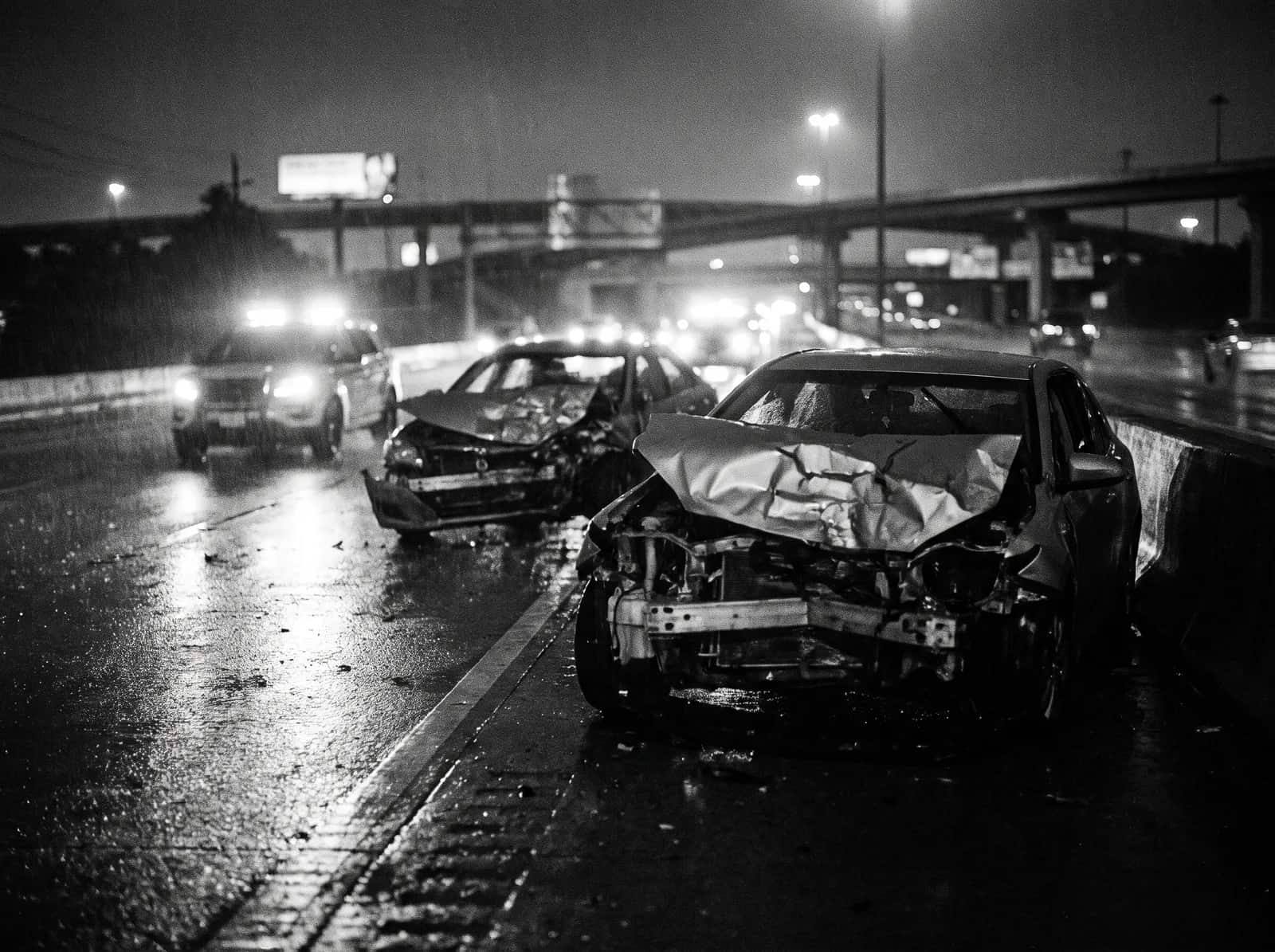

Rear-end collisions are among the most common crashes in Houston, especially in stop-and-go freeway traffic. Texas law requires drivers to keep an assured clear distance, so the rear driver is usually at fault. Owsley Law Firm handles Houston rear-end claims, including the neck and back injuries they cause, and charges no fee unless it wins.
Where do rear-end crashes happen in Houston?
Houston freeway traffic slows suddenly at merges and interchanges, and drivers following too closely cannot stop in time. Frontage roads add another risk, as drivers exit at highway speed and meet stopped traffic at the signal.
- Katy Freeway main lanes between Beltway 8 and the 610 Loop
- Gulf Freeway near the 610 South Loop and Broadway
- Southwest Freeway through the 610 interchange
- Frontage-road signals at freeway exits
- Westheimer and other congested arterials
Who is at fault in a Houston rear-end collision?
Texas Transportation Code section 545.062 requires a driver following another vehicle to keep an assured clear distance so they can stop safely. When a driver hits you from behind, that rule usually points to them. Insurers may argue you stopped suddenly or that a third car pushed them, so video and the crash report matter.
A citation for following too closely helps, but it is not required to prove fault in a civil claim. The physical evidence, the crash report, and the drivers’ statements together show what happened.
What injuries do rear-end crashes cause?
Even at moderate speeds, a rear-end impact can cause whiplash, herniated discs, and back injuries that need therapy, injections, or surgery. Insurers often call these minor because the car damage looks small, which is why consistent medical care from the first days matters.
Symptoms of neck and back injuries often build over days. If you feel stiffness, headaches, numbness, or pain that spreads into an arm or leg, get examined and tell the doctor about the crash. Imaging such as an MRI can show disc injuries that an emergency room visit may not.
What if it was a chain-reaction crash on a Houston freeway?
In a multi-car crash, each driver’s share of fault is assigned under Civil Practice and Remedies Code Chapter 33. The driver who started the chain is often the main defendant, but others may share fault. The order of impacts, shown by vehicle damage and witness accounts, decides who pays.
Each driver in the chain usually has a separate insurer, and each will argue that someone else caused the damage. Photos of every vehicle and the order they came to rest help reconstruct the impacts. The firm requests the crash report, which often lists every driver and insurer involved.
How is a Houston rear-end claim valued?
Value depends on the medical treatment, lost income, and how the injury affects daily life, and on the at-fault driver’s coverage. Texas minimum liability coverage is $30,000 per person, so your own underinsured motorist coverage can matter even in a common rear-end crash.
Lost income is part of the claim, including time missed for appointments and therapy. Keep pay stubs, a letter from your employer, and a record of every missed day.
What do insurers argue in Houston rear-end cases?
The most common argument is that the injury is minor because the car damage is minor. Another is that a preexisting condition, like a degenerative disc, explains the pain. A third is that you stopped suddenly for no reason. Each has an answer: medical records from the first visit, imaging that shows a new or worsened injury, and video or witness accounts of traffic conditions.
Texas law does not let a defendant escape responsibility because the injured person had an earlier condition, if the crash made it worse. That aggravation is part of the claim.
- Low property damage arguments
- Preexisting condition arguments
- Sudden stop arguments
- Gaps in medical treatment
- Recorded statements taken too early
How long does a Houston rear-end claim take?
Many rear-end claims resolve without a lawsuit once treatment is complete and the bills and records are in. Claims with surgery, disputed injuries, or limited coverage can take longer and may need to be filed in the Harris County civil district courts. The two-year deadline under section 16.003 controls the outside limit.
What should you do after being rear-ended in Houston?
Photograph both cars and the scene, get the other driver’s insurance, and get examined the same day. Do not tell the insurer you are fine before a doctor has examined you. Call the firm for a free review, 24/7.
Go deeper
More on rear-end collisions in Houston and Texas.
Common questions
Houston rear-end collisions questions
Is the rear driver always at fault in Texas?
Usually, because of the assured clear distance rule, but not always. Sudden stops and chain reactions can shift some fault.
What if there was little damage to my car?
Injury does not track car damage. Medical records decide the injury claim.
How do I get my Houston crash report?
Through the TxDOT Crash Report Online Purchase System, or the firm obtains it for you.
Where is the case filed?
Usually in the Harris County Civil District Courts at 201 Caroline Street.
How long do I have to file?
Generally two years from the crash.