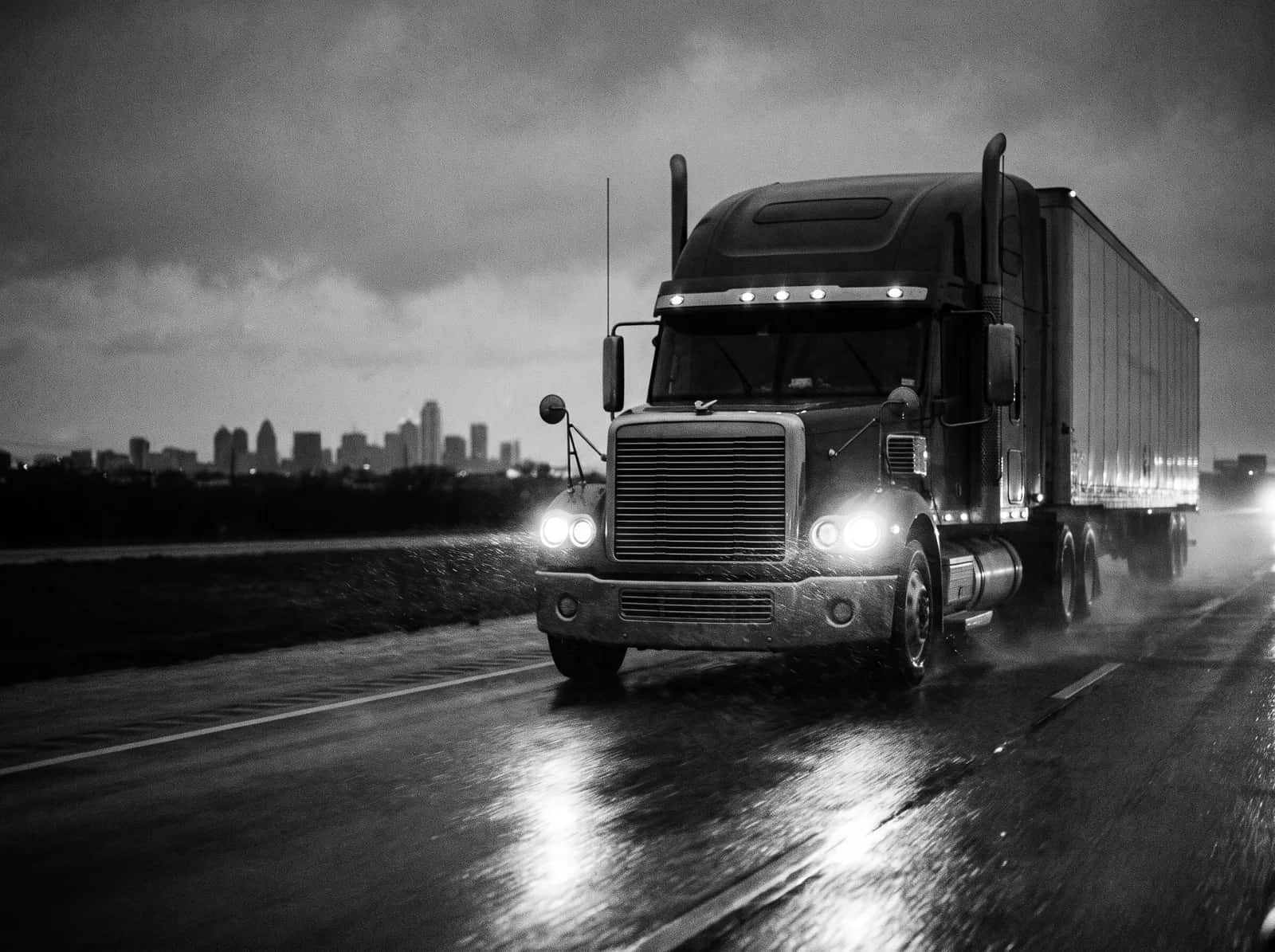
In Texas, a wide turn crash happens when a truck swings left before turning right, or cuts across lanes, and a car caught in the gap is struck or pinned under the trailer. Truck drivers are trained to manage wide turns with mirrors, signals, and lane position, and a crash usually means a step was skipped. Owsley Law Firm handles these claims and charges no fee unless it wins.
What is a wide turn crash?
A tractor-trailer's rear wheels track inside the path of its front wheels in a turn. To make a tight right turn, a driver often swings left first, opening a space on the right that another driver may read as an open lane. When the truck completes the turn, the trailer sweeps across that space and can strike or pin a car, cyclist, or pedestrian. These are sometimes called squeeze play or right-turn squeeze crashes.
What does Texas law require when turning right?
Section 545.101 of the Transportation Code requires a driver turning right to make the approach and the turn as close as practicable to the right-hand curb or edge of the roadway. That standard recognizes that large trucks cannot always hug the curb, but it places the burden on the turning driver to do it as safely as the vehicle allows, with clear signals and careful mirror checks.
How do trained drivers avoid wide turn crashes?
Commercial driver training covers wide turns in detail, and a crash often points to one of these missing steps.
- Signaling early so following traffic understands the turn
- Keeping the rear of the trailer close to the curb so cars cannot slip into the gap
- Checking right-side mirrors throughout the turn, not just before it
- Turning wide into the destination street rather than swinging out first
- Stopping and waiting when a car has moved into the space
Who is responsible for a wide turn crash?
The truck driver usually bears primary responsibility because the turning driver controls the maneuver and the risk. The motor carrier is generally responsible for its driver and may be directly responsible for training. A trucking company may argue that the car driver should not have moved into the gap. Texas divides fault under Chapter 33 of the Civil Practice and Remedies Code, and the injured driver can recover as long as their share is not more than 50 percent.
Where do wide turn crashes happen in Texas?
They are most common where trucks leave highways for surface streets: frontage road intersections along I-10, I-45, and US-59, industrial areas near the Port of Houston, distribution centers, and downtown streets where loading docks sit on tight corners. Narrow intersections with no room for a truck to turn without crossing lanes are a recurring factor.
What evidence proves a wide turn crash?
Intersection cameras, dash cameras on the truck, and nearby business footage can show the truck's path. The truck's engine data and turn signal records, where available, show speed and signaling. Scene photographs that capture the final resting positions and tire marks help reconstruct the turn. The driver's training records show what the company taught.
What injuries do wide turn crashes cause?
When a trailer sweeps into a car, it often strikes the passenger side or pushes the car into the curb or a pole. Side-impact injuries to the head, neck, shoulder, pelvis, and ribs are common. If the car is drawn under the trailer, the injuries can be catastrophic. Cyclists and pedestrians caught in the sweep suffer crushing injuries and fractures.
Prompt imaging and follow-up care document these injuries, which can be more serious than they first appear when adrenaline masks pain.
What should you do after a wide turn crash?
Photograph the positions of the truck and your vehicle before they are moved if it is safe. Capture the intersection layout, lane markings, and any turn signal still flashing on the truck. Get the truck's company name and number and the names of witnesses.
Ask nearby businesses whether their cameras face the intersection, since that footage is often overwritten within days. Get medical care and avoid recorded statements to the carrier's insurer.
What damages can be recovered?
Injured people can recover medical expenses, lost income, loss of earning capacity, physical pain, mental anguish, impairment, and disfigurement, along with damage to their vehicle. Cyclists and pedestrians struck in a wide turn have the same rights.
The trucking company's insurer will often argue that the car driver should have stayed back. The value of the claim depends heavily on how clearly the evidence shows what the truck driver did and did not do during the turn, which is why intersection footage and the truck's data are gathered quickly.
Do local streets make wide turn crashes worse?
Many Texas streets were laid out before today's 53-foot trailers. Narrow intersections, tight corner radii, and poorly placed stop lines force trucks to swing across lanes. That does not excuse the driver, but it can explain why the same intersection sees repeated crashes and whether route planning should have avoided it.
How long do I have to file?
Texas generally allows two years from the crash under section 16.003 of the Civil Practice and Remedies Code.
Common questions
What clients ask about wide turn crashes.
The truck swung left, so I thought it was turning left. Am I at fault?
Not necessarily. The turning driver must signal and manage the maneuver safely. The facts of the signals and lane positions decide the fault split.
Can a cyclist or pedestrian be hit in a wide turn?
Yes, and they are especially vulnerable to the trailer's sweep. The same rules apply.
Is the trucking company responsible for the driver's turn?
Generally yes, for a driver working within the scope of the job, and it may also be responsible for poor training.
What if my car was pinned under the trailer?
That is an underride-type injury and is often catastrophic. Preserve the vehicle and get medical care immediately.
Can a truck driver be cited for an unsafe turn?
Yes, and a citation can be useful evidence, though a civil claim does not depend on whether a ticket was written.
What does the firm charge?
No fee unless it wins.