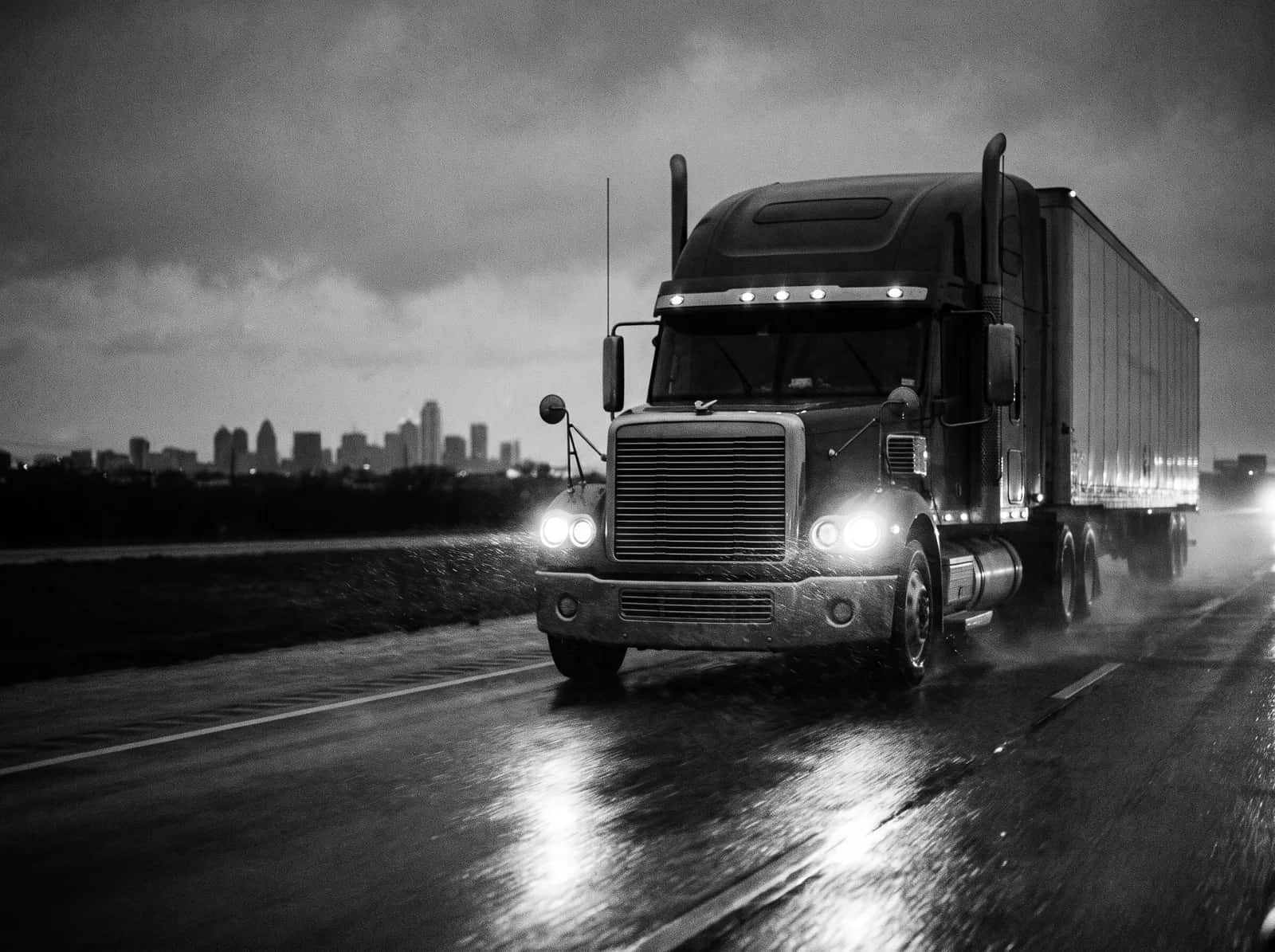

In Texas, a trucking company can be directly responsible for a crash if it hired, retained, trained, or supervised a driver it knew or should have known was unsafe. Federal rules require carriers to check a driver's history, testing, and medical fitness before hiring and to keep checking after. Owsley Law Firm examines those files in every truck case and charges no fee unless it wins.
What is negligent hiring in a truck case?
A trucking company is generally responsible for its driver's negligence on the job. Separately, the company can be responsible for its own negligence in putting that driver behind the wheel. Negligent hiring, retention, training, supervision, and entrustment claims focus on what the company knew or should have known about the driver and what it did about it.

What must a trucking company check before hiring a driver?
Federal driver qualification rules in 49 CFR Part 391 and drug and alcohol testing rules in Part 382 require carriers to investigate drivers before and during employment.
- An employment application listing prior driving jobs
- Inquiries to previous employers about safety performance and testing history
- A motor vehicle record from each state where the driver held a license
- A road test or equivalent
- A valid medical examiner's certificate
- Pre-employment drug testing and a query of the federal drug and alcohol clearinghouse
- An annual review of the driver's record
What does a driver qualification file reveal?
The driver qualification file is the carrier's record of those checks. A missing record, an ignored violation, a gap in employment history that was never explained, or a prior positive drug test that the company overlooked can show that the carrier accepted a known risk. The file is requested in every truck case for that reason.
What about negligent supervision and retention?
The duty continues after hiring. A carrier that receives complaints, sees hours-of-service violations in its logs, or learns of speeding or crashes and keeps the driver on the road without correction may be responsible for retaining an unsafe driver. Internal safety scores, telematics alerts, and corrective action records can show what the company knew.
How does Texas Chapter 72 affect these claims?
Chapter 72 of the Civil Practice and Remedies Code, adopted in 2021, changed how claims against commercial vehicle employers are tried. Among other things, if the employer stipulates that the driver was acting within the course and scope of employment, the presentation of certain direct claims against the employer, such as negligent hiring, can be limited in the first phase of trial. Those claims can still matter, particularly when gross negligence and exemplary damages are at issue. How Chapter 72 applies is evaluated case by case.
When can exemplary damages be available?
Chapter 41 of the Civil Practice and Remedies Code allows exemplary damages when a defendant's gross negligence is proven by clear and convincing evidence. A company that knowingly hired a driver with a history of impaired or reckless driving, or kept one on the road after repeated warnings, presents the kind of facts that can support that claim.
What warning signs should a trucking company catch?
Some driver histories should stop a hiring decision or trigger close supervision.
- A suspended or recently reinstated license
- Prior crashes or serious moving violations
- A positive or refused drug or alcohol test with a previous employer
- Unexplained gaps in employment history
- An expired or questionable medical certificate
- Frequent job changes with no safety performance inquiry
What damages can be recovered when a company hired an unsafe driver?
The injured person can recover the same damages available in any truck crash: medical expenses, lost income, loss of earning capacity, pain, mental anguish, impairment, and disfigurement. Where the evidence shows the company acted with gross negligence, Chapter 41 allows exemplary damages, subject to statutory limits. Families of people killed can bring wrongful death and survival claims under Chapter 71.
The value of the direct claim against the company is not only in the dollars. It brings the company's decisions into view, which often changes how the defense evaluates the case.
How do courts look at a driver's past?
Not every past violation makes a hiring decision negligent. The question is whether the company knew, or would have known through the checks the law requires, about a history that made the driver unfit for the specific job, and whether that unfitness caused the crash. A driver with a history of impaired driving who crashes while impaired, or a driver with repeated hours-of-service violations who crashes while fatigued, presents a direct connection.
This is why the specific facts of the crash and the specific contents of the driver's file are examined together. A strong negligent hiring claim connects what the company ignored to what actually happened on the road.
Does negligent hiring apply to smaller companies?
Yes. A small carrier or a business that runs a few trucks owes the same duty to check its drivers. Small operators sometimes skip the required checks because they lack a safety department, and that gap is exactly what the claim examines.
How long do I have to file?
Texas generally allows two years from the crash under section 16.003. Hiring records are held by the company, so a written preservation demand should be sent early.
Common questions
What clients ask about negligent hiring and supervision.
Can I sue the company even if the driver was clearly at fault?
Yes. The company is generally responsible for the driver, and it can be separately responsible for its own hiring and supervision decisions.
How do you find out about the driver's past?
Through the driver qualification file, testing records, prior employer inquiries, and the company's internal safety data obtained in the claim.
What if the driver had prior crashes?
Prior crashes the company knew about, or should have found, can support a negligent hiring or retention claim.
Does a company have to drug test truck drivers?
Yes. Federal rules require pre-employment, random, and post-crash testing in many situations.
Can a company be liable for keeping a driver after complaints?
Yes. Negligent retention and supervision claims focus on what the company learned after hiring and failed to act on.
What does the firm charge?
No fee unless it wins.