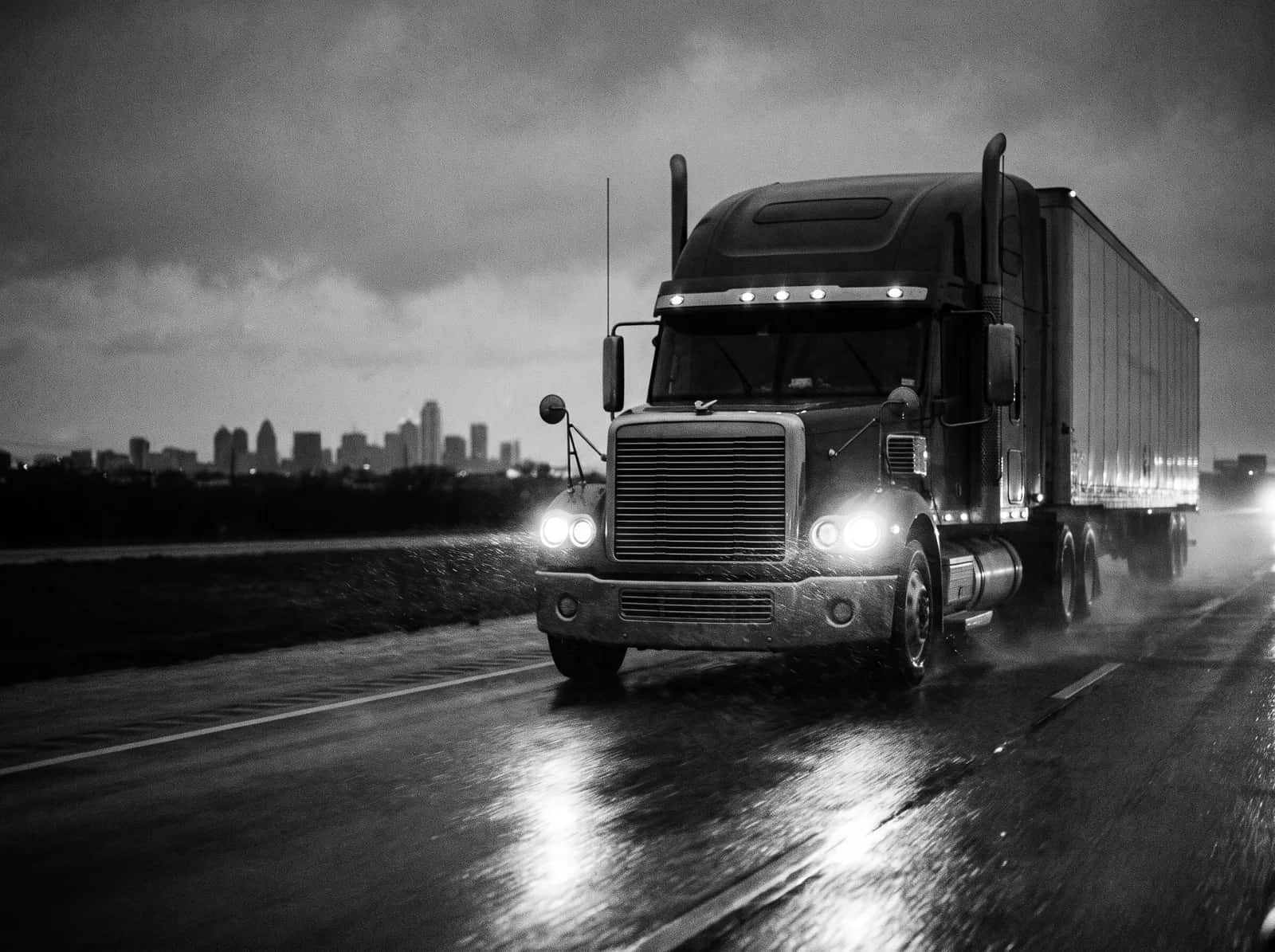

18-wheeler settlements in Texas are usually larger than car crash settlements because injuries are more severe and federal law requires carriers to carry far more insurance. Value depends on proving carrier violations, preserving truck data, and documenting the full harm. Owsley Law Firm reviews truck cases free and charges no fee unless it wins.
A loaded tractor-trailer can weigh up to 80,000 pounds, roughly twenty times a passenger car. The injuries from these crashes are frequently catastrophic, and the cases are built differently from car crash claims because federal safety rules, the trucking company's records, and multiple insurance policies are all in play.
Federal regulations require interstate carriers to carry at least $750,000 in liability coverage for general freight, which means the money to pay a serious claim is often there. The question is whether the evidence proves the carrier's responsibility before its records disappear.
How much is an 18-wheeler accident settlement worth in Texas?
There is no average that fits your case; value depends on the injuries, the proof of carrier fault, and the layers of insurance available.
Truck crash damages are calculated like any injury claim: medical costs, future care, lost earning capacity, pain, mental anguish, and impairment. What differs is the scale of the injuries and the amount of coverage that can pay them.
A truck case with a catastrophic injury and proven safety violations can justify a far larger settlement than the same injury caused by a passenger car, simply because more insurance and more responsible parties exist.
How much insurance do trucking companies carry?
Federal minimums start at $750,000 for general freight in interstate commerce and rise for oil and hazardous materials.
Under 49 CFR 387.9, for-hire carriers of non-hazardous property must carry at least $750,000, carriers of oil at least $1,000,000, and carriers of certain hazardous materials at least $5,000,000. Many carriers carry more through excess and umbrella policies.
Those are minimums, not caps. Identifying every layer of coverage, including policies held by brokers, shippers, and trailer owners, is part of valuing the case.
What FMCSA violations raise the value of a truck case?
Violations that connect to the crash, like hours-of-service breaches, poor maintenance, or an unqualified driver.
Federal rules govern how long a driver may drive (49 CFR Part 395), who may be hired (Part 391), and how trucks must be inspected and maintained (Part 396). A violation that helped cause the crash strengthens liability and can support a gross negligence claim against the carrier.
- Electronic logging device data showing hours-of-service violations
- Missed or falsified inspections and brake defects
- A driver hired without required background or medical checks
- Drug or alcohol testing failures
- Pressure from dispatch to meet delivery windows
Why does truck data need to be preserved early?
Engine control module and logging data can be overwritten or lost, and carriers are not eager to keep evidence that hurts them.
Modern trucks record speed, braking, and throttle in the moments before a crash. Electronic logging devices record driving hours. A preservation demand sent early puts the carrier on notice that destroying this evidence has consequences.
Without that data, the case can become a contest of accounts between an injured family and a trained corporate response team that often arrives at the scene within hours.
How do Texas bifurcated trials affect truck settlements?
Since 2021, Texas lets commercial vehicle defendants request a trial split into liability and damages phases.
Chapter 72, subchapter B of the Civil Practice and Remedies Code allows a defendant in a commercial motor vehicle case to request a bifurcated trial, and an employer's stipulation that the driver was acting in the course and scope of employment can limit certain direct negligence claims in the first phase.
The practical effect is that evidence of the carrier's broader safety failures may be held back until later, which makes proving the driver's negligence in the first phase all the more important. These rules shape settlement strategy from the start.

What if more than one company is responsible?
Each responsible company is liable for its share, and one found more than 50 percent responsible can be liable for all of it.
Under section 33.013 of the Civil Practice and Remedies Code, a defendant assigned more than 50 percent of responsibility is jointly and severally liable for the recoverable damages. Others pay their percentage. This is why naming every responsible company, not just the driver, protects the value of the claim.
How long does an 18-wheeler settlement take?
Usually longer than a car case, because of the investigation, multiple insurers, and the need to project future care.
Simple truck cases can resolve within a year of finishing treatment. Catastrophic and wrongful death cases often require filing suit and expert work. The two-year deadline under section 16.003 applies, so delay is never an option.
What moves the value up or down
| Factor | Pushes value up | Pushes value down |
|---|---|---|
| Insurance | Carrier policy plus excess layers, shipper or broker coverage | Small carrier at the federal minimum |
| Violations | Hours-of-service, maintenance, or driver qualification violations proven | Compliant logs and inspections |
| Evidence | ECM and ELD data preserved, dashcam video | Data overwritten before a preservation demand |
| Injuries | Catastrophic injury, permanent disability, wrongful death | Injuries that heal fully |
| Defendants | Carrier, broker, shipper, maintenance contractor | Owner-operator only |
What evidence proves it
- Engine control module (black box) and ELD downloads
- The driver qualification file and drug testing records
- Inspection, maintenance, and repair records for the tractor and trailer
- Dispatch records and delivery schedules
- Dashcam and forward-facing camera video
- Crash reconstruction and scene evidence
Mistakes that cost people money
- Talking to the trucking company's insurer or investigators
- Waiting to send a preservation demand
- Assuming the driver is the only defendant
- Settling before future care costs are projected
- Accepting the carrier's account of the crash without independent reconstruction
Frequently asked questions
Are 18-wheeler settlements bigger than car accident settlements?
Often, because injuries are more severe and federal insurance minimums are much higher. But the value still depends on proof of fault and the actual damages.
Can I sue the trucking company, not just the driver?
Yes. Carriers are responsible for drivers acting within the scope of their work, and they can be directly liable for unsafe hiring, training, or maintenance.
What is the truck's black box?
The engine control module records speed, braking, and other data around the crash. It can be decisive evidence, which is why it should be preserved early.
What if the driver was an owner-operator?
Owner-operators leased to a carrier are often covered under the carrier's authority and insurance. The lease and the carrier's records determine who is responsible.
How long do I have to file a truck accident claim in Texas?
Generally two years from the crash under section 16.003, but evidence should be preserved long before then.
This page is general information about Texas law and is not legal or medical advice. Every case depends on its own facts. Contact the firm for a free review of yours.
Keep reading