The same way as any Texas crash: by the evidence, under proportionate responsibility. A jury or adjuster assigns each party a percentage of fault, your recovery is reduced by yours, and you recover nothing if you are more than 50 percent at fault. Insurers often push extra blame onto riders, so evidence matters.
Texas follows proportionate responsibility under Civil Practice and Remedies Code Chapter 33. Each party’s share of responsibility is stated as a percentage. A rider found 20 percent at fault recovers 80 percent of the damages; a rider found more than 50 percent at fault recovers nothing.
The rules of the road apply to motorcycles like any other vehicle. A driver turning left must yield to oncoming traffic under Transportation Code section 545.152, and left-turn crashes are among the most common ways riders are hurt. On the other side, since September 1, 2023, Transportation Code section 545.0605 expressly prohibits riding between lanes of traffic moving in the same direction, so an insurer will look for any sign of lane splitting.
Helmet use is a separate question. Under Transportation Code section 661.003, a rider 21 or older may ride without a helmet if they have completed an approved safety course or are covered by a health insurance plan that provides benefits for crash injuries. Not wearing one can be raised in arguments about head injuries, but it is not the same as causing the crash.
Riders face a credibility problem drivers do not. Adjusters often assume a rider was speeding or weaving. Evidence answers that: the angle of impact, skid marks, the motorcycle’s damage, helmet or dash camera footage, nearby business video, and witnesses. Accident reconstruction can show speed and sight lines.
Following too closely is another common issue. Transportation Code section 545.062 requires drivers to keep a safe distance, and motorcycles can stop faster than most cars, which makes rear-end crashes into stopped riders especially dangerous. When a car rear-ends a motorcycle, the following driver usually bears most of the responsibility.
Riders’ own insurance can also matter. Uninsured and underinsured motorist coverage on a motorcycle policy can pay when the at-fault driver has no insurance or too little, and it must be offered with every Texas policy unless rejected in writing.
Owsley Law Firm handles motorcycle cases across Texas, preserves the bike and the scene evidence, and charges no fee unless it wins.
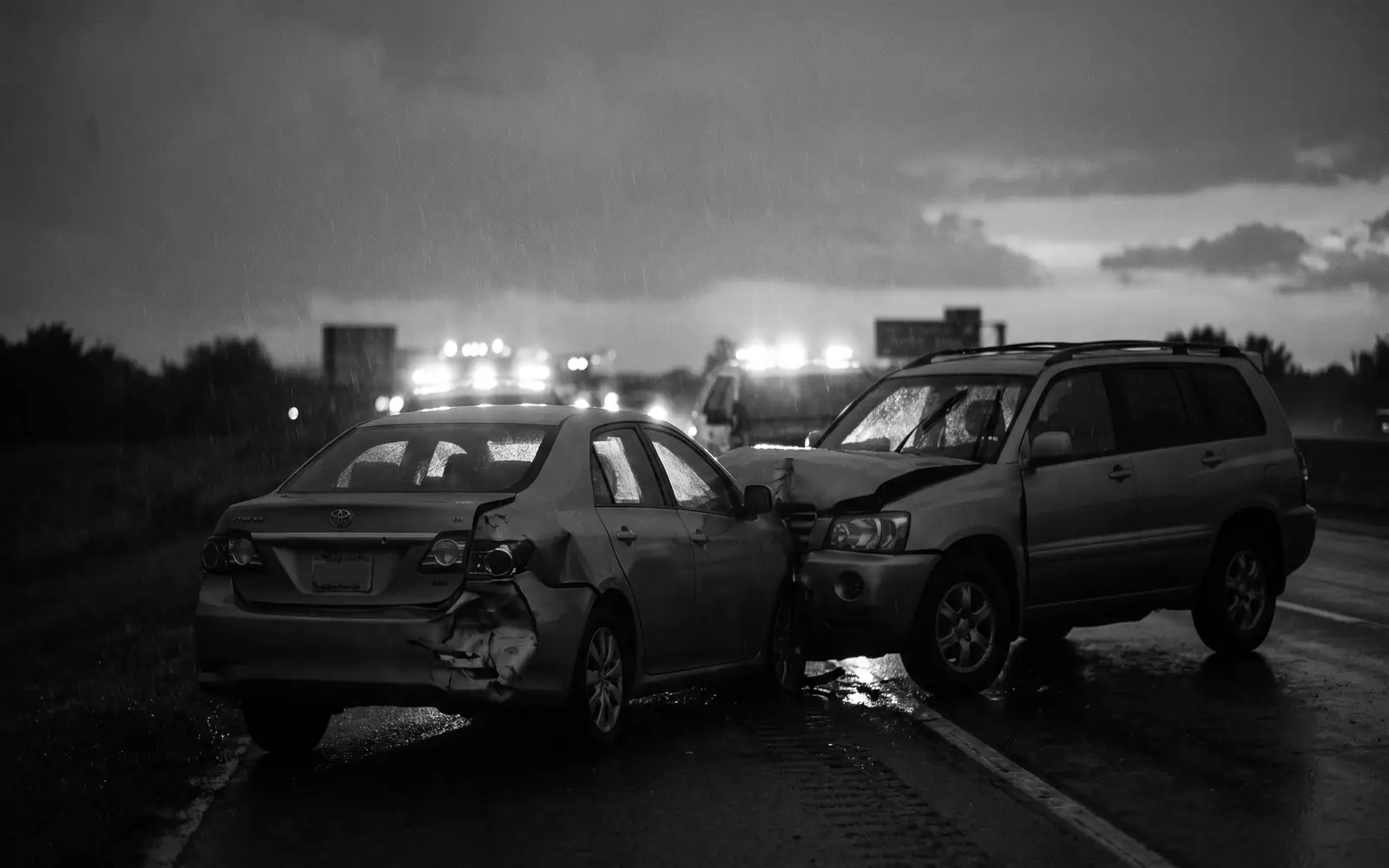
The crash report is a starting point, not the final word. Officers often arrive after the vehicles have moved and rely on what the drivers say, and an injured rider may not have been able to give a statement at all. If the report gets the facts wrong, the physical evidence, witnesses, and video can correct it, and the jury decides fault based on all the evidence.
Comparative fault arguments often target speed. An insurer may claim a rider was going too fast to stop, even when the other driver turned directly into the rider’s path. Reconstruction from the motorcycle’s damage, the length of skid marks, and video timing can show the actual speed and whether any rider could have avoided the crash.
Motorcycle damage tells a story. The point of impact on the bike and on the car, scrape marks on the road, and where the rider landed can show angle and speed. Preserving the motorcycle before it is repaired or salvaged is often critical.
Some riders use helmet cameras or dash cameras, and nearby businesses and traffic cameras may have captured the crash. Those recordings can be overwritten quickly, so they should be requested early.
Mistakes that cost people money
- Letting the insurer’s assumption about speed go unanswered.
- Allowing the motorcycle to be repaired or salvaged before it is inspected.
- Posting about riding or the crash on social media while the claim is open.
Related questions
Does not wearing a helmet bar my claim?
No. Helmet use is a separate question from who caused the crash, though it may be raised about head injuries.
What if the driver says they did not see me?
Not seeing a motorcycle is not a defense. Drivers have a duty to keep a proper lookout and to yield the right of way.
Can a passenger on my bike make a claim?
Yes. A passenger can claim against any driver at fault, which may include the rider, depending on the facts and the insurance.
Read next