
In a Texas multi-vehicle pileup, value depends on how fault is divided among several drivers and how many insurance policies can pay. Texas assigns responsibility by percentage, and a defendant more than 50 percent responsible can be liable for all damages. Shared policy limits make early claims important. Owsley Law Firm reviews pileup claims free.
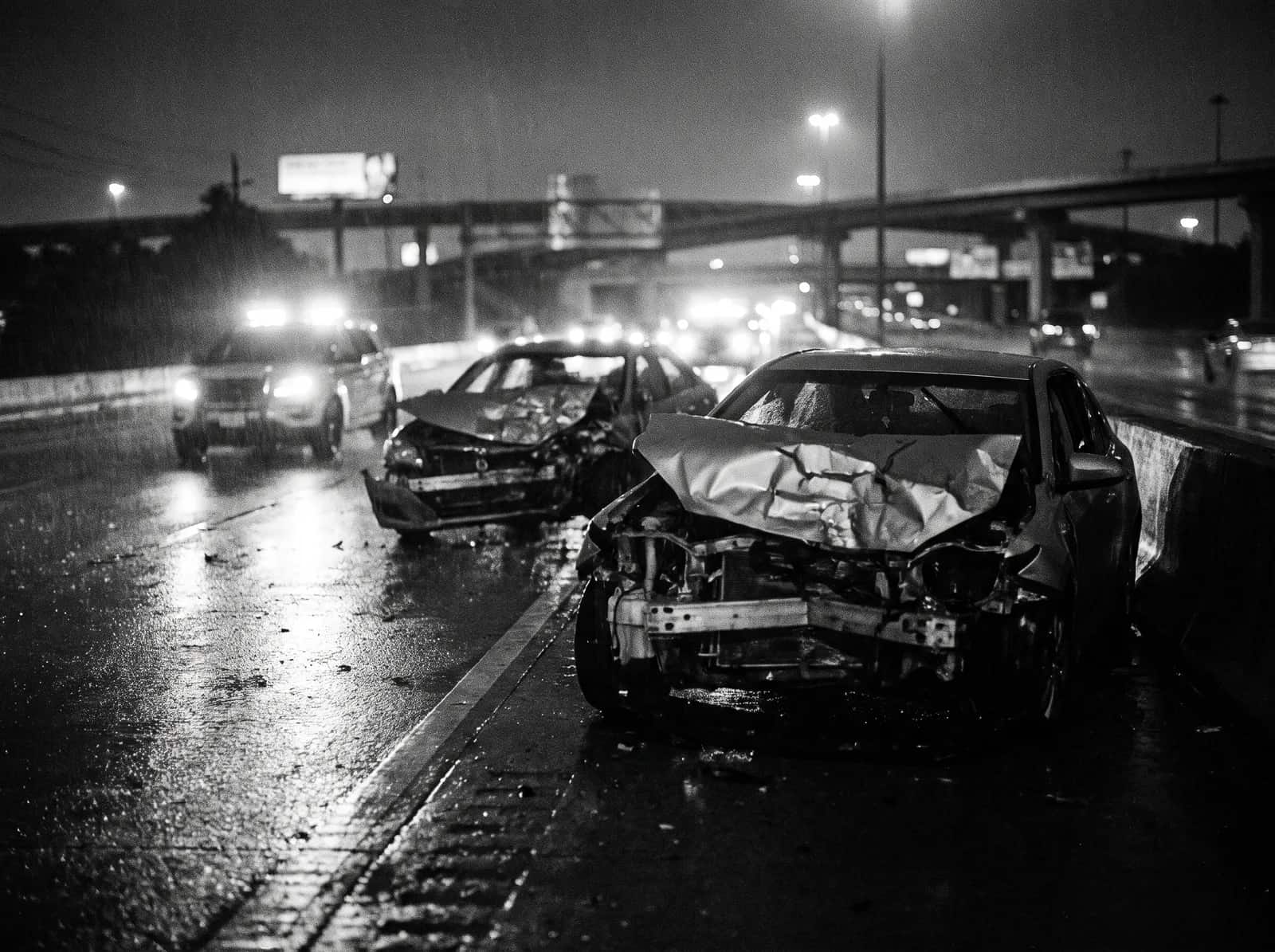
Chain-reaction crashes on Texas freeways, especially in fog, rain, or sudden slowdowns, can involve a dozen vehicles. Each driver may have contributed, and each insurer will try to place the blame elsewhere.
That makes pileup claims complex. The value of your claim depends on reconstructing the sequence of impacts, dividing fault among the drivers, and collecting from several policies, some of which may be exhausted by other injured people.
How much is a pileup settlement worth in Texas?
Your damages set the value; the division of fault and the available policies determine what can be collected.
Pileups produce the same categories of damages as any crash. What changes is the collection problem: several drivers may share fault, and each driver's policy limits may be split among several injured people.
Your own UIM coverage often becomes important when the responsible drivers' policies are stretched thin.

How is fault divided among drivers in a pileup?
By percentage, with each defendant generally paying its share.
Chapter 33 of the Civil Practice and Remedies Code assigns responsibility to each party by percentage. Your recovery is reduced by your own percentage and barred above 50 percent.
Under section 33.013, a defendant assigned more than 50 percent of responsibility is jointly and severally liable for the recoverable damages, which means that defendant can be required to pay the full amount. Others pay only their share.
Why does reconstruction matter so much?
Because the order and force of each impact decides who caused which injury.
In a chain reaction, a car may be hit from behind and then pushed into the car ahead. Whether the first impact or a later one caused your injury, and which driver was following too closely, depends on physical evidence, vehicle data, and witness accounts.
What happens when insurance limits are shared?
Several injured people may claim against the same policy, which can exhaust it.
When a single driver's policy covers several injured people, the per-incident limit may not be enough for everyone. Making the claim early and documenting it fully matters, and your own UIM coverage can fill the gap.
What evidence matters in a pileup?
Anything that establishes the sequence of impacts and each driver's conduct.
Pileups often happen on freeways covered by traffic cameras.
- TxDOT or Houston TranStar traffic camera footage
- Dashcam video from involved or passing vehicles
- Vehicle event data from multiple cars
- Crash report with a diagram of the impacts
- Weather and visibility records
- Medical records
What if a commercial truck was involved?
A commercial vehicle often brings the largest policy and may bear the largest share of fault.
Trucks need more distance to stop and are frequently involved in chain reactions. Federal insurance minimums for interstate carriers start at $750,000 under 49 CFR 387.9.
How long does a pileup settlement take?
Often longer than a two-car crash, because fault must be sorted out among several parties.
The two-year deadline under section 16.003 applies to claims against each driver.
What moves the value up or down
| Factor | Pushes value up | Pushes value down |
|---|---|---|
| Sequence | Clear reconstruction of which car hit which | Unclear order of impacts |
| Defendants | A commercial vehicle or a driver over 50 percent responsible | Many drivers with small shares |
| Coverage | Several policies plus your own UIM | Limits shared among many claimants |
| Timing | Claim made early before limits are exhausted | Late claim after others settle |
| Injuries | Serious and well documented | Minor |
What evidence proves it
- Traffic camera footage
- Dashcam video
- Event data from multiple vehicles
- Crash report and diagrams
- Weather data
- Medical records
Mistakes that cost people money
- Assuming the car that hit you is the only responsible party
- Waiting while other injured people exhaust the limits
- Not requesting traffic camera footage quickly
- Giving statements to multiple insurers
- Ignoring your own UIM coverage
Frequently asked questions
Who pays in a chain-reaction crash?
Each driver who contributed pays according to their percentage of fault. A driver over 50 percent responsible can be liable for all of the recoverable damages.
What if I was in the middle of the pileup?
You may have claims against the driver behind you and the driver who started the chain. Reconstruction shows which impact caused which injury.
What if the insurance runs out?
Your own UIM coverage can help. Making the claim early also matters when several people are claiming against the same policy.
Does bad weather excuse the drivers?
No. Drivers must adjust speed and following distance for conditions. Fog or rain can explain a crash without excusing it.
How long do I have to file?
Generally two years from the crash under section 16.003.
This page is general information about Texas law and is not legal or medical advice. Every case depends on its own facts. Contact the firm for a free review of yours.
Keep reading