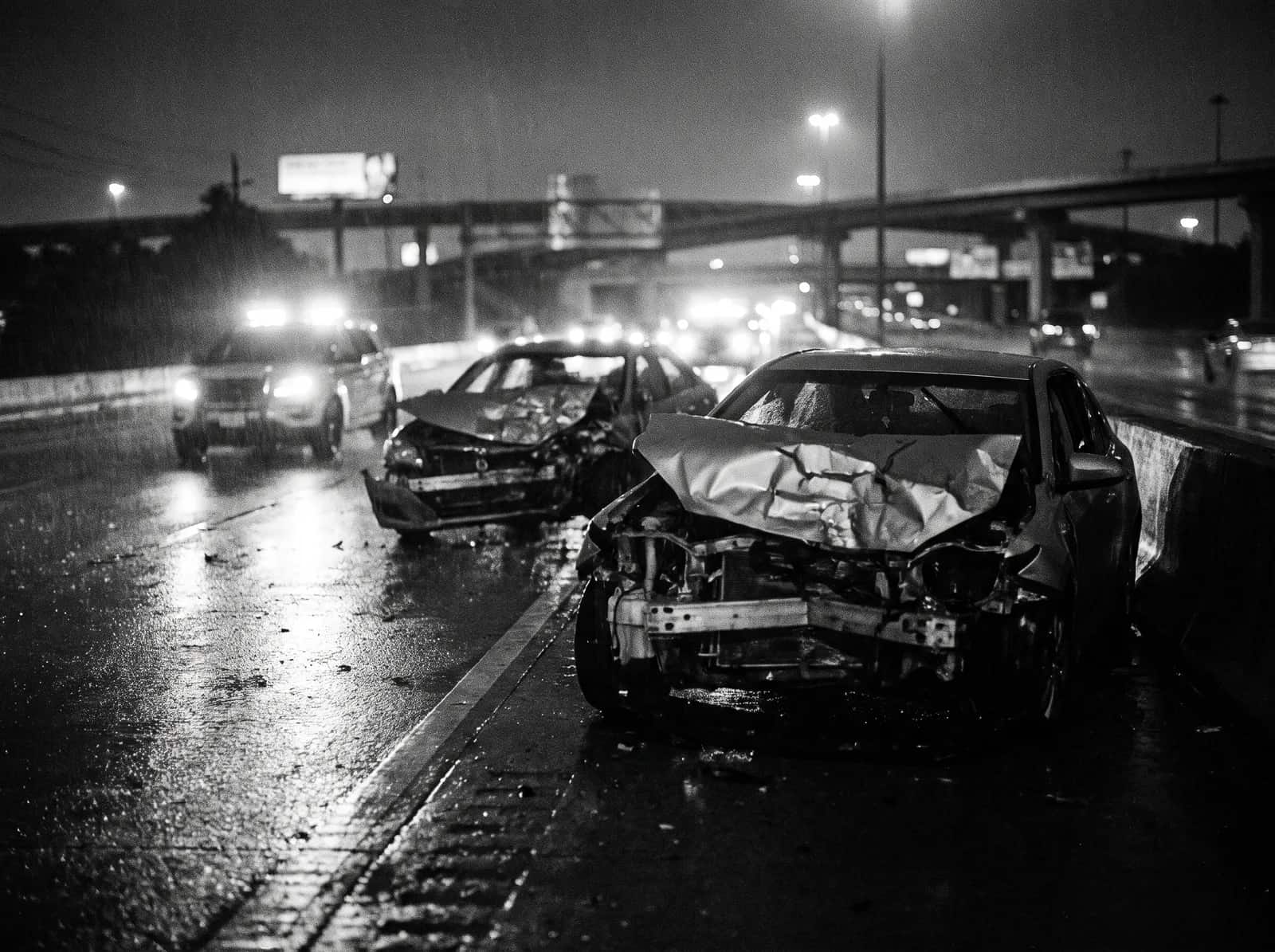

Head-on collisions cause some of the most severe injuries on Texas roads, so their settlement value is often limited less by damages than by the insurance available. Wrong-way and impaired drivers can open the door to exemplary damages and other defendants. Owsley Law Firm reviews head-on cases free and charges no fee unless it wins.
When two vehicles meet head on, their speeds combine. A crash between two cars each traveling 45 miles an hour can deliver forces far beyond what either car was designed to absorb, which is why head-on collisions produce a large share of traffic deaths and catastrophic injuries.
The value questions in these cases are different from a typical fender-bender. Damages are often enormous, so the central issues become who else can be held responsible, how much insurance exists, and whether the at-fault driver's conduct supports exemplary damages.
How much is a head-on collision settlement worth in Texas?
The damages are often large; the practical limit is usually the insurance and assets available to pay them.
A head-on crash that causes a brain injury or spinal cord damage can create lifetime medical costs, lost earning capacity, and profound non-economic damages. Few individual drivers carry enough insurance to cover that, so the real work is identifying every source of recovery.
That means looking past the at-fault driver: an employer if the driver was working, a bar that over-served an intoxicated driver, a vehicle owner who entrusted the car, and the injured person's own underinsured motorist coverage.

What causes head-on crashes in Texas?
Wrong-way driving, impairment, distraction, fatigue, and unsafe passing on two-lane roads are the common causes.
Wrong-way crashes on freeways often involve drivers entering an exit ramp, frequently at night and frequently while impaired. On rural two-lane highways, head-on crashes come from failed passing attempts and drivers drifting across the center line.
The cause matters to value because some causes open additional claims. Impairment can support a dram shop claim against the establishment that served the driver, and conduct like extreme intoxication can support exemplary damages.
Can I recover exemplary damages after a head-on crash?
Possibly, if the other driver acted with gross negligence, but Texas caps most exemplary awards.
Exemplary damages under Chapter 41 punish gross negligence, malice, or fraud and require clear and convincing evidence. Section 41.008(b) generally caps them at the greater of $200,000 or two times economic damages plus non-economic damages up to $750,000.
Section 41.008(c) removes the cap when the conduct amounts to certain felonies, including intoxication assault and intoxication manslaughter. That can matter a great deal in drunk-driving head-on cases.
Who else can be responsible besides the other driver?
Employers, vehicle owners, alcohol providers, and in some cases the entity responsible for the road.
Each additional defendant brings its own insurance, which is often the difference between a settlement that covers the harm and one that does not.
- The driver's employer, if the driver was on the job
- The vehicle owner, if they knowingly let an unsafe driver use it
- A bar or restaurant that served an obviously intoxicated driver (Alcoholic Beverage Code Chapter 2)
- A government entity, for certain road conditions, subject to Tort Claims Act limits and notice rules
- Your own underinsured motorist coverage
How does fault work when both cars crossed the line?
Fault is divided by percentage, and your recovery is reduced by yours and barred above 50 percent.
Insurers sometimes argue both vehicles drifted toward the center, or that the injured driver could have steered away. Crash reconstruction, debris location, gouge marks, and vehicle data establish where each car was at impact.
Because the stakes are high, reconstruction is often worth the cost in head-on cases. It turns a credibility contest into physical evidence.
What if the head-on crash was fatal?
The family can bring a wrongful death claim and the estate a survival claim, often together.
Chapter 71 of the Civil Practice and Remedies Code allows the surviving spouse, children, and parents to recover for their losses, and section 71.021 lets the estate recover what the deceased person could have claimed. The deadline is generally two years from the date of death.
How long does a head-on settlement take?
Serious head-on cases usually take longer because future care must be projected and multiple insurers are involved.
Life care planning, economic analysis of lost earning capacity, and coordination among several policies all take time. Settling before future needs are known can leave a family without resources for care that will last decades.
What moves the value up or down
| Factor | Pushes value up | Pushes value down |
|---|---|---|
| Cause | Wrong-way, drunk, or texting driver with proof | Unclear lane position, disputed facts |
| Injuries | TBI, spinal injury, multiple fractures, long-term care needs | Injuries that heal fully |
| Defendants | Employer, bar (dram shop), or road agency also responsible | Single individual driver |
| Coverage | Commercial or umbrella policies, UIM stacked across policies | Minimum limits only |
| Conduct | Gross negligence supporting exemplary damages | Ordinary negligence only |
What evidence proves it
- Crash reconstruction and scene measurements
- Vehicle event data from both vehicles
- Toxicology and the criminal case file, if impairment is involved
- Receipts and witnesses from where the driver was drinking
- Employment records showing whether the driver was working
- Life care plan and economic analysis for catastrophic injuries
Mistakes that cost people money
- Assuming the at-fault driver's policy is the only coverage
- Settling with one insurer in a way that releases others
- Missing the dram shop investigation while receipts and video still exist
- Accepting an early offer before future care costs are known
- Waiting on the criminal case before preserving civil evidence
Frequently asked questions
Are head-on collision settlements larger than other crashes?
Head-on crashes tend to cause more severe injuries, so the damages are often larger, but the settlement still depends on fault evidence and available coverage. No crash type guarantees an amount.
What if the wrong-way driver had no insurance?
Your uninsured motorist coverage can pay if you have it. Other parties, like an employer or a bar that served the driver, may also be responsible.
Can I sue a bar for serving the driver who hit me?
Texas dram shop law allows a claim when a provider served someone who was obviously intoxicated to the point of presenting a clear danger, and the intoxication caused the crash.
Does the criminal case affect my settlement?
A criminal conviction can help prove fault, but the civil claim is separate and has its own deadline. You do not need to wait for the criminal case to pursue compensation.
How long do I have to file?
Generally two years from the crash, or two years from the date of death in a wrongful death case, under section 16.003.
This page is general information about Texas law and is not legal or medical advice. Every case depends on its own facts. Contact the firm for a free review of yours.
Keep reading