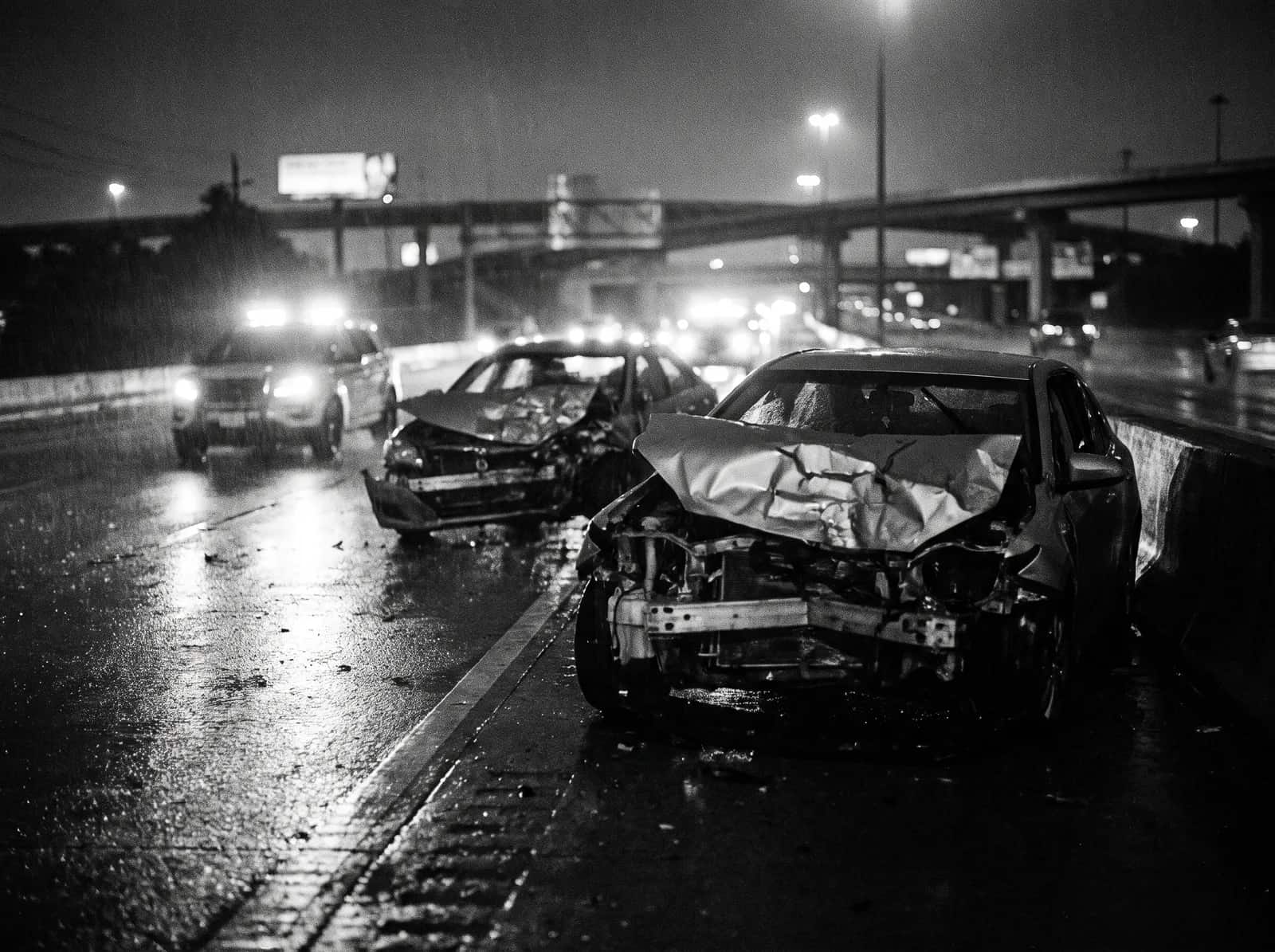

In Texas, a multi-vehicle pileup is a claim against every driver whose negligence contributed to your injuries, with fault divided among them by percentage under Chapter 33 of the Civil Practice and Remedies Code. Several insurers will each try to blame someone else. Owsley Law Firm sorts out the sequence of impacts, pursues every responsible party, and charges no fee unless it wins.
How is fault divided in a Texas pileup?
Chapter 33 proportionate responsibility requires a jury to assign a percentage of responsibility to each party whose negligence caused the harm, which can include each driver involved, an employer, and in some cases a designated responsible third party. Your damages are reduced by your own percentage, and if your share is more than 50 percent you recover nothing.
A defendant is jointly and severally liable for the full judgment only if found more than 50 percent responsible. Otherwise, each defendant pays its own percentage. That means it matters how fault is divided among the other drivers, not just whether you were at fault.

What causes chain-reaction crashes?
Pileups usually start with a single failure and spread because drivers behind cannot stop.
- Following too closely, in violation of Transportation Code section 545.062
- Speeding for conditions, including fog, rain, and smoke, under section 545.351
- Sudden slowdowns at freeway construction zones and exits
- A truck that cannot stop in time because of its weight
- Distracted drivers who look up too late
- A first crash that blocks lanes and is struck by following traffic
Why are pileups common on Houston freeways?
Houston freeways run at high speed and high density. Traffic on I-45, the Katy Freeway, US-59, and the 610 Loop can go from 70 miles an hour to a stop within a few hundred feet, especially near exits, merges, and construction. Sudden heavy rain cuts visibility and traction. Fog near Galveston Bay can cut visibility on the Gulf Freeway with little warning. When one driver is following too closely, the next is often doing the same.
What evidence sorts out a multi-vehicle crash?
The key questions are which vehicle struck which, in what order, and with what force. The answers come from the damage on each vehicle, event data recorders that show speed and braking for each impact, video from dash cameras, TxDOT cameras, and nearby vehicles, the crash report and diagram, and statements from each driver and witness. Medical records and the timing of symptoms help show which impact caused which injury.
With several insurers involved, evidence goes missing quickly as vehicles are repaired or salvaged. The firm identifies every vehicle and insurer early and sends preservation letters.
What if a commercial truck caused the pileup?
A loaded tractor-trailer needs far more distance to stop than a car, and a truck that rear-ends slowing traffic can push several vehicles into one another. When a truck is involved, the claim usually includes the trucking company, which is responsible for its driver’s conduct and may have its own negligence in hiring, training, or scheduling. Federal hours-of-service rules in 49 CFR Part 395 and electronic logging data can show whether fatigue played a role. Commercial policies are much larger than the Texas minimums, which matters when many people are hurt.
How do insurance limits work when many people are hurt?
When several people are hurt by one driver, they may all claim against the same policy, and a 30/60/25 minimum policy offers only $60,000 for all injured people combined. Settling quickly with one insurer can leave other sources untouched or let the money run out. The firm evaluates every policy, including employer and commercial coverage and your own UM/UIM and PIP benefits, before advising on any settlement.
Can I designate the driver who started the pileup?
Texas allows a defendant to designate a responsible third party under section 33.004, which lets the jury assign a percentage of fault to a person who is not a party to the lawsuit, such as a driver who fled or was never sued. Defendants use this tool to shift blame. Plaintiffs need to know who all the drivers were and what each did so that a designation does not leave a large share of fault assigned to someone who cannot pay. That is another reason to identify every vehicle and witness early.
What injuries happen in pileups?
People in a pileup are often struck more than once, from behind and in front, and the repeated impacts multiply the injuries. Neck and back injuries from rear impacts combine with knee, wrist, and chest injuries from striking the car ahead. Head injuries are common. When a truck is involved, the forces can crush vehicles and cause catastrophic harm. Medical records that note the timing and mechanism of each injury help tie each one to the impact that caused it.
How are claims handled with several insurers?
Each insurer will investigate separately and each has an incentive to blame the others. Adjusters may delay while they wait to see how fault is divided, or offer small amounts early to close out their share. The firm gathers the evidence on the sequence of impacts, presents a single, consistent account of how the crash happened, and evaluates the total coverage before deciding which claims to resolve and in what order. Your own PIP coverage can pay medical bills and lost wages in the meantime, regardless of fault, which takes pressure off while the liability questions are sorted out.
What should you do after a pileup?
Stay in a safe place, call 911, and get medical care. Photograph all vehicles you can, including license plates and company names on trucks. Get the names of every driver and witness you can. Do not discuss fault with other drivers or insurers. Each insurer will ask for a recorded statement; you do not have to give one to another driver’s insurer. Most claims must be filed within two years under section 16.003.
Common questions
What clients ask about multi-vehicle pileups.
Who pays when several cars are involved?
Each driver whose negligence contributed is responsible for their percentage of fault. A driver found more than 50 percent responsible can be liable for the full amount.
What if I was hit twice?
Each impact may have caused different injuries, and different drivers may be responsible for each. Event data and medical timing help separate them.
Can I recover if I hit the car in front of me after being pushed?
Yes. If you were pushed into the car ahead by a driver behind you, the driver who struck you is usually responsible for both impacts.
Should I accept the first offer from one insurer?
Not before every source of coverage is known. Settling with one insurer can affect claims against others and may leave money on the table.
How long does a pileup case take?
Usually longer than a two-car crash, because several insurers and sometimes a lawsuit with multiple defendants are involved.