


Insurance Code section 1952.159 says that when a guest or passenger described by section 1952.151 makes a liability claim against the owner or operator of the vehicle they were riding in, or that person's liability insurer, the owner, operator or insurer is entitled to an offset, credit, or deduction against any award, equal to the amounts paid to the guest or passenger under personal injury protection.
Texas Insurance Code chapter 1952 (Legislature text). Find section 1952.159, Offset Against Liability Claim, and read both subsections in full.
Many Texas auto policies carry personal injury protection, often called PIP. A passenger hurt in a crash may receive PIP payments and may also make a liability claim against the driver or owner of the vehicle. Section 1952.159 addresses how those two things meet.
This page covers only section 1952.159. It quotes the section closely, then explains how it can show up in a crash injury claim. Other pages on this site cover neighboring sections, including section 1952.152 on personal injury protection and section 1952.106 on underinsured motorist recovery. For advice on a specific claim, speak with a Texas lawyer.
What does Insurance Code 1952.159 say?
Section 1952.159 is titled Offset Against Liability Claim. It has two subsections: an offset in subsection (a) and a limit on direct actions in subsection (b).
Subsection (a) reads in part: "If a liability claim is made by a guest or passenger described by Section 1952.151 against the owner or operator of the motor vehicle in which the guest or passenger was riding or against the owner's or operator's liability insurer, the owner or operator of the motor vehicle or the owner's or operator's liability insurer is entitled to an offset, credit, or deduction against any award made to the guest or passenger in an amount equal to the amounts paid by the owner, the operator, or the owner's or operator's automobile liability insurer to the guest or passenger under personal injury protection."
Subsection (b) reads: "This subchapter does not authorize a direct action against a liability insurer if that right does not presently exist at law."
- Section title: Offset Against Liability Claim
- Subsection (a): the offset, credit, or deduction
- Subsection (b): no new direct action against a liability insurer
- The offset is tied to amounts paid under personal injury protection
Who is covered by the PIP offset in a liability claim?
The section speaks of a guest or passenger described by section 1952.151 who makes a liability claim against the owner or operator of the vehicle they were riding in, or against that person's liability insurer.
The claimant in subsection (a) is a guest or passenger. The claim is made against one of two targets: the owner or operator of the motor vehicle in which the guest or passenger was riding, or the owner's or operator's liability insurer.
Section 1952.151 is the section the offset points to for who counts as a guest or passenger. Read that section in the chapter text to see how it describes them. Its description includes an authorized operator or passenger of the named insured's motor vehicle, including a guest occupant.
How does the offset, credit, or deduction work?
The owner, operator, or liability insurer is entitled to an offset, credit, or deduction against any award made to the guest or passenger. The amount equals the amounts paid under personal injury protection.
The section words the amount this way: an amount equal to the amounts paid by the owner, the operator, or the owner's or operator's automobile liability insurer to the guest or passenger under personal injury protection. The measure is what was paid, not what was billed or what coverage was available.
The offset applies against "any award made to the guest or passenger." The section does not give a dollar figure, a formula beyond "equal to the amounts paid," or a time limit. It does not say how the offset interacts with other reductions. Anyone comparing the two should read each statute and not assume an order.
Does fault change the PIP offset?
Section 1952.159 does not mention fault or percentages of responsibility. Fault is addressed separately in Civil Practice and Remedies Code chapter 33, which applies to the claim itself.
Section 33.003(a) says the trier of fact, as to each cause of action asserted, "shall determine the percentage of responsibility" for each claimant, each defendant, each settling person, and each responsible third party designated under section 33.004. Section 33.001 says a claimant "may not recover damages if his percentage of responsibility is greater than 50 percent."
Section 33.012(a) says that if the claimant is not barred under section 33.001, the court "shall reduce the amount of damages to be recovered by the claimant with respect to a cause of action by a percentage equal to the claimant's percentage of responsibility." Section 33.012(b) addresses settlements: the court "shall further reduce" the damages "by the sum of the dollar amounts of all settlements." Sibling pages on this site cover sections 33.001, 33.003 and 33.012 in more detail. Section 1952.159 itself does not say whether PIP payments fall under section 33.012.
Can a passenger sue the liability insurer directly under this section?
Subsection (b) says the subchapter does not authorize a direct action against a liability insurer if that right does not presently exist at law.
The wording is a limit. It does not create a right to sue a liability insurer. Subsection (a) refers to a claim against the owner or operator, or against the liability insurer, but subsection (b) says the subchapter does not authorize a direct action where that right does not presently exist at law.
Whether a direct action is available in a given situation is a separate legal question. A lawyer can review the specific facts.
What evidence shows PIP payments and fault?
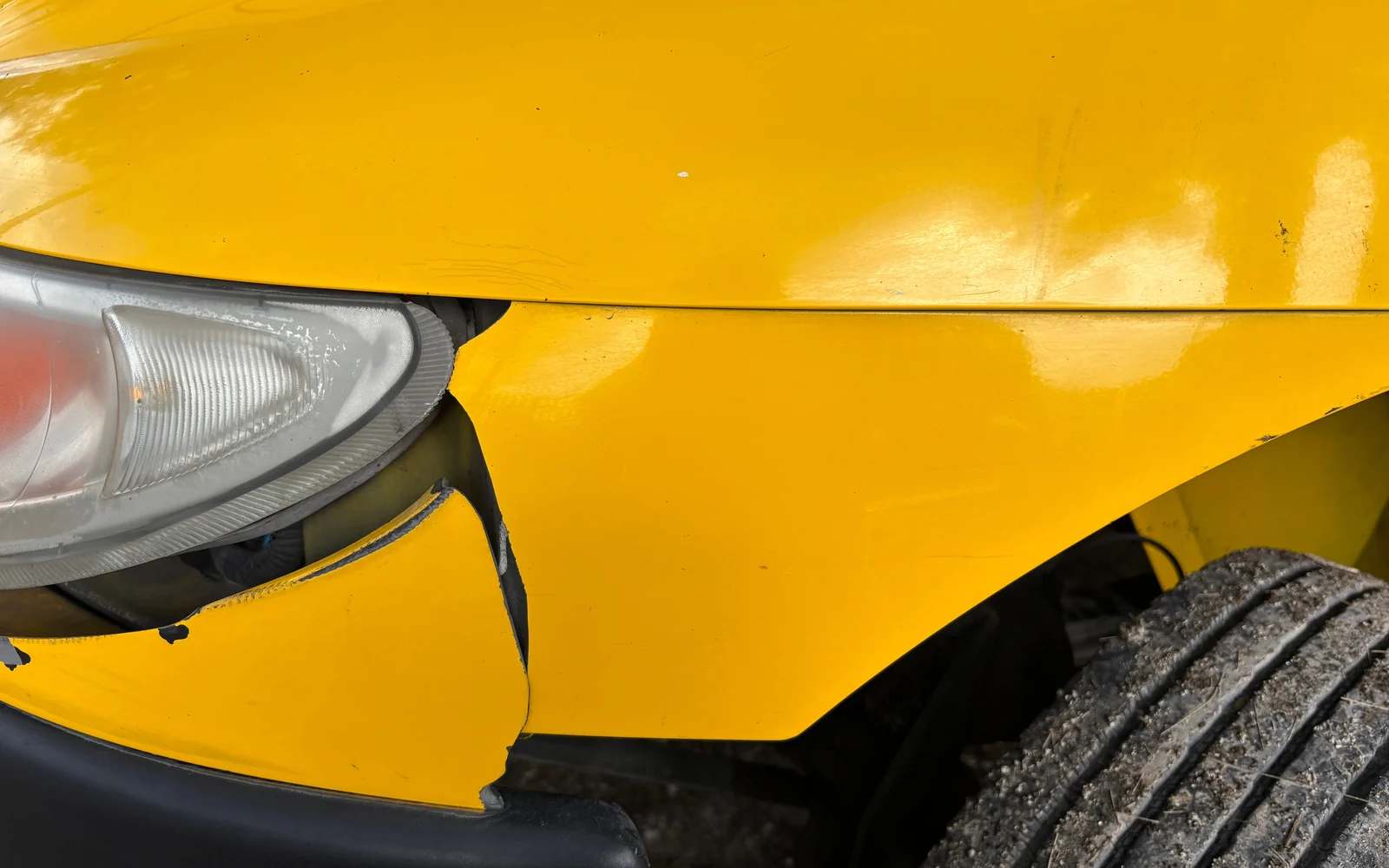
Payment records show what was paid under personal injury protection. Crash records, photos and witness statements bear on fault.
Because the offset is measured by amounts paid under personal injury protection, records of those payments matter: payment letters, explanation of benefits forms, and the insurer's payment ledger. Check with the insurer for a payment history.
Fault evidence matters because chapter 33 asks the trier of fact to determine percentages of responsibility. Section 33.003(b) says the section does not allow a submission to the jury of a question about conduct by any person "without sufficient evidence to support the submission." Photos, video, the crash report, and witness names can all help show how the crash happened.
- PIP payment letters and ledgers
- Medical bills and records
- Crash report and photos
- Witness names and statements
- Policy pages showing the coverage
How does section 1952.159 relate to the other PIP sections?
Section 1952.159 is one section in the same chapter as the PIP coverage rules. Other sections of the chapter have their own titles and rules.
Section 1952.152 is titled Personal Injury Protection Coverage Required. Section 1952.155 is titled Benefits Payable Without Regard to Fault or Collateral Source; Effect on Subrogation. Section 1952.157 is titled Action for Failure to Pay Benefits, and section 1952.158 is titled Exclusion of Benefits.
This page does not explain those sections. The title of section 1952.155 shows that PIP benefits and the liability offset are handled in separate sections, so each section has to be read on its own words.
Section 1952.159 elements and how each shows up in a claim
| Element in the section | What the section says | How it shows up in a claim |
|---|---|---|
| Who makes the claim | A guest or passenger described by section 1952.151 | Passenger status in the vehicle; check the claimant against section 1952.151 |
| Type of claim | A liability claim | A claim for injuries against the owner, operator, or liability insurer |
| Against whom | The owner or operator of the vehicle the passenger was riding in, or the owner's or operator's liability insurer | The vehicle's registration and insurance details |
| Who gets the offset | The owner or operator, or the owner's or operator's liability insurer | The party defending the claim may point to the offset |
| What is offset | An offset, credit, or deduction against any award made to the guest or passenger | Applied against an award, not stated as a dollar figure in the section |
| How much | An amount equal to amounts paid under personal injury protection | PIP payment records |
| Who paid the PIP amounts | The owner, the operator, or the owner's or operator's automobile liability insurer | The insurer's payment history |
| Direct action | The subchapter does not authorize a direct action against a liability insurer if that right does not presently exist at law | Whether suit may name the insurer is a separate legal question |
| Fault (chapter 33) | Percentages of responsibility are determined by the trier of fact | Crash evidence, photos, witnesses |
How it is proven after a crash
- Every PIP payment letter or explanation of benefits you receive
- The insurer's PIP payment history, requested from the insurer
- The policy declarations page for the vehicle you rode in
- The crash report and photos of the scene and vehicles
- Names and contact details of witnesses
Mistakes that cost people money
- Assuming the offset is a set dollar amount, when the section ties it to amounts paid
- Reading section 1952.159 as saying anything about fault percentages
- Assuming subsection (b) gives a right to sue an insurer directly
- Mixing up the passenger claim in this section with other PIP or underinsured motorist sections
- Throwing away PIP payment records before the liability claim ends
Related Texas laws
- All Texas laws explained
- Insurance Code 1952.102: Uninsured Motor Vehicle Defined
- Insurance Code 1952.103: Underinsured Motor Vehicle Meaning
- Insurance Code 1952.154: PIP Loss of Income Benefits
- Texas PIP Coverage: Insurance Code 1952.152
- How to get a Texas crash report
- Car accident lawyer
- Houston injury lawyer
Where this fits in your claim
- 1. The crash: what to do at the scene and in the first days
- 2. The report: how to get your Texas crash report (CR-3)
- 3. The insurance claim: claims phone numbers and first calls
- 4. Treatment: how PIP pays medical bills
- 5. Liens: hospital liens on a settlement
- 6. The demand: what a demand letter does
- 7. The lawsuit: the two-year deadline to sue
Frequently asked questions
What does Insurance Code 1952.159 do?
It entitles the owner, operator, or liability insurer to an offset, credit, or deduction against an award to a guest or passenger. The amount equals the amounts paid under personal injury protection.
Who can be on the other side of the claim?
Subsection (a) names the owner or operator of the vehicle the guest or passenger was riding in, and the owner's or operator's liability insurer.
Does the section give a dollar amount?
No. The amount is stated only as an amount equal to the amounts paid under personal injury protection.
Does the section mention percentages of fault?
No. Fault percentages are in Civil Practice and Remedies Code chapter 33, including sections 33.003 and 33.012.
Does subsection (b) allow a direct suit against the insurer?
Subsection (b) says the subchapter does not authorize a direct action against a liability insurer if that right does not presently exist at law.
Where can I read the section?
The Texas Legislature's text of Insurance Code chapter 1952 includes section 1952.159. A lawyer can explain how it fits your situation.
This page is general information about Texas law and is not legal or medical advice. Every case depends on its own facts. Contact the firm for a free review of yours.
Keep reading


Sources