Texas Transportation Code section 545.151 sets who must stop and yield at intersections: drivers obey stop and yield signs, treat a dark signal like a stop, and at uncontrolled intersections yield to the vehicle on the right. These rules decide most T-bone claims. Owsley Law Firm handles intersection crashes across Texas and charges no fee unless we win.
Intersection crashes are among the most dangerous on Texas roads because the impact often hits the side of a car, where there is little protection. Fault turns on one question: who had to stop and yield? Section 545.151 provides the answer for most situations.
The statute covers stop and yield signs, signals that are dark, smaller roads meeting larger ones, unpaved roads meeting paved ones, and intersections with no controls at all. This page walks through each rule and how it is proven.
Who has the right-of-way at a Texas intersection?
It depends on the controls. Signs and signals come first. Without them, the driver on a smaller road yields to the larger road, and at equal roads the driver yields to the vehicle on the right.
A driver approaching a stop or yield sign must stop, yield, and grant immediate use of the intersection to traffic using the other road, and may proceed only when it can be done without interference or collision.
At an intersection with no traffic control, subsection (d) requires a driver to yield to a vehicle that has entered from the right or is approaching from the right close enough to be a hazard.
- Stop or yield sign: stop, then proceed only when safe
- Dark traffic signal: treated as a stop
- Two-lane road meeting a divided or multilane road: the smaller road yields
- Unpaved road meeting a paved road: the unpaved road yields
- Uncontrolled equal roads: yield to the right
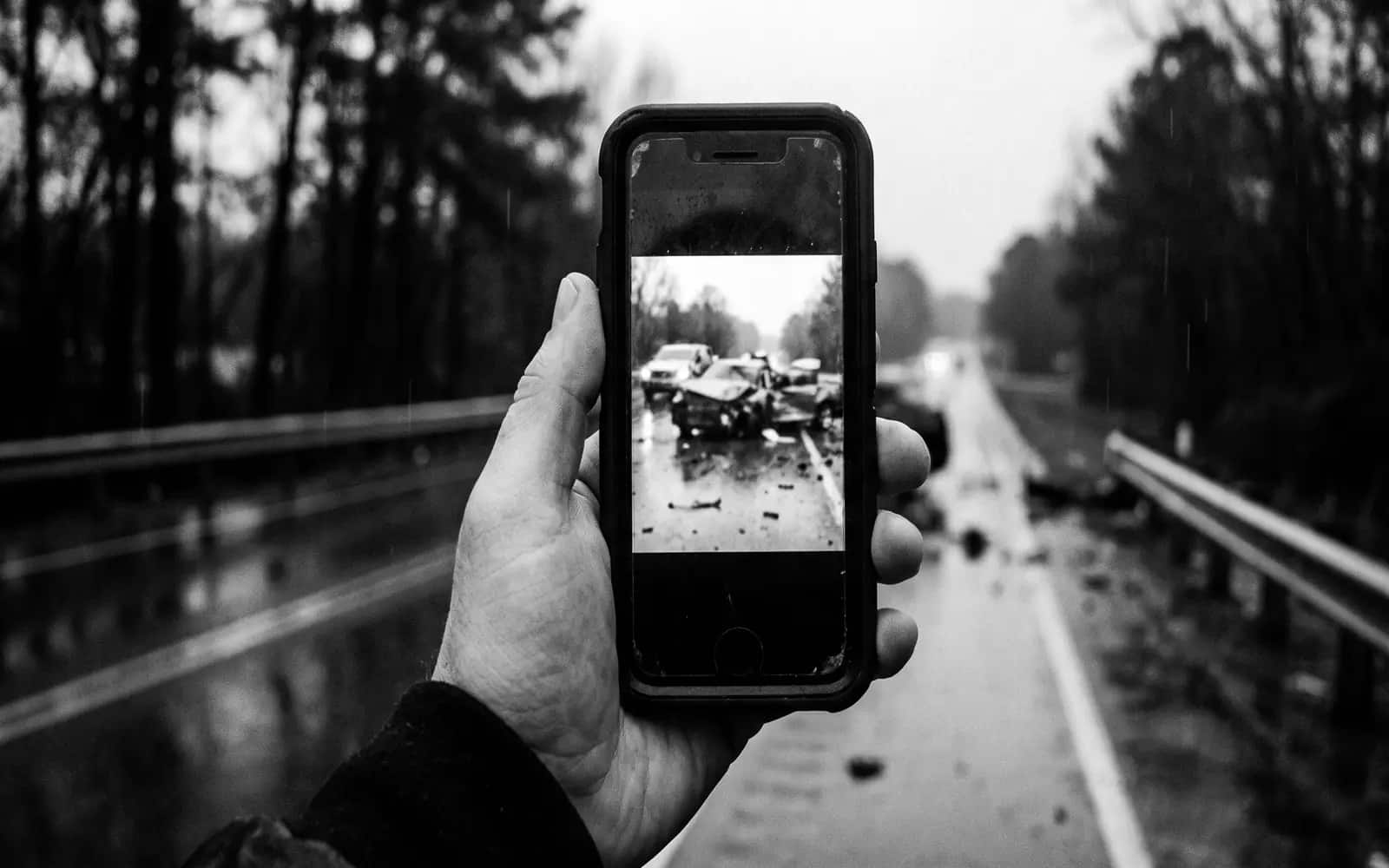
What happens when the traffic light is out?
Under section 545.151(a)(1)(B), a driver approaching a signal that shows no indication must stop and yield as if facing a stop sign.
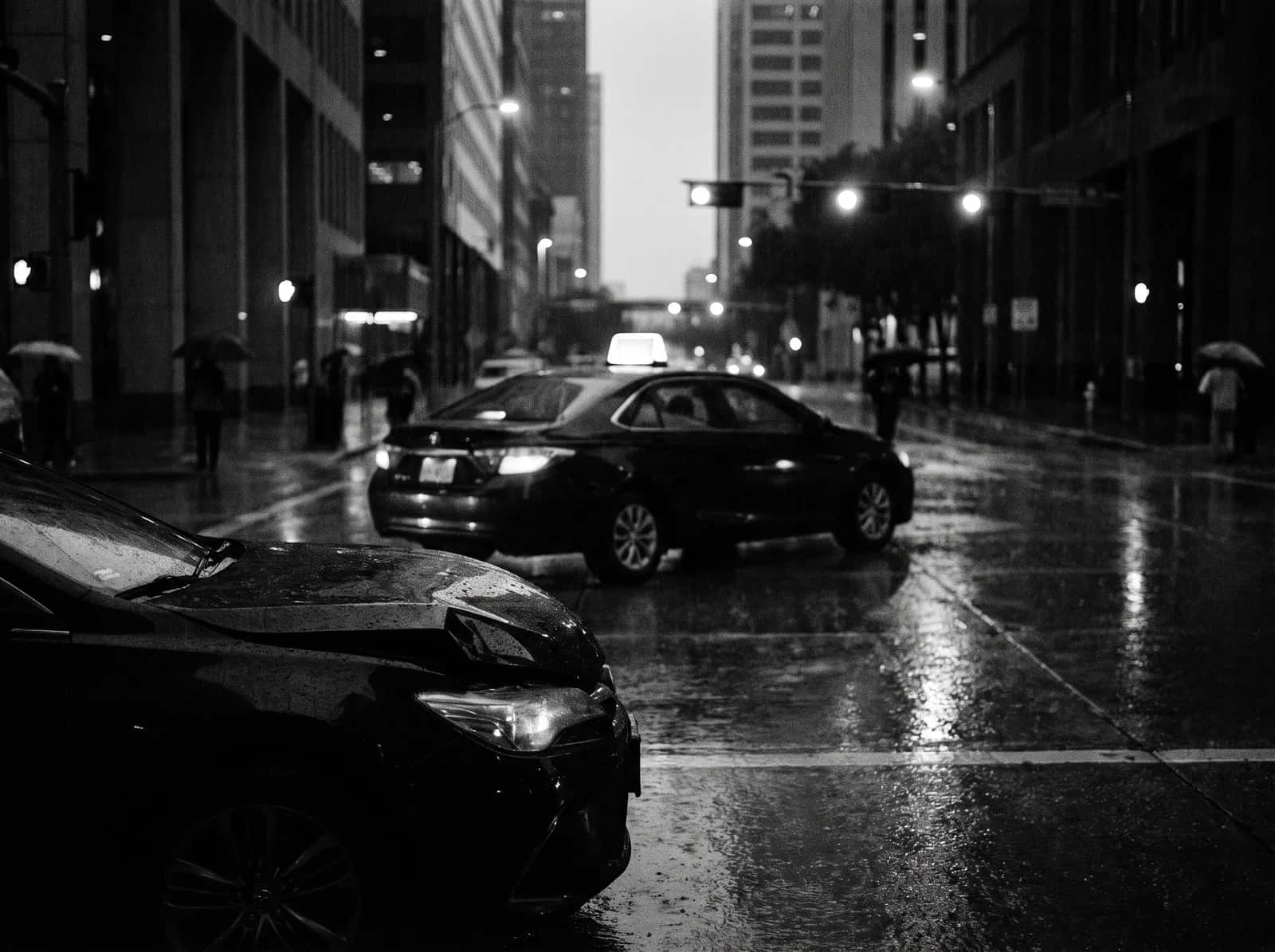
Power outages after storms leave many Houston signals dark. Drivers who roll through without stopping are not following the statute, and that conduct weighs heavily when a side-impact crash follows.
Does stopping at the sign protect a driver from fault?
No. After stopping, a driver may proceed only when the intersection can be safely entered without interference or collision.
Many T-bone crashes involve a driver who did stop and then pulled out into cross traffic. The statute requires both steps. A complete stop followed by an unsafe entry is still a failure to yield.
How is fault divided in an intersection crash?
Under Chapter 33, each driver is assigned a percentage. A driver who had the right-of-way can still share fault if speeding or distracted.
The driver who failed to yield usually bears most of the responsibility. The other driver may share it if they were speeding, ran a light, or had time to avoid the crash. An injured person recovers if their share is not greater than 50 percent, reduced by that share.
What evidence proves who failed to yield?
Video, signal timing, witness accounts, vehicle damage, and event data recorder information.
Many Houston intersections have business cameras nearby, and that footage is often overwritten within days. City signal timing records and the vehicles’ recorded speed can also show who entered when.
How it is proven after a crash
- Business, traffic, or dashcam video
- Signal timing and outage records
- Event data recorder speed and braking data
- Damage location showing the angle of impact
- Independent witness statements
Mistakes that cost people money
- Waiting to request nearby video
- Assuming the police report settles fault
- Giving a recorded statement to the other insurer early
- Skipping medical care after a side impact
Frequently asked questions
Who goes first at a four-way stop in Texas?
Section 545.151 requires each driver to stop and proceed only when the intersection can be entered safely. At uncontrolled intersections the statute requires yielding to the vehicle on the right.
What if the other driver ran a red light?
Running a red light is a separate violation of the signal rules and strong evidence of fault. Video and signal timing records are the best proof.
Can I recover if I was speeding when someone pulled out?
Possibly. Your speed may give you a share of fault, but you can recover if your share is not greater than 50 percent.
Does a stop sign hidden by trees change fault?
A blocked sign can raise a claim against the entity responsible for maintaining it. Claims against cities and the state have short notice deadlines under the Tort Claims Act.
How long do I have to sue after an intersection crash?
Generally two years from the crash under section 16.003.
This page is general information about Texas law and is not legal or medical advice. Every case depends on its own facts. Contact the firm for a free review of yours.
Keep reading