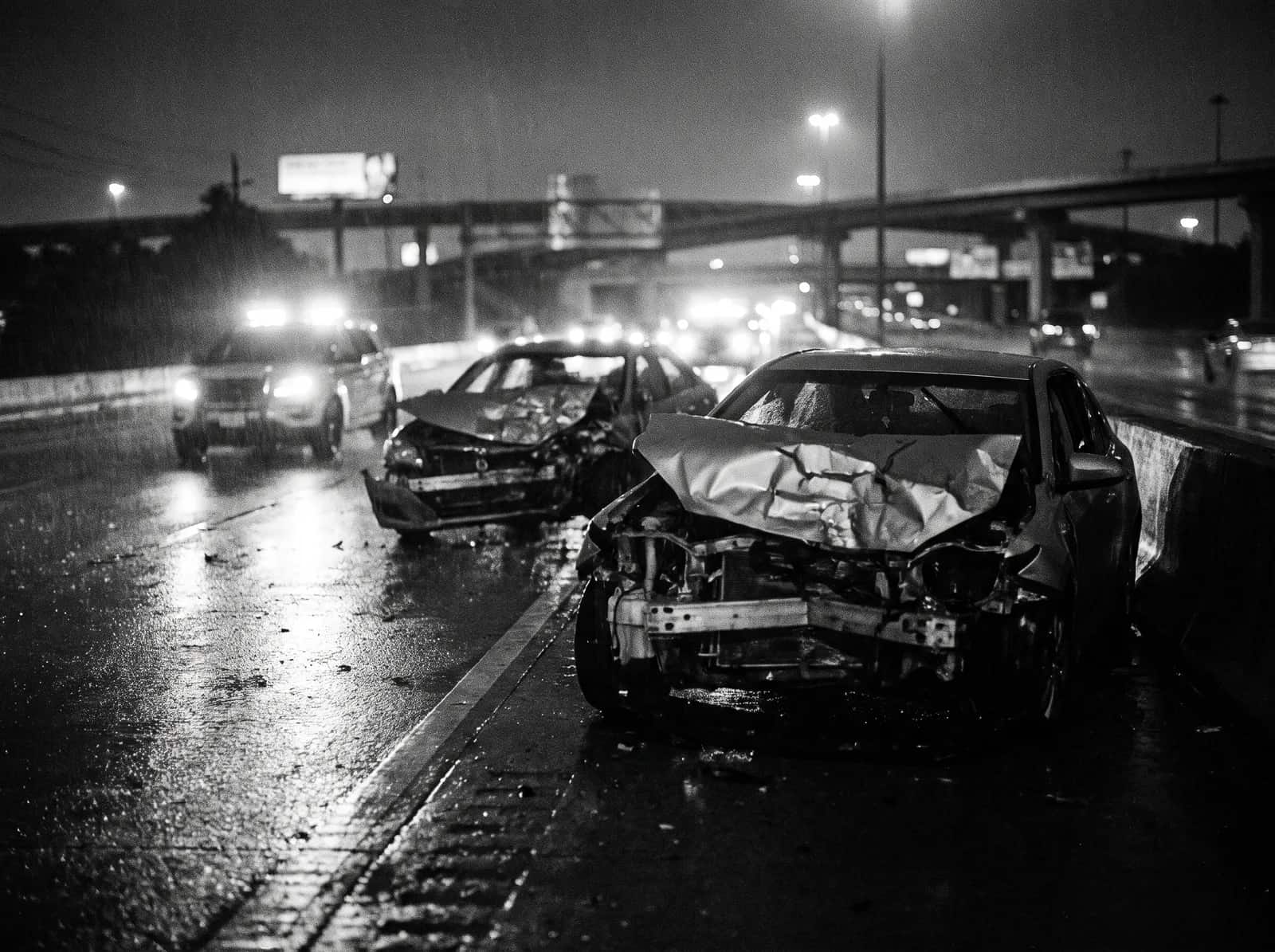

In Texas, the driver who fails to yield the right of way at an intersection, most often a left-turning driver, is at fault, and the dispute is usually over who had the green light. Owsley Law Firm secures signal timing, camera, and witness evidence before it disappears and charges no fee unless it wins. Call the same day.
Who has the right of way at a Texas intersection?
Transportation Code section 545.152 requires a driver turning left at an intersection to yield to oncoming traffic that is in the intersection or close enough to be an immediate hazard. Section 544.007 governs traffic signals, including what green, yellow, and red mean for each movement. Section 545.151 governs intersections controlled by stop signs and those with no controls at all.
In practice, a left-turn or red-light crash is a failure-to-yield case, and the injured driver usually has the stronger claim, but only if the light and lane facts are proven.
At a four-way stop, the driver who arrives first goes first, and when two drivers arrive at the same time, the driver on the left yields to the driver on the right. Right turns on red are allowed after a complete stop unless a sign prohibits them, but the turning driver must yield to pedestrians and cross traffic.
Who is at fault in a left-turn accident?
Usually the turning driver. A driver turning left across traffic must wait for a safe gap. The common exceptions are an oncoming driver who ran a red light, was speeding badly, or was traveling in a lane where they did not belong. Insurers for the turning driver will look for one of those facts and argue shared fault under Chapter 33 proportionate responsibility.
A flashing yellow arrow, now common in Texas, allows a left turn only after yielding to oncoming traffic. Drivers often treat it like a protected green arrow, and crashes follow. The signal display at the moment of the crash is part of the evidence the firm requests.
What if both drivers say they had the green light?
This is the most common dispute in intersection cases, and it is resolved with evidence rather than testimony. Texas banned red-light cameras in 2019, so those records no longer exist, but other evidence often does.
- Traffic signal timing and phase records from the city or TxDOT
- Business, gas station, and traffic cameras, which overwrite within days
- Dash camera footage from other vehicles
- Event data from both vehicles showing speed and braking
- Independent witnesses, especially drivers waiting at the light
- The crash report’s diagram and contributing-factor codes
Why are T-bone crashes so serious?
In a side-impact crash, the occupant sits inches from the point of impact with only a door between them and the other vehicle. Pelvic and hip fractures, rib and chest injuries, shoulder injuries, and head injuries from striking the window or pillar are common. Children seated on the struck side are especially at risk. Side airbags help, but they cannot remove the energy of a full-speed impact.
Side-impact injuries often require surgery and long recovery, and pelvic and hip fractures can affect a person’s ability to walk, work, and care for themselves for months. Your damages should include future medical care, lost earning capacity, and the impairment the injury causes, not only the immediate bills.
Which intersections cause the most crashes?
In Houston, many serious intersection crashes happen at freeway frontage roads, where drivers exit at highway speed and meet a signal, and on wide arterials like Westheimer, Bellaire, and Richmond. TxDOT’s Crash Records Information System publishes crash data by location, and the crash report for your collision is available through the TxDOT online purchase system, usually within about ten days.
What if a stop sign was missing or a signal was malfunctioning?
A downed stop sign, a signal stuck on green in both directions, or sightlines blocked by vegetation can make a city, county, or the State partly responsible. Claims against government entities are governed by the Texas Tort Claims Act, which has strict written notice deadlines, sometimes as short as a few months, and damage limits. These claims must be identified early.
Commercial property owners can also contribute when landscaping, signs, or parked vehicles on their property block a driver’s view of an intersection. Their role depends on the specific facts, and photographs of the sightlines taken soon after the crash are important.
What should I do after an intersection crash?
If you can, photograph the intersection, the traffic signals, both vehicles’ final positions, and any skid marks. Look around for cameras on businesses, gas stations, and traffic poles, and note their locations. Ask witnesses which light they saw and get their contact information, because independent witnesses often decide who had the green. Get medical care the same day. Do not agree with the other driver about what happened at the scene; statements made in shock are often wrong and are used later. Call a lawyer quickly so requests for signal timing records and video go out while they still exist.
How long do I have to file?
The general deadline is two years from the crash under Civil Practice and Remedies Code section 16.003. Camera footage and witness memories last a matter of days, so the practical window to preserve the evidence is much shorter.
Common questions
What clients ask about intersection accidents.
Who is at fault in a left-turn accident in Texas?
Usually the turning driver, who must yield to oncoming traffic under Transportation Code section 545.152. The exception is an oncoming driver who ran a red light or was speeding badly.
Both of us say we had the green light. What now?
Signal timing data, cameras, and witnesses resolve it. The firm requests those records immediately because camera footage is overwritten within days.
Are red-light camera records available?
No. Texas banned red-light cameras in 2019. Business, traffic, and dash camera video, along with signal timing records, now fill that role.
Can I recover if I was partly at fault?
Yes, if you were 50 percent or less responsible. Under Chapter 33, your recovery is reduced by your percentage of fault.
What if a broken traffic signal caused the crash?
A government entity may share responsibility under the Texas Tort Claims Act, which has short notice deadlines. Call promptly so the deadline is not missed.