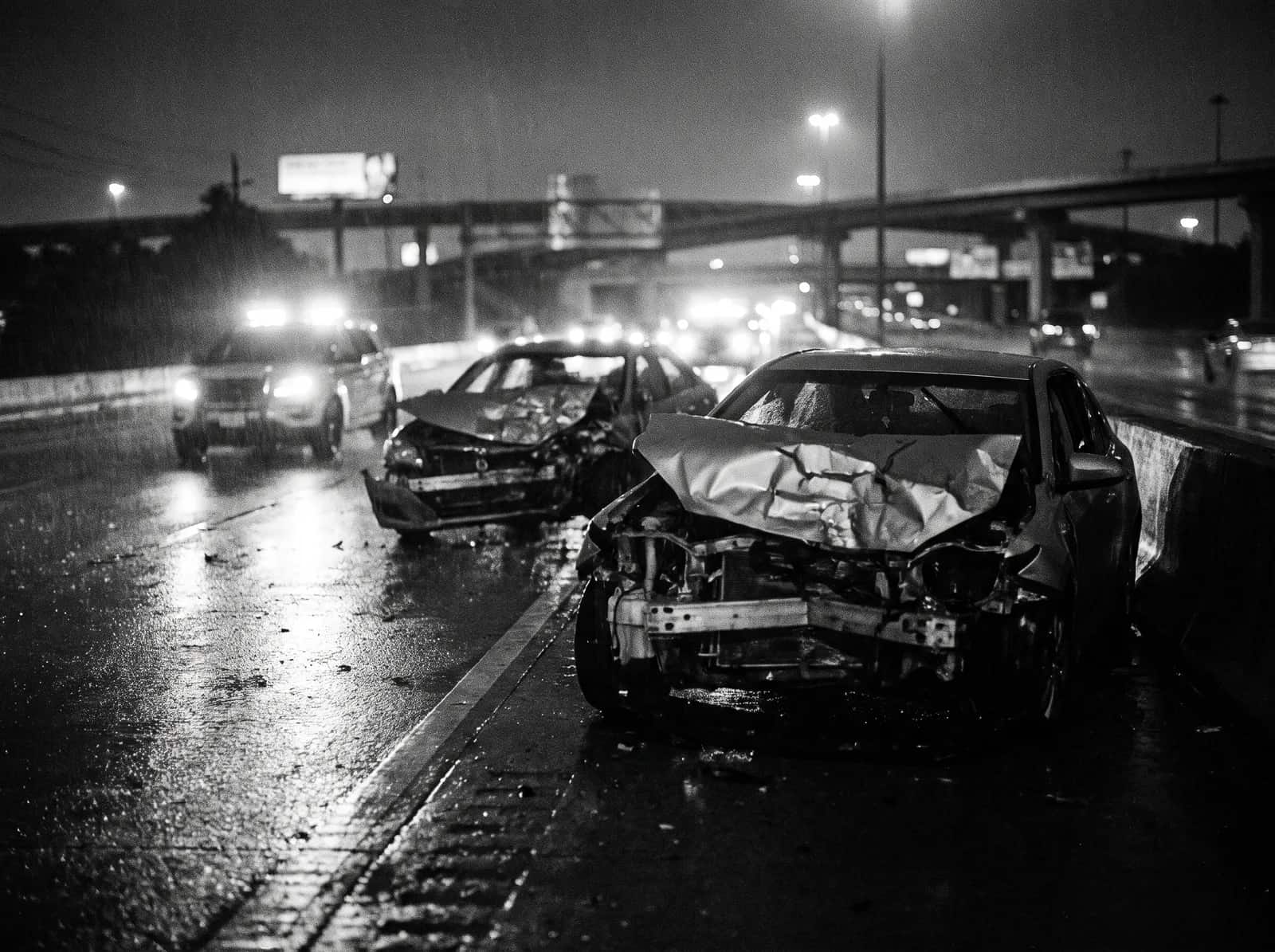

In Texas, a crash caused by a dangerous road condition can be a claim against a city, county, or TxDOT, but only within the narrow limits of the Texas Tort Claims Act, with damages caps and a formal notice deadline that is generally six months and sometimes shorter. A private contractor may also be liable. Owsley Law Firm evaluates these claims quickly and charges no fee unless it wins.
Can you sue the government for a bad road in Texas?
Government entities in Texas are generally immune from suit unless the Legislature has waived immunity. The Texas Tort Claims Act, Chapter 101 of the Civil Practice and Remedies Code, waives immunity for certain premises defects and certain failures involving traffic signs and signals. Outside those categories, a road claim may be barred no matter how dangerous the road was. That is why the first question in a road defect case is whether the claim fits the Act at all.

What is the difference between a premise defect and a special defect?
Under section 101.022, the duty a government entity owes depends on the kind of condition. For an ordinary premise defect, the entity generally owes the duty owed to a licensee, which means the claimant must usually prove the entity actually knew of the dangerous condition. For a special defect, such as an excavation or obstruction on a roadway, the entity owes the higher duty owed to an invitee. Whether a pothole, drop-off, or obstruction counts as a special defect is a legal question that often decides the case.
What about missing signs and broken signals?
Section 101.060 addresses traffic signs, signals, and warning devices. A government entity is generally not liable for a decision not to install a sign or signal, which is treated as a discretionary choice. But it can be liable for failing to correct the absence, condition, or malfunction of a sign or signal within a reasonable time after notice. A stop sign knocked down and never replaced, or a signal stuck on green in two directions, may fit this provision.
What road conditions cause crashes?
Road defect crashes often involve one of these conditions.
- Deep potholes that cause a loss of control or a blown tire
- Pavement drop-offs at the road edge that trip a vehicle into a rollover
- Missing or knocked-down stop signs and warning signs
- Traffic signals that malfunction or show conflicting indications
- Debris, steel plates, or construction materials left in a lane
- Flooding at a known low point without warning devices
- Faded lane markings in a shifted or temporary lane
How much can you recover from a government entity?
Section 101.023 caps damages. For the state, including TxDOT, the cap is $250,000 for each person and $500,000 for each single occurrence for bodily injury or death. For a municipality the caps are the same, $250,000 and $500,000. For other units of local government, such as counties, the caps are $100,000 per person and $300,000 per occurrence. These caps make it important to identify any private party, such as a contractor, whose work created the danger, because private parties are not protected by them.
What is the notice deadline?
Section 101.101 generally requires formal notice of a claim to the government entity within six months of the incident, describing the injury, the time and place, and the incident. City charters may require notice much sooner: the Houston and San Antonio charters require it within 90 days. Missing the notice deadline can end the claim unless the entity had actual notice of the injury and its role. The two-year lawsuit deadline under section 16.003 also applies.
Can a contractor be liable for a road defect?
Yes. When a private contractor is building, repairing, or maintaining a road, it can be liable for dangerous conditions it creates, such as an unprotected drop-off, a loose steel plate, an unmarked lane shift, or debris left in a lane. Contractors are not protected by the Tort Claims Act damages caps. Project contracts, traffic control plans, and daily logs show who was responsible for the condition at the time of the crash.
What about flooded roads in Houston?
Houston streets and underpasses flood quickly in heavy rain, and drivers are sometimes trapped in high water. Whether a government entity can be liable depends on the Tort Claims Act: a decision about drainage design or where to place warning devices is often treated as discretionary and protected, while a failure to repair a known malfunctioning flood gate or warning sign after notice may be different. Claims against another driver who caused a crash in flood conditions are evaluated under ordinary negligence. These cases are fact-specific and should be reviewed quickly given the short notice deadlines.
What should you do after a crash caused by the road?
Photograph the condition immediately, with something in the picture for scale, because potholes are patched and signs are replaced quickly. Note the exact location and get witness information. Keep the damaged tire or part. Report the condition to the city or TxDOT in writing and keep a copy, but get advice before sending formal claim notice so it meets the requirements. Get medical care and keep records. Then talk to a lawyer quickly, because the notice clock starts on the day of the crash.
Common questions
What clients ask about road defect crashes.
Can I sue the City of Houston for a pothole?
Possibly, but only within the Texas Tort Claims Act. Proof that the city knew of the pothole is often required, damages are capped, and the city charter sets a short notice deadline.
Who is responsible for the road where I crashed?
It depends on the road. TxDOT maintains state highways and most freeway frontage roads, while cities and counties maintain local streets. A contractor may control a road during construction.
What if a traffic light was broken when I crashed?
Section 101.060 may allow a claim if the entity failed to fix the malfunction within a reasonable time after notice. The other driver may also be at fault for not treating it as a stop.
Are damages against the government capped?
Yes. Caps are $250,000 per person for the state and municipalities and $100,000 per person for other local units, with per-occurrence limits.
How long do I have to give notice?
Generally six months under section 101.101, and often less under a city charter. Do not wait.