
Texas Transportation Code section 545.155 says an operator about to enter or cross a highway from an alley, building, or private road or driveway shall yield the right-of-way to a vehicle approaching on the highway to be entered. In a crash claim, this rule can help show who was at fault and how fault is shared.
Texas Transportation Code chapter 545 (Legislature's text host). Find section 545.155 and read the exact words of the rule.
Many crashes happen at the edge of a road. A driver pulls out of a parking lot, a gas station, an alley or a home driveway. Another car is coming along the road. Section 545.155 of the Texas Transportation Code is the rule that speaks to this moment.
This page explains what the section says, how its parts line up with a crash, and how it can show up in an injury claim. It describes the law in general terms. It is not advice about your case. A lawyer can look at your facts.
What does Transportation Code 545.155 say?
The section is titled "Vehicle Entering Highway from Private Road or Driveway." It is short, and it is a yield rule.
The text reads: "An operator about to enter or cross a highway from an alley, building, or private road or driveway shall yield the right-of-way to a vehicle approaching on the highway to be entered."
The duty falls on the driver who is coming from the alley, building, private road or driveway. The driver on the highway is the one who is given the right-of-way.
- Who has the duty: the operator about to enter or cross
- Where the driver starts: an alley, building, or private road or driveway
- What the driver must do: yield the right-of-way
- To whom: a vehicle approaching on the highway to be entered
Who has the right-of-way when pulling out of a driveway or parking lot?
Under the text of section 545.155, the vehicle approaching on the highway has the right-of-way over an operator entering or crossing from a driveway, private road, alley or building.
The statute uses the words "shall yield the right-of-way." Those words place the duty on the driver leaving the private spot.
The section's text speaks of a building, an alley and a private road or driveway. Whether a particular lot exit or access lane fits those words can depend on the facts. If that is in doubt, a lawyer can review the layout and how the place is used.
Does the rule apply when crossing a road, not just entering it?
Yes, by its words. The section covers an operator "about to enter or cross" a highway.
A driver may leave a driveway and cross all lanes to turn into another driveway or to reach a street on the far side. The statute's wording covers crossing as well as entering.
The duty is owed to a vehicle approaching on the highway to be entered. That phrase ties the rule to traffic that is coming toward the point where the driver enters.
How is fault decided after a crash leaving a driveway?
Texas shares fault by percentage. Civil Practice and Remedies Code chapter 33 sets the rules for that.
Under section 33.003, the trier of fact determines the percentage of responsibility. That is done for each claimant, each defendant, each settling person and each responsible third party designated under section 33.004.
Under section 33.001, a claimant may not recover damages if his or her percentage of responsibility is greater than 50 percent. Under section 33.012, if the claimant is not barred, the court reduces the damages by a percentage equal to the claimant's percentage of responsibility.
Under section 33.013, a liable defendant is generally liable only for the percentage of damages equal to that defendant's percentage of responsibility. The section also lists cases where a defendant is jointly and severally liable, including when that defendant's percentage is greater than 50 percent.
In a driveway crash, the other side may argue that the highway driver was speeding or not paying attention. The yield rule does not end that discussion. Each side's conduct can be weighed.
What is negligence per se and does it matter here?
It is a general idea that breaking a safety rule can be treated as carelessness. This page does not state how a Texas court would apply it to section 545.155.
Lawyers sometimes say a driver who breaks a traffic rule was negligent because of that violation. Whether and how that idea applies is a question of law for a court and for your lawyer.
Even if a yield violation is shown, the claim still has other parts. These include whether the violation helped cause the crash, what injuries resulted, and how fault is shared with others under chapter 33.

What evidence shows a driver failed to yield?
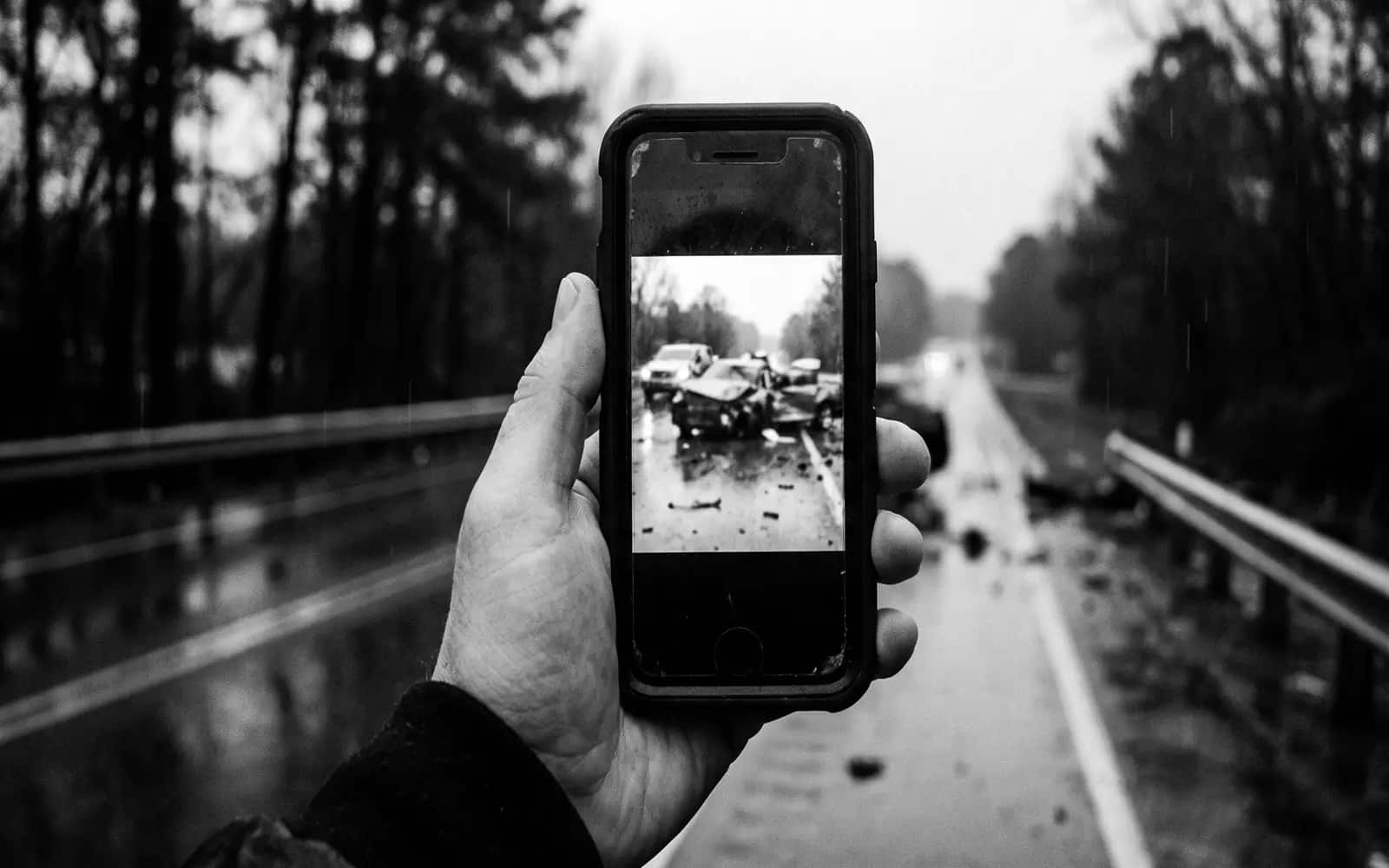
Evidence that shows where each vehicle was, how fast it was moving and what each driver did before impact is most useful.
Because the rule turns on who was entering and who was approaching, proof often centers on the point where the driveway meets the road. Evidence can fade fast, so it helps to collect it early.
Video is often the clearest proof. Businesses with a lot or driveway may have cameras. Ask a lawyer how and how fast to request it.
- Photos of the driveway, the road, signs and sight lines
- Photos of vehicle damage and where the vehicles ended up
- Video from nearby cameras, dash cameras or phones
- Names and contact details of witnesses
- The police crash report, if one was made
- Your notes on which way each vehicle was headed
Does a ticket or no ticket change my injury claim?
A ticket is not the same as a finding of fault in a civil claim. Not getting a ticket does not by itself end a claim.
Section 545.155 is written as a duty to yield. The text I reviewed does not say that a citation is needed before a driver can be found responsible in a civil case.
In a civil claim, fault is decided by the percentage process in chapter 33. How a ticket, a plea or an officer's opinion may be used as evidence is a legal question. Ask a lawyer before you assume it helps or hurts.
Section 545.155 duties and how each is shown after a crash
| Part of the rule | What the words say | How it can be shown |
|---|---|---|
| Who | An operator | Driver identity from the crash report, insurance details and witness statements |
| About to enter or cross | The operator is about to enter or cross a highway | Video, photos of the point of entry, vehicle positions after impact, driver and witness accounts |
| Starting place | An alley, building, or private road or driveway | Photos and maps of the driveway or lot exit, and where the vehicle came from |
| The duty | Shall yield the right-of-way | Evidence of whether the driver stopped, slowed or looked, such as video and witness accounts |
| The other vehicle | A vehicle approaching on the highway to be entered | Evidence of the other vehicle's direction, lane and speed, such as video and damage |
| Sharing fault | The trier of fact determines each person's percentage of responsibility | Evidence about both drivers' conduct, since a percentage over 50 bars recovery and a lower one reduces damages |
How it is proven after a crash
- Photos of the driveway or lot exit from the road and from the driver's view
- Photos of both vehicles and the road before they are moved, if safe
- Names and contact details for witnesses
- A copy of the crash report, if one was made
- A list of nearby businesses with cameras, with the date and time of the crash
- Notes on lane, direction and speed, written down soon after
Mistakes that cost people money
- Saying the crash was your fault at the scene or to an insurer
- Waiting too long to ask for video, which may be overwritten
- Assuming no ticket means no claim
- Assuming a ticket to the other driver settles every fault question
- Ignoring your own part, since shared fault can reduce or bar recovery
Related Texas laws
- All Texas laws explained
- Texas Reckless Driving Law: Transportation Code 545.401
- Texas Transportation Code 545.101: Turning at Intersections
- Texas Transportation Code 545.153: Stop and Yield Signs
- Texas Transportation Code 545.156: Yield to Emergency Vehicles
- How to get a Texas crash report
- Car accident lawyer
- Houston injury lawyer
Where this fits in your claim
- 1. The crash: what to do at the scene and in the first days
- 2. The report: how to get your Texas crash report (CR-3)
- 3. The insurance claim: claims phone numbers and first calls
- 4. Treatment: how PIP pays medical bills
- 5. Liens: hospital liens on a settlement
- 6. The demand: what a demand letter does
- 7. The lawsuit: the two-year deadline to sue
Frequently asked questions
What does Texas Transportation Code 545.155 cover?
It covers an operator about to enter or cross a highway from an alley, building, or private road or driveway. That operator shall yield the right-of-way to a vehicle approaching on the highway to be entered.
Is the driver leaving the parking lot always at fault?
Not always. The statute puts a yield duty on that driver, but fault in a claim is shared by percentage under Civil Practice and Remedies Code chapter 33.
Can I still recover if I was partly at fault?
Under section 33.001, a claimant may not recover damages if his or her percentage of responsibility is greater than 50 percent. If not barred, the damages are reduced by the claimant's percentage under section 33.012.
Does the other driver need to be ticketed for me to have a claim?
The text of section 545.155 does not mention tickets. Fault in a civil claim is decided through the chapter 33 process, so ask a lawyer how a citation may be used.
Does this section apply to alleys and private roads?
Yes. The words say alley, building, or private road or driveway.
Where can I read the law myself?
The Legislature's text of Transportation Code chapter 545 is linked on this page. Section 545.155 is in the subchapter on right-of-way.
This page is general information about Texas law and is not legal or medical advice. Every case depends on its own facts. Contact the firm for a free review of yours.
Keep reading


Sources