In El Paso, a person hurt in a car accident caused by someone else can recover medical costs, lost income, and pain under Texas law. Owsley Law Firm handles El Paso car accidents from its Houston offices, comes to you, and charges no fee unless it wins. Call before you speak with any insurer.
Car Accidents in El Paso
Where do El Paso car accidents happen?
El Paso car crashes often begin on I-10, and at the Spaghetti Bowl interchange in particular. El Paso County cases are filed at the County Courthouse downtown.
El Paso car crashes happen on I-10 because there is nowhere else for the traffic to go. The Spaghetti Bowl interchange with US-54 funnels downtown, Fort Bliss, and cross-border traffic through one set of ramps, and the East Side exits at Zaragoza and Loop 375 back up with port-of-entry trucks. Dust storms and sudden weather produce multi-car pileups on the eastern and western approaches. On the surface streets, Montana Avenue and Mesa Street lead the count. The firm’s El Paso car cases most often begin on I-10 or at the Spaghetti Bowl.
Corridors where El Paso car accidents cluster
- I-10 through downtown and the Spaghetti Bowl interchange with US-54
- I-10 East at Loop 375 and Zaragoza Road
- Loop 375 Border Highway near the Ysleta port of entry
- US-54 Patriot Freeway at Fort Bliss
- Montana Avenue (US-62/180) on the East Side
- Mesa Street and Sunland Park Drive on the West Side
Cases from El Paso
What does a El Paso car accident case look like?
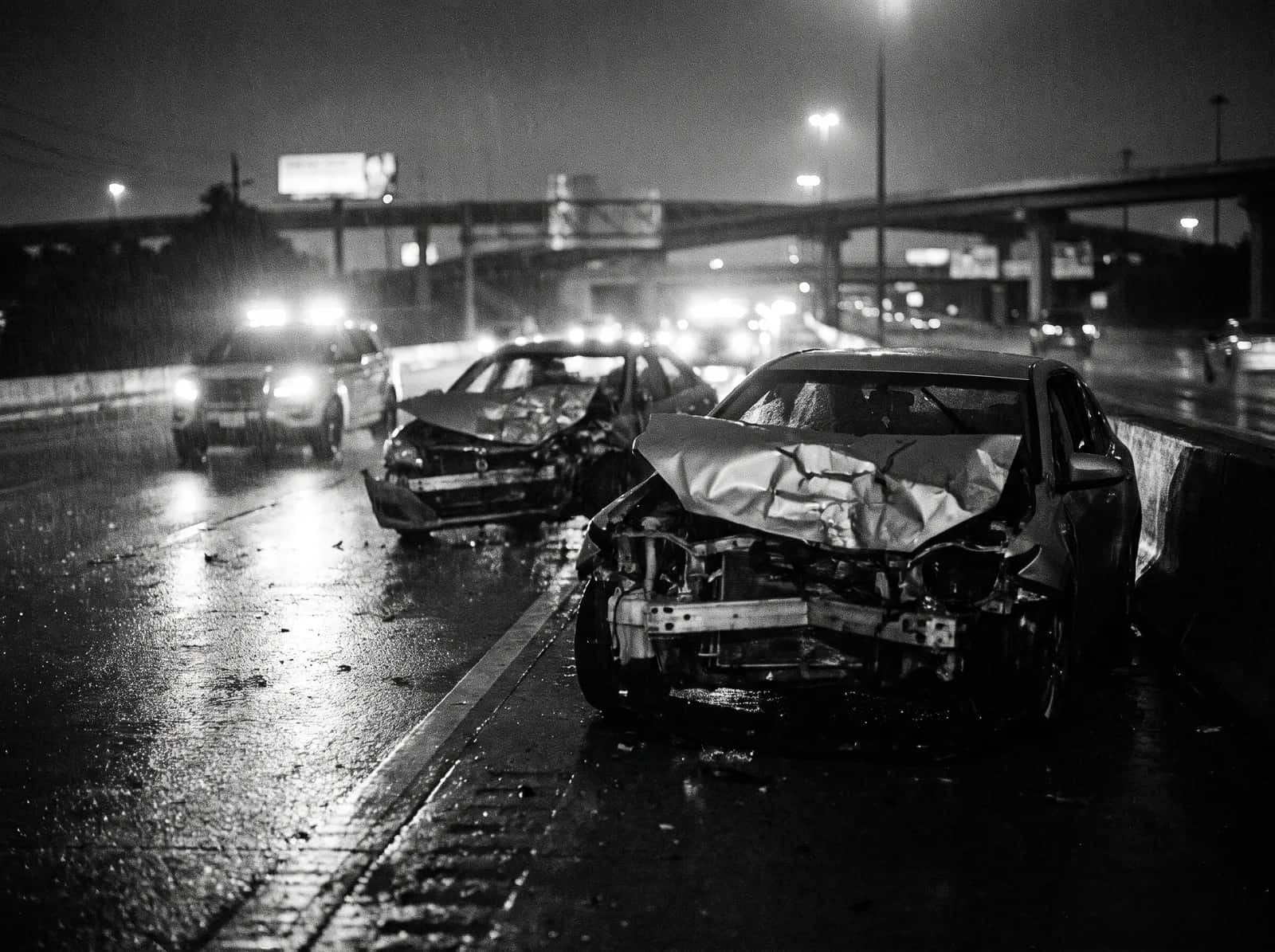
A dust storm on I-10 east of the city causes a chain-reaction crash; the injured driver in the fourth car has claims against three insurers.
A soldier from Fort Bliss is hit by a distracted driver on US-54; his claim coordinates with military medical care.

What to do now
What should you do after a car accident in El Paso?
- Get examined the same day. University Medical Center of El Paso (Level I trauma) and Del Sol Medical Center handle the serious car accident injuries from El Paso; an urgent care visit the same day is enough to start the record if you are not transported.
- Photograph the vehicles, the road, and your injuries where it happened, especially on I-10 and Loop 375 (Border Highway and Joe Battle), where scenes are cleared within minutes.
- Get the El Paso crash report. El Paso Police Department reports are available through the TxDOT Crash Report Online Purchase System, usually within 10 days. The firm obtains it for clients at no charge.
- Report the crash to your own insurer, but give no recorded statement to the other driver’s carrier until you have counsel.
- Know where the case goes. El Paso car accidents suits are filed in the El Paso County Civil District Courts, El Paso County Courthouse, or El Paso County Courts at Law depending on the crash location.
- Call the firm. El Paso clients are handled from Houston by phone, video, and mail, and the firm travels to El Paso for meetings, depositions, and court. The consultation is free.
Go deeper
More on car accident claims in El Paso and Texas.
Common questions
El Paso car accident questions
Which El Paso roads have the most car accidents?
I-10, especially at the Spaghetti Bowl and the East Side exits, Loop 375, US-54, and Montana Avenue.
Where is an El Paso car accident case filed?
In the El Paso County Civil District Courts at the County Courthouse downtown.
What if the driver who hit me in El Paso lives in Mexico?
You can still bring the claim in El Paso County if the crash happened there. Drivers operating in Texas must meet Texas financial responsibility rules, and Mexican-only insurance often does not satisfy them. If the driver had no valid U.S. coverage, your own uninsured motorist coverage can step in. The El Paso Police crash report should list the driver’s insurer and plates.
What if a soldier from Fort Bliss hit me in El Paso?
It depends on whether the soldier was on duty. A soldier driving a government vehicle on duty makes it a Federal Tort Claims Act case, which starts with an administrative claim filed with the Army within two years. An off-duty soldier in a personal car is handled like any other driver, through that driver’s own auto policy.