
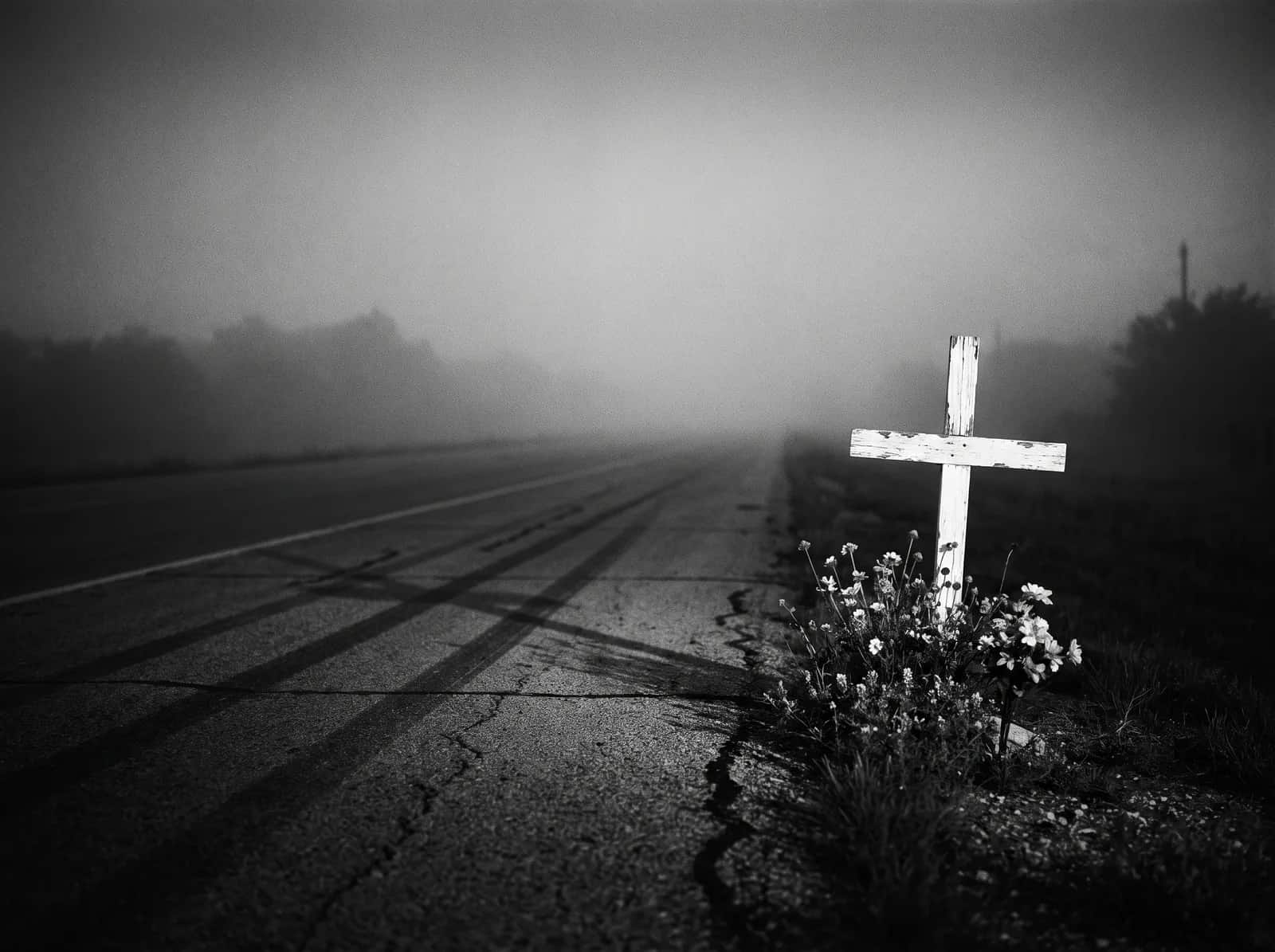

In El Paso, when a crash caused by someone else kills a family member, the spouse, children, and parents can bring a wrongful death claim under Texas law for lost support, companionship, and mental anguish. Owsley Law Firm handles El Paso wrongful death from its Houston offices, comes to you, and charges no fee unless it wins. Call before you speak with any insurer.
Wrongful Death in El Paso
Where do El Paso fatal crashes happen?
El Paso County fatal crashes cluster on I-10, Loop 375, and Montana Avenue at night.
El Paso County fatal crashes cluster on I-10, Loop 375, and Montana Avenue at night, and pedestrian deaths on Montana and Dyer are a persistent problem. The firm’s El Paso wrongful death cases most often begin on I-10 or Montana after midnight, and many involve alcohol. El Paso Police’s Special Traffic Investigations unit investigates, and the family’s claim is filed at the County Courthouse downtown.
Corridors where fatal crashes cluster in El Paso
- I-10 through downtown and the Spaghetti Bowl interchange with US-54
- I-10 East at Loop 375 and Zaragoza Road
- Loop 375 Border Highway near the Ysleta port of entry
- US-54 Patriot Freeway at Fort Bliss
- Montana Avenue (US-62/180) on the East Side
- Mesa Street and Sunland Park Drive on the West Side
What does an El Paso family face in the first weeks after a fatal crash?
A funeral, an investigation, and insurance calls all at once. Some evidence and deadlines need attention early, but the family does not have to make decisions about a claim right away.
TxDOT counted 80 people killed in 76 fatal crashes in El Paso County in 2024, 69 of them inside the City of El Paso. For each family, the weeks after the crash bring the medical examiner, a police investigation, calls from insurers, and paperwork. A family does not have to give a recorded statement to the at-fault driver's insurer, and should not sign a release or a check before understanding exactly what it gives up.
What protects the claim most in those weeks is preserving evidence: the crash report and any reconstruction, vehicle data, video from businesses and traffic cameras, and the names of witnesses. Those can be secured on the family's behalf while the family grieves, and doing it early prevents the most common losses of proof.
- Do not sign releases or give recorded statements to the other insurer
- Keep the crash report number and the name of the investigating agency
- Keep medical, ambulance, and funeral bills
- Gather pay stubs, tax returns, and benefits records
- Write down what officers and witnesses said while it is fresh
Who can bring a wrongful death claim for an El Paso crash?
The surviving spouse, children, and parents of the person who died. One of them can bring the case for all of them.
Civil Practice and Remedies Code section 71.004 gives the wrongful death claim to the spouse, children, and parents, and lets one or more of them bring it for the benefit of all. Brothers, sisters, grandparents, and stepchildren who were never adopted cannot bring their own wrongful death claims, even when they were close to the person who died. An adoptive parent or adopted child has the same rights as a biological one.
If none of the beneficiaries files within three calendar months of the death, the executor or administrator of the estate must bring the claim unless all of the beneficiaries ask that it not be brought. Families in El Paso are often spread across Texas, New Mexico, and Mexico, so deciding early, together, who will lead the case avoids confusion and duplicate claims.
What is the survival claim, and how do El Paso's probate courts fit in?
The survival claim belongs to the estate and recovers what the person who died could have claimed. El Paso County's two statutory probate courts can appoint the representative who brings it.
Under section 71.021, an injury claim does not end with the person's death; it passes to the heirs, legal representatives, and estate. It covers medical expenses from the crash until death, funeral and burial costs, and the conscious pain and mental anguish the person suffered before death. It is a separate claim from the family's wrongful death claim, and both are usually brought together.
Government Code section 25.0731 creates Probate Court No. 1 and Probate Court No. 2 of El Paso County, and section 25.0733 gives Probate Court No. 2 primary responsibility for mental illness proceedings, which leaves estates mainly with Probate Court No. 1. The County describes its probate courts as also hearing lawsuits by or against an estate's personal representative. Whether an estate needs a probate case at all depends on the will, the property, and the heirs, and it decides who has authority to bring and settle the survival claim.
What damages can an El Paso family recover?
Lost financial support and household services, lost companionship, and the family's mental anguish, plus the estate's survival damages.
The family's wrongful death damages include the support and services they would have received, the loss of love, companionship, and society, and their mental anguish. Texas courts have also recognized loss of inheritance. Under section 71.011, wrongful death damages are not subject to the debts of the person who died, which matters when the estate owes money. Under section 71.010, a jury divides the damages among the beneficiaries in the shares it finds.
Exemplary damages are available under section 71.009 when the death was caused by a wilful act or omission or gross negligence. Under Article XVI, Section 26 of the Texas Constitution, exemplary damages for a death go only to the surviving spouse and heirs of the body. They are subject to the cap in Civil Practice and Remedies Code section 41.008, which does not apply to certain conduct, including intoxication manslaughter. The figures in a given case depend on the evidence, and no one can responsibly predict them in the first weeks.
Which records matter most after a fatal El Paso County crash?
The crash report and any reconstruction, the medical examiner's findings, 911 recordings, vehicle data, and video. Several disappear on their own schedule.
The El Paso County Office of the Medical Examiner, an independent, nationally accredited agency, investigates sudden and unexpected deaths in the county and determines cause and manner of death. Its autopsy and toxicology findings often answer whether alcohol or drugs were involved and whether the person survived for a time after the crash, which bears directly on the survival claim. Final reports can take weeks.
Inside the city, the El Paso Police Department, headquartered at 911 N. Raynor Street, investigates; outside it, the sheriff or DPS usually does. Texas officers must file reports for crashes involving death within ten days under Transportation Code section 550.062, and copies are available through TxDOT's Crash Report Online Purchase System. Business camera video is often overwritten within days, and a vehicle can be salvaged quickly, so preservation letters should go out early.
What if a tractor-trailer from the ports caused the death?
A commercial truck adds the motor carrier, federal insurance minimums, and company records to the case. Some of those records are kept only for months.
El Paso's ports of entry put heavy freight on I-10, US-54, and Loop 375, the César Chávez Border Highway. TxDOT's I-10 Connect project describes trucks and commuters diverted onto local streets between I-10 and Loop 375, and congestion near the Bridge of the Americas that backs up onto US-54. When a truck causes a death on those routes, the claim reaches the driver, the carrier, and sometimes the companies that loaded, owned, or arranged the load.
Federal rules set minimum insurance for for-hire interstate carriers and for carriers of oil and hazardous materials under 49 CFR Part 387, and hours-of-service records under 49 CFR Part 395 must be kept for six months. A freight broker's negligent selection of an unsafe carrier is a claim that federal law does not preempt (Montgomery v. Caribe Transport II, U.S. 2026). Under Chapter 72 of the Civil Practice and Remedies Code, a commercial vehicle case can be tried in phases, which affects when evidence about the company comes in.

What if a federal vehicle or a Fort Bliss soldier was involved?
It depends on whether the driver was on duty. An on-duty federal driver means a Federal Tort Claims Act claim; an off-duty soldier in a personal car means an ordinary Texas claim.
For a death caused by a federal employee acting within the scope of the job, the claim is against the United States under 28 U.S.C. 2679, and it must first be presented in writing to the agency within two years under 28 U.S.C. 2401(b). Suit must follow within six months of a mailed denial, in the El Paso Division of the Western District of Texas, tried to a judge without a jury under 28 U.S.C. 2402. The United States does not pay punitive damages under 28 U.S.C. 2674, and attorney fees are capped by 28 U.S.C. 2678.
When the person who died was a service member killed on duty in a government vehicle, the Feres doctrine generally bars a suit against the United States, and military survivor benefits apply. When the person who died was a soldier off duty, hit by a civilian or by another soldier driving a personal vehicle, the family's claims proceed under Texas law against that driver's insurance. The Servicemembers Civil Relief Act, 50 U.S.C. 3936, can affect deadlines where a servicemember is a party.
What if a city or county vehicle caused the death?
A claim against the City of El Paso, including Sun Metro, requires written notice to the mayor within 90 days, or six months for good cause shown. Damages are capped by the Tort Claims Act.
The City Attorney's claims page cites City Charter Section 1.5 and Municipal Code Chapter 3.28 for the 90-day notice rule, and section 101.101 of the Civil Practice and Remedies Code ratifies charter periods like it. Claims against El Paso County or another local government generally require notice within six months, and city charters can require notice sooner than six months. Under section 101.101(c), the notice requirement does not apply if the governmental unit had actual notice that a death occurred, but families should not rely on that without advice.
Under section 101.023, a city's liability is capped at $250,000 per person and $500,000 per occurrence, and other local governments at $100,000 and $300,000. Those caps can fall far short of the loss in a death case, which is why other parties, such as a private driver who shared fault, matter.
What if the crash happened across the state line or the border?
Texas courts can hear a wrongful death claim for a crash outside Texas in some circumstances, but another jurisdiction's law may decide important questions.
El Paso sits against New Mexico and Mexico, and families regularly drive both directions. Civil Practice and Remedies Code section 71.031 lets Texas courts hear a death claim even when the crash happened in another state or country, if that place's law or Texas law gives a right to sue and the suit is filed within the Texas deadline. For a resident of another state or country, the suit must also be filed within that place's deadline, and for a citizen of a foreign country, that country must have equal treaty rights with the United States.
Even when a Texas court hears the case, section 71.031(c) tells the court to apply the substantive law that fits the facts, which may be New Mexico or Mexican law for a crash there. That can change how fault is shared and what damages are available. A crash at Sunland Park, Santa Teresa, or Anthony on the New Mexico side should be evaluated with that in mind from the start.
What if the at-fault driver had little or no insurance?
The family's uninsured and underinsured motorist coverage, an employer's policy, or a bar that overserved the driver may make up the difference.
Texas minimum liability coverage is $30,000 per person and $60,000 per crash under Transportation Code section 601.072, which rarely comes close to the loss in a death case. The deceased person's own auto policy, and sometimes other household policies, may carry uninsured and underinsured motorist coverage, which insurers must offer under Insurance Code section 1952.101.
Under Alcoholic Beverage Code section 2.02, a bar or restaurant can be liable when it served a customer who was obviously intoxicated to the point of being a clear danger and the intoxication caused the crash. A criminal case against the driver can proceed alongside the family's civil claim; the family does not have to wait for it. Finding every policy early is one of the most valuable parts of a wrongful death case.
Other sources are easy to miss. If the driver was on the job, delivering for an app, or driving a company vehicle, the employer's commercial policy may apply, and a company can be responsible for its own negligence in hiring or supervising a dangerous driver. If the person who died was a passenger, the policy on the vehicle they were riding in may provide both liability and uninsured motorist coverage. Personal Injury Protection, defined in Insurance Code section 1952.151, covers reasonable medical, ambulance, hospital, and funeral expenses arising from the crash, up to the policy limit, for the named insured, household members, and passengers in the insured vehicle. Each policy has its own notice requirements, so the insurers should be put on notice early rather than after the funeral bills come due.
How long does an El Paso family have, and what does the case cost?
Generally two years from the date of death, with much shorter notice rules for city and federal claims. The firm charges no fee unless it wins.
Civil Practice and Remedies Code section 16.003(b) sets a two-year limit for a wrongful death suit that runs from the death, which can be later than the crash. The City of El Paso's 90-day notice and the two-year federal claim presentation are separate deadlines that run on their own. Waiting for a criminal case or for the medical examiner's final report before contacting a lawyer can cost the family evidence that disappears sooner. If a claim does not resolve, a lawsuit in El Paso County moves through written discovery, depositions of drivers, officers, and experts, and usually mediation before trial; how long that takes depends on the defendants, the insurance, and the court's schedule, and no one can honestly promise a timeline at the start.
Owsley Law Firm handles El Paso wrongful death cases from its Houston offices under a written contingent fee agreement, with no fee unless the firm wins. Clients may be responsible for case expenses, such as court costs, as set out in the written fee agreement. The firm works with El Paso families by phone, video, and mail, in English and Spanish, and travels to El Paso to meet with families and for depositions and court.
Deadlines after a fatal El Paso crash, by who caused it
| Who caused the crash | First required step | Deadline |
|---|---|---|
| Private driver or company | Lawsuit by the beneficiaries or the estate | Generally two years from death (section 16.003(b)) |
| Sun Metro or another City of El Paso vehicle | Written notice to the mayor (Charter Section 1.5; Municipal Code Chapter 3.28) | 90 days, or six months for good cause shown |
| El Paso County or another local government | Tort Claims Act notice (section 101.101) | Generally six months; a charter can be shorter |
| On-duty federal employee | Written claim to the federal agency (28 U.S.C. 2675) | Two years to present; suit within six months of denial |
| Crash in New Mexico or Mexico | Suit in Texas under section 71.031, or where the crash happened | Must meet the Texas deadline and, for foreign residents, the foreign one |

What to do now
What should you do after a fatal crash in El Paso?
- Request the crash report and keep every record you receive. El Paso Police Department reports are available through the TxDOT Crash Report Online Purchase System, usually within 10 days. The firm obtains it for clients at no charge.
- Do not sign anything or give a recorded statement to the at-fault driver's insurer. Adjusters sometimes call families within days, before anyone knows what the claim is worth.
- Gather what shows what your family lost: pay stubs and tax returns, benefits, and the household work your loved one did. These records carry the economic part of the claim.
- Know who can bring the claim. Texas lets the surviving spouse, children, and parents file a wrongful death claim, and the estate can bring a separate survival claim for what your loved one suffered before death.
- Watch the deadline. A Texas wrongful death claim generally must be filed within two years of the date of death.
- Know where the case goes. El Paso wrongful death suits are filed in the El Paso County Civil District Courts, El Paso County Courthouse, or El Paso County Courts at Law depending on the crash location.
- Call the firm. El Paso clients are handled from Houston by phone, video, and mail, and the firm travels to El Paso for meetings, depositions, and court. The consultation is free.
Go deeper
More on wrongful death claims in El Paso and Texas.
Common questions
El Paso wrongful death questions
Who investigates a fatal crash in El Paso?
The El Paso Police Department’s Special Traffic Investigations unit inside the city, and the county sheriff or DPS outside it.
Where is an El Paso wrongful death case filed?
In the El Paso County Civil District Courts at the County Courthouse, with the estate’s survival claim.
What if the person killed in an El Paso crash was a Mexican citizen?
The family can still bring the claims. Texas wrongful death law turns on the family relationship, not citizenship or immigration status, so a spouse, children, or parents living in Mexico can recover. Proving relationships and lost financial support may require Mexican records, which take time to gather and translate.
What if a pedestrian was killed crossing Montana Avenue?
The family can bring a wrongful death claim against the driver who caused the death. Insurers often argue the pedestrian was partly at fault, for example by crossing outside a crosswalk. Under Texas law, that reduces the recovery only if a jury agrees, and it bars the claim only if the pedestrian was more than 50 percent responsible.
Can the family sue if the driver who caused the death was also killed?
Yes. The claim can be brought against the driver's estate, and the driver's liability insurance still applies. Section 71.021 keeps an injury claim alive after the death of the person liable.
Our son was 19 and unmarried. Who brings the claim?
His parents can bring the wrongful death claim. If he had children, they are beneficiaries too. The survival claim belongs to his estate.
Do we need a lawyer in El Paso, or can a Houston firm handle it?
A Texas-licensed firm can handle a case in any Texas county. The firm works with El Paso families remotely and travels to El Paso for meetings, depositions, and court.
Will a criminal conviction of the driver decide the civil case?
Not automatically. The civil case proceeds on its own evidence, and a guilty plea is admissible as evidence. A misdemeanor conviction itself generally is not admissible to prove fault, while a felony conviction can be.
Can we get the medical examiner's report?
Families and their representatives can request the El Paso County Office of the Medical Examiner's findings. Final autopsy and toxicology reports can take weeks, so the request should go out early.
What if our family member was partly at fault?
The family's recovery is reduced by that share under Chapter 33 of the Civil Practice and Remedies Code, and it is barred only if the share is more than 50 percent.
Can a surviving partner who was not formally married bring a claim?
Possibly. Texas recognizes informal marriage when the couple agreed to be married, lived together in Texas as spouses, and represented to others that they were married. Proof of those facts is needed.
Sources
Sources this page relies on
- TxDOT, Crashes and Injuries by County, 2024
- El Paso County Office of the Medical Examiner
- El Paso County Probate Court No. 1
- City of El Paso, City Attorney: Filing a Claim (90-day notice)
- TxDOT, I-10 Connect project (I-10, US-54, Loop 375)
- Texas Civil Practice and Remedies Code, chapter 71 (wrongful death and survival)
- 28 U.S.C. 2401 (Federal Tort Claims Act deadlines)
- Texas Government Code, chapter 25 (El Paso County statutory courts)