
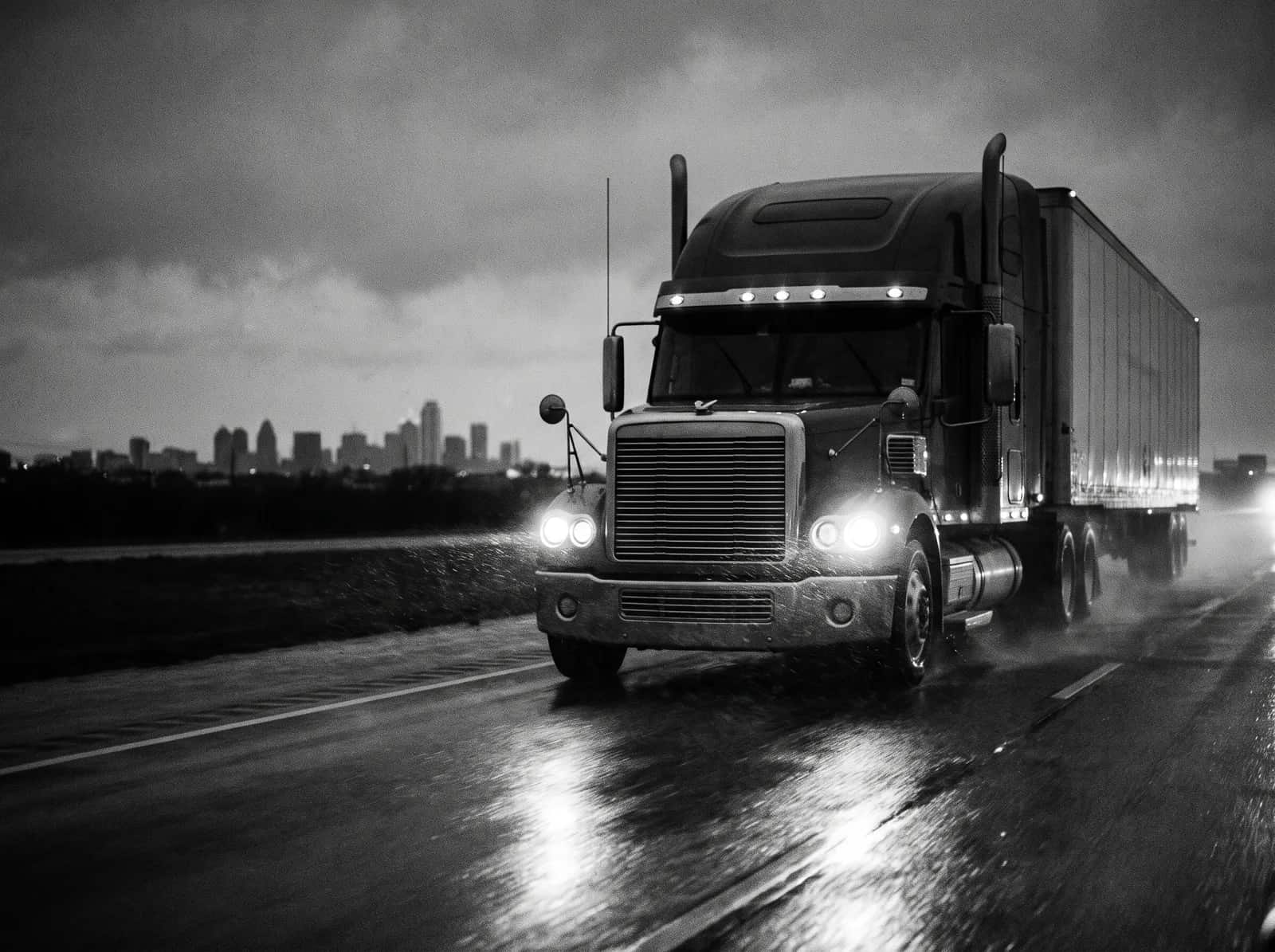

In Fort Worth, a person hurt in a truck accident caused by someone else can recover medical costs, lost income, and pain under Texas law. Owsley Law Firm handles Fort Worth truck accidents from its Houston offices, comes to you, and charges no fee unless it wins. Call before you speak with any insurer.
Truck Accidents in Fort Worth
Where do Fort Worth truck accidents happen?
The Alliance corridor north of the city is one of the largest logistics hubs in the country, and its trucks fill I-35W and Loop 820. Truck cases here are frequent and involve large carriers.
Fort Worth truck cases come from the Alliance corridor. The logistics hub north of the city on I-35W is one of the largest in the country, and its trucks fill I-35W, Loop 820, and the I-30 interchange downtown around the clock. US-287 and I-20 add freight from the south and west. The firm’s Fort Worth truck cases most often involve a box truck or tractor-trailer merging onto I-35W from a distribution center without clearing the lane, or a truck rear-ending stopped traffic at the north Loop 820 interchange.
Corridors where Fort Worth truck accidents cluster
- I-35W and I-30 interchange downtown
- I-35W north through the Alliance freight corridor
- Loop 820 at I-35W on the north side
- I-20 and I-35W interchange on the south side
- US-287 through Kennedale and southeast Fort Worth
- Camp Bowie Boulevard and University Drive on the west side
Cases from Fort Worth
What does a Fort Worth truck accident case look like?
A box truck leaving a distribution center in Alliance merges onto I-35W without checking its mirror and forces a commuter into the barrier.
Why are Fort Worth truck crashes so common and so serious?
Fort Worth is built around freight. I-35W carries trucks through downtown and north to the Alliance logistics area, and I-20, I-30, Loop 820, and US-287 add more. Tarrant County recorded 201 traffic deaths in 2024, according to TxDOT.
TxDOT's 2024 county crash table counts 189 fatal crashes and 201 deaths in Tarrant County, with 983 suspected serious injuries. Trucks are a constant presence on the corridors where those crashes cluster: I-35W at the downtown interchange and north of Loop 820, the I-20 and I-35W interchange on the south side, and Loop 820 on the north side.
Truck cases differ from car cases in three ways. More companies can be responsible, the trucking company controls most of the evidence, and far more insurance is usually available. Each of those differences rewards moving quickly.
Who can be held responsible for a Fort Worth truck crash?
The driver and the motor carrier first, and sometimes the shipper, the company that loaded the trailer, a maintenance shop, a freight broker, or a parts manufacturer.
A motor carrier is usually responsible for its driver's conduct on the job, and for its own failures in hiring, training, scheduling, and maintenance. A logistics operator or shipper that loaded a trailer badly at a distribution center can share fault for a load-shift or rollover crash.
A freight broker that hired an unsafe carrier can also be liable, because in 2026 the U.S. Supreme Court held in Montgomery v. Caribe Transport II that federal law does not block that kind of claim, though each case depends on its facts. A rental or leasing company is generally protected by the federal Graves Amendment from liability just for owning the truck.
- Driver: speeding, following too closely, unsafe lane changes, fatigue
- Motor carrier: the driver's conduct, plus negligent hiring, supervision, or maintenance
- Shipper or loader: overweight or unsecured cargo
- Maintenance shop or manufacturer: brake, tire, or equipment failures
How much insurance does a trucking company have to carry?
Under 49 CFR 387.9, at least $750,000 for a for-hire interstate carrier hauling general freight, $1 million for oil, and $5 million for certain hazardous materials.
Those are minimums, and many carriers carry excess or umbrella coverage on top. Some large fleets self-insure part of their risk, which changes who decides whether to settle.
Finding every policy, including the shipper's, the broker's, and any excess carrier's, is part of the first weeks of a Fort Worth truck case.
Which federal rules and records decide a Fort Worth truck case?
The Federal Motor Carrier Safety Regulations, and the records carriers must keep to prove they followed them.
Part 395 limits driving and on-duty hours and requires electronic logging devices on most trucks. Part 391 covers driver qualification and the carrier's driver file. Part 396 covers inspection and maintenance. Part 382 requires drug and alcohol testing, including after certain crashes.
Federal rules require carriers to keep hours-of-service records and supporting documents for at least six months, but dashcam video and engine data can disappear much sooner. A preservation letter sent early protects that evidence.
What happens in a Texas commercial truck trial?
Chapter 72 of the Civil Practice and Remedies Code lets a commercial vehicle defendant request a two-phase trial.
In the first phase the jury decides liability and compensatory damages; in the second, exemplary damages. If the employer stipulates in time that the driver was acting within the scope of employment, evidence on ordinary negligence claims against the company, such as negligent entrustment, generally waits for the second phase.
For carriers regulated under federal or Texas motor carrier safety law, a listed set of safety evidence can still come in during the first phase to prove negligent entrustment, including whether the driver was licensed, disqualified, or under an out-of-service order. Preparing for those rules from the first day is part of handling a Texas truck case.
Where is a Fort Worth truck case filed?
Usually in the Tarrant County Civil District Courts at the Tom Vandergriff Civil Courts Building, 100 North Calhoun Street, though venue rules and federal removal can change that.
A crash on I-35W in Tarrant County is a Tarrant County case. Texas venue rules also allow filing in a county where the trucking company has its principal Texas office, and a crash near Denton or Johnson County may belong there.
If every defendant is from out of state and the claim exceeds $75,000, the case can be removed to the U.S. District Court for the Northern District of Texas, Fort Worth Division. Federal law does not allow that removal when a properly joined and served defendant is a Texas citizen, such as a Texas-resident driver.
The filing deadline is generally two years from the crash under Civil Practice and Remedies Code section 16.003.

What can you recover after a Fort Worth truck crash?
Medical expenses, lost earnings and earning capacity, physical pain, mental anguish, physical impairment, and disfigurement, plus exemplary damages for gross negligence, subject to Texas caps.
Future medical care and lost earning capacity are often the largest parts of a truck claim, and they are proven with medical and economic evidence. Medical expenses are limited to amounts actually paid or incurred under Civil Practice and Remedies Code section 41.0105.
Exemplary damages are capped under Civil Practice and Remedies Code section 41.008 and require proof of gross negligence. Our 18-wheeler accident settlement guide explains the factors that move a truck claim's value without quoting averages.
What should you do after a truck crash in Fort Worth?
Get medical care first, then protect the evidence: photograph the truck and the scene, collect the carrier's information, and do not give a statement to the trucking company or its insurer before you have counsel.
Serious truck injuries often go to John Peter Smith Hospital, a Level I trauma center. If you were not taken by ambulance, get seen the same day; truck crash injuries such as spinal and brain injuries often surface late, and the medical record starts the claim.
Photograph the truck's USDOT number, the company name on the cab door, the trailer number, and the plates. On I-35W and Loop 820, trucks are often towed and the scene cleared within the hour, so photos taken at the scene may be the only record of how it looked.
Trucking companies and their insurers often start investigating within hours. Report the crash to your own insurer with the basic facts, but do not give a recorded statement to the carrier, its investigator, or its insurer until you have counsel.
- Get medical care the same day
- Photograph the USDOT number, company name, trailer, and plates
- Get names and phone numbers of witnesses
- Keep the officer's report number
- Do not give a recorded statement to the carrier or its insurer
- Call a lawyer early so a preservation letter goes out
What if a tanker or hazardous materials truck was involved in Fort Worth?
Hazardous materials carriers face stricter federal insurance minimums, up to $5 million for certain hazardous materials under 49 CFR 387.9, and the cargo itself can add burn, chemical, and evacuation injuries to the claim.
Tanker and hazmat trucks are placarded, and the placard number identifies the material. Photograph it if it is safe to do so. The bill of lading and shipping papers in the cab show what was carried, who shipped it, and who loaded it.
Those details matter because more companies can be responsible in a hazmat crash: the carrier, the shipper that classified and packaged the material, and the company that loaded the tank. Each may carry its own insurance.
How long does a Fort Worth injury case take?
It depends mostly on the injury. A claim cannot be valued well until treatment is finished or the future is clear, so a short recovery can resolve in months, while a surgery case or a lawsuit can take a year or more.
Most of the time in an injury case is medical time: treatment, recovery, and the doctors' opinions about what comes next. Settling before that picture is clear risks leaving future care unpaid.
If the insurer will not pay a fair amount, the firm files suit before the two-year deadline. Discovery, depositions, and court-ordered mediation follow, and many cases settle during that process. The firm tells you where the case stands at every step.
What if the trucking company's insurer calls you with an offer?
Be careful. Early calls from a carrier's insurer are usually about locking in your account of the crash and closing the claim before the full injury is known.
A trucking insurer may call within days, sound sympathetic, and ask for a recorded statement or offer to pay the property damage and some medical bills quickly. You are not required to give the other side's insurer a recorded statement, and anything you say can be used to shift fault or minimize the injury.
Signing a release ends the claim, even if you later learn you need surgery. Before you sign anything, make sure you know what treatment you will need, what your lost income will be, and every policy that may pay, including the carrier's excess coverage and your own underinsured motorist coverage.
Once you have a lawyer, the insurer will usually deal with the firm instead of you. That one change usually stops the calls and the pressure.
- Do not give a recorded statement to the carrier's insurer
- Do not sign a release or a medical authorization they send
- Keep every letter, text, and voicemail from the insurer
- Let the firm handle all communication with the carrier
How does the firm handle Fort Worth truck cases, and what does it cost?
The firm represents Fort Worth clients from its Houston offices, comes to you, and travels to Tarrant County for depositions and court. There is no fee unless we win.
The first steps happen the day you call: preservation letters, crash report requests, and a review of every insurance policy. Our team answers calls 24/7.
The fee is a percentage of the recovery under a written contingent fee agreement, and there is no fee if there is no recovery. Clients may be responsible for case expenses, such as court costs, as set out in the written fee agreement.
Fort Worth truck case: who may be responsible
| Party | Possible basis | Key records |
|---|---|---|
| Truck driver | Unsafe driving, fatigue, impairment | Logging data, phone records, crash report |
| Motor carrier | Employer liability; negligent hiring, supervision, maintenance | Driver qualification file, dispatch, maintenance |
| Shipper or loader | Overweight or unsecured cargo | Bill of lading, load and scale records |
| Freight broker | Hiring an unsafe carrier (fact-dependent) | Carrier selection file, safety history |
| Repair shop or manufacturer | Faulty repair or defective part | Work orders, recall and inspection records |

What to do now
What should you do after a truck accident in Fort Worth?
- Get examined the same day. Truck crashes cause injuries that surface late, and JPS Health Network, John Peter Smith Hospital (Level I trauma) and Texas Health Harris Methodist Fort Worth take the serious ones from Fort Worth.
- Photograph the truck's USDOT number, the company name on the door, the trailer, and the plates. On I-35W the rig is often towed within the hour.
- Move fast on the carrier's records. The truck's electronic logging data, dashcam video, and engine data sit with the trucking company, and federal rules only require hours-of-service records to be kept for six months, so a preservation letter should go out early.
- Get the Fort Worth crash report. Fort Worth Police Department reports are available through the TxDOT Crash Report Online Purchase System, usually within 10 days. The firm obtains it for clients at no charge.
- Do not give a statement to the trucking company's investigator or its insurer. They often start working the crash within hours; your own insurer only needs the basic facts.
- Know where the case goes. Fort Worth truck accidents suits are filed in the Tarrant County Civil District Courts, Tom Vandergriff Civil Courts Building, or Tarrant County Courts at Law depending on the crash location.
- Call the firm. Fort Worth clients are handled from Houston by phone, video, and mail, and the firm travels to Fort Worth for meetings, depositions, and court. The consultation is free.
Fort Worth truck accidents we handle
Specific Fort Worth truck accident cases
Go deeper
More on truck accident claims in Fort Worth and Texas.
Common questions
Fort Worth truck accident questions
Which Fort Worth roads have the most truck accidents?
I-35W, especially through the Alliance corridor and the downtown interchange, Loop 820, I-20, and US-287.
Who is liable when a truck merges from a distribution center?
The driver and the carrier, and sometimes the logistics company that controls the yard and its exits. The firm identifies each from the carrier’s registration and the bill of lading.
Can the freight broker be liable for a Fort Worth truck crash?
Sometimes. A broker that arranged the load around Alliance or the I-35W corridor may be responsible if it hired a carrier with an obviously poor safety record. In May 2026 the U.S. Supreme Court held in Montgomery v. Caribe Transport II that federal law does not block these negligent-selection claims, so whether the broker is liable now turns on the facts. The broker’s carrier selection file and the carrier’s federal safety history are the evidence that decides it.
Does a truck crash on the Chisholm Trail Parkway go to Tarrant County court?
Only if it happened in Tarrant County. The Chisholm Trail Parkway runs south from downtown Fort Worth into Johnson County toward Cleburne, so a crash on the southern stretch may be filed there instead. Texas venue rules also allow filing in a county where the trucking company has its principal Texas office. The milepost on the crash report settles it.
Does the firm have a Fort Worth office?
No. The firm's offices are in Houston. It represents Fort Worth clients by phone, video, and mail, comes to you for meetings, and travels to Tarrant County for depositions and court.
How soon should I act after a Fort Worth truck crash?
Right away. Trucking companies often start investigating within hours, and dashcam video and engine data can be lost quickly. A preservation letter should go out early.
Is the trucking company responsible, or just the driver?
Usually both can be. A carrier is generally responsible for its driver on the job and can also be responsible for its own hiring, scheduling, and maintenance failures.
What if a box truck rented from a leasing company hit me?
The Graves Amendment generally protects rental and leasing companies from liability just for owning the truck. The claim goes against the driver and the business that was using it.
How much time do I have to file?
Generally two years from the crash under Civil Practice and Remedies Code section 16.003. Waiting also risks losing evidence the carrier controls.
Can my case be moved to federal court in Fort Worth?
It can if every defendant is from out of state and the claim exceeds $75,000. Federal law blocks that removal when a properly joined and served defendant is a Texas citizen.
Sources
Sources this page relies on
- 49 C.F.R. § 387.9 (carrier insurance minimums)
- 49 C.F.R. Part 391 (driver qualification)
- 49 C.F.R. Part 396 (inspection and maintenance)
- Tex. Civ. Prac. & Rem. Code ch. 72, subch. B
- Tex. Civ. Prac. & Rem. Code § 16.003
- Tex. Civ. Prac. & Rem. Code § 41.0105
- Tex. Civ. Prac. & Rem. Code § 41.008
- TxDOT Crash Report Online Purchase System