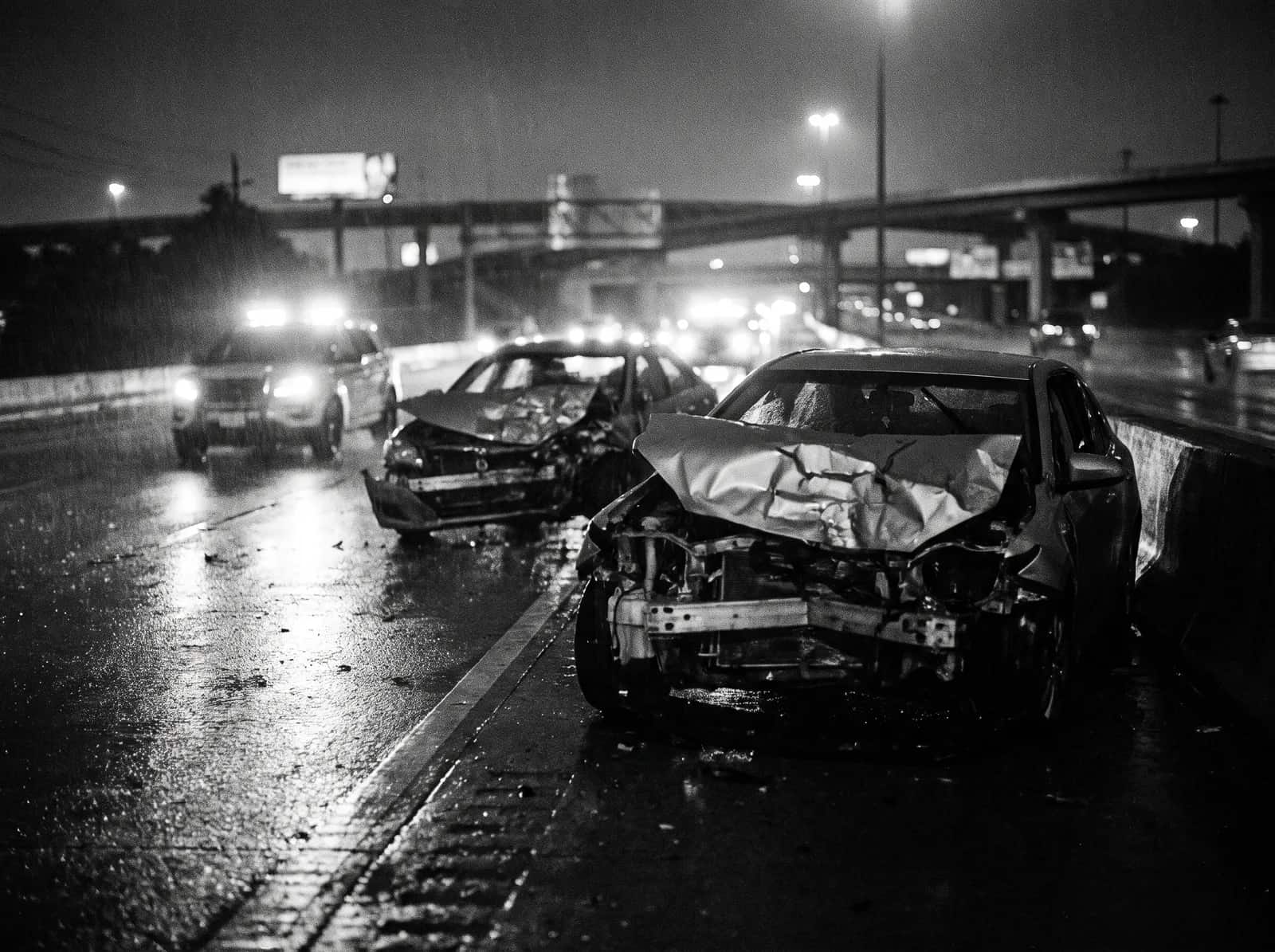

In Texas, a wrong-way driver is responsible for the crash, and when alcohol is involved the bar or restaurant that overserved the driver may also be liable under the Alcoholic Beverage Code Chapter 2 dram shop law. Wrong-way crashes are usually head-on at highway speed and often fatal. Owsley Law Firm pursues every source of recovery and charges no fee unless it wins.
Why do wrong-way crashes happen?
Most wrong-way crashes on divided highways happen at night, when a driver enters an exit ramp going the wrong direction and continues onto the main lanes. Impairment from alcohol or drugs is a frequent factor. Confusing interchanges, poor lighting, missing or faded signs, and older drivers who become disoriented are others. On frontage roads and one-way streets, wrong-way driving often happens when a driver turns the wrong direction at a signal.
Who is liable for a wrong-way crash?
The wrong-way driver is liable for violating the rules of the road, including the duty in section 545.051 to drive on the right half of the roadway and to obey one-way designations. The question is usually not whether that driver is at fault but where the money comes from.
- The wrong-way driver’s liability insurance, which may be only the 30/60/25 minimum
- A bar, restaurant, or other licensed seller that served the driver while obviously intoxicated, under the dram shop law
- The owner of the vehicle, if the owner knowingly let an unfit driver use it
- The driver’s employer, if the driver was working
- A government entity in limited cases where missing or failed signs contributed, within the Texas Tort Claims Act
- Your own uninsured and underinsured motorist coverage
How does the Texas dram shop law apply?
Chapter 2 of the Alcoholic Beverage Code allows a claim against a provider of alcohol when it was apparent to the provider that the person served was obviously intoxicated to the extent of presenting a clear danger to themselves and others, and the intoxication was a proximate cause of the damages. Bar tabs, receipts, video from inside the establishment, and witness accounts can show how much was served and how the driver appeared. These records must be requested quickly.
What injuries do wrong-way crashes cause?
Wrong-way crashes are typically head-on at combined speeds well over 100 miles an hour. Survivors often suffer traumatic brain injury, spinal injuries, multiple fractures, internal injuries, and severe burns if a fire follows. Many of these crashes are fatal, and families may bring a wrongful death claim under Chapter 71 of the Civil Practice and Remedies Code and a survival claim on behalf of the estate.
Can I get punitive damages after a wrong-way crash?
Exemplary damages under Chapter 41 of the Civil Practice and Remedies Code may be available when a defendant acted with gross negligence, meaning an extreme degree of risk that the defendant knew about and ignored. Driving drunk the wrong way on a freeway can meet that standard. Exemplary damages are generally capped in Texas, and the rules are technical, so they should be evaluated by a lawyer based on the specific facts.
What evidence matters in a wrong-way case?
Video from TxDOT cameras, toll road cameras, dash cameras, and businesses often shows where the driver entered the highway and how long the driver traveled the wrong way. Toxicology and the criminal investigation file show impairment. 911 calls reporting the wrong-way driver help establish the timeline. Bar receipts and witness accounts support a dram shop claim. Event data from both vehicles shows speed and impact. The firm requests all of it early, before it is overwritten or lost.
Where do wrong-way crashes happen in the Houston area?
Wrong-way crashes in the Houston region tend to happen on freeways with many closely spaced exits and on frontage roads, where a driver turns the wrong direction at a signal. Late night on I-45, I-10, US-59, SH-288, and the 610 Loop, when traffic is light and speeds are high, is when they are most dangerous. TxDOT has installed wrong-way warning systems at some ramps around Texas, and whether a ramp had appropriate signs and markings can be part of the investigation.
How does insurance work after a wrong-way crash?
The wrong-way driver’s liability policy pays first, but it may carry only the Texas 30/60/25 minimum, which is far below the cost of a serious crash. Your own uninsured and underinsured motorist coverage can pay the difference, up to your limits, and it applies whether the driver had too little insurance or none. Personal injury protection pays medical bills and lost wages regardless of fault. When a family member is killed, the policy limits often must be shared among several claimants, and a dram shop claim against a bar or an employer’s policy may provide the only meaningful additional recovery. The order in which claims are settled matters, because settling with the at-fault driver can affect the UIM claim if the insurer’s consent is not obtained.
What should a family do after a wrong-way crash?
Focus on medical care and on each other first. Keep any paperwork from police, the hospital, and insurers. Do not give recorded statements to the other driver’s insurer. A criminal case against the driver, if any, is separate from the civil claim for your losses; the civil case does not have to wait for the criminal case, and the two-year filing deadline under section 16.003 continues to run either way.
Common questions
What clients ask about wrong-way driver crashes.
Can I sue the bar that served a wrong-way driver?
Yes, if the bar served the driver when it was apparent the driver was obviously intoxicated and presented a clear danger, and the intoxication caused the crash. Chapter 2 of the Alcoholic Beverage Code governs these claims.
What if the wrong-way driver had no insurance?
Your uninsured motorist coverage may pay, and a dram shop claim or an employer’s policy may provide another source.
Does a criminal case affect my injury claim?
They are separate. A conviction can help prove fault, but the civil claim has its own deadline and does not need to wait.
What if the wrong-way driver died?
The claim can proceed against the driver’s estate and insurance, and other defendants such as a bar may still be liable.
Are wrong-way crashes always the wrong-way driver’s fault?
Nearly always. In rare cases a government entity’s failure to repair signage or a confusing design may contribute, and that is evaluated under the Texas Tort Claims Act.