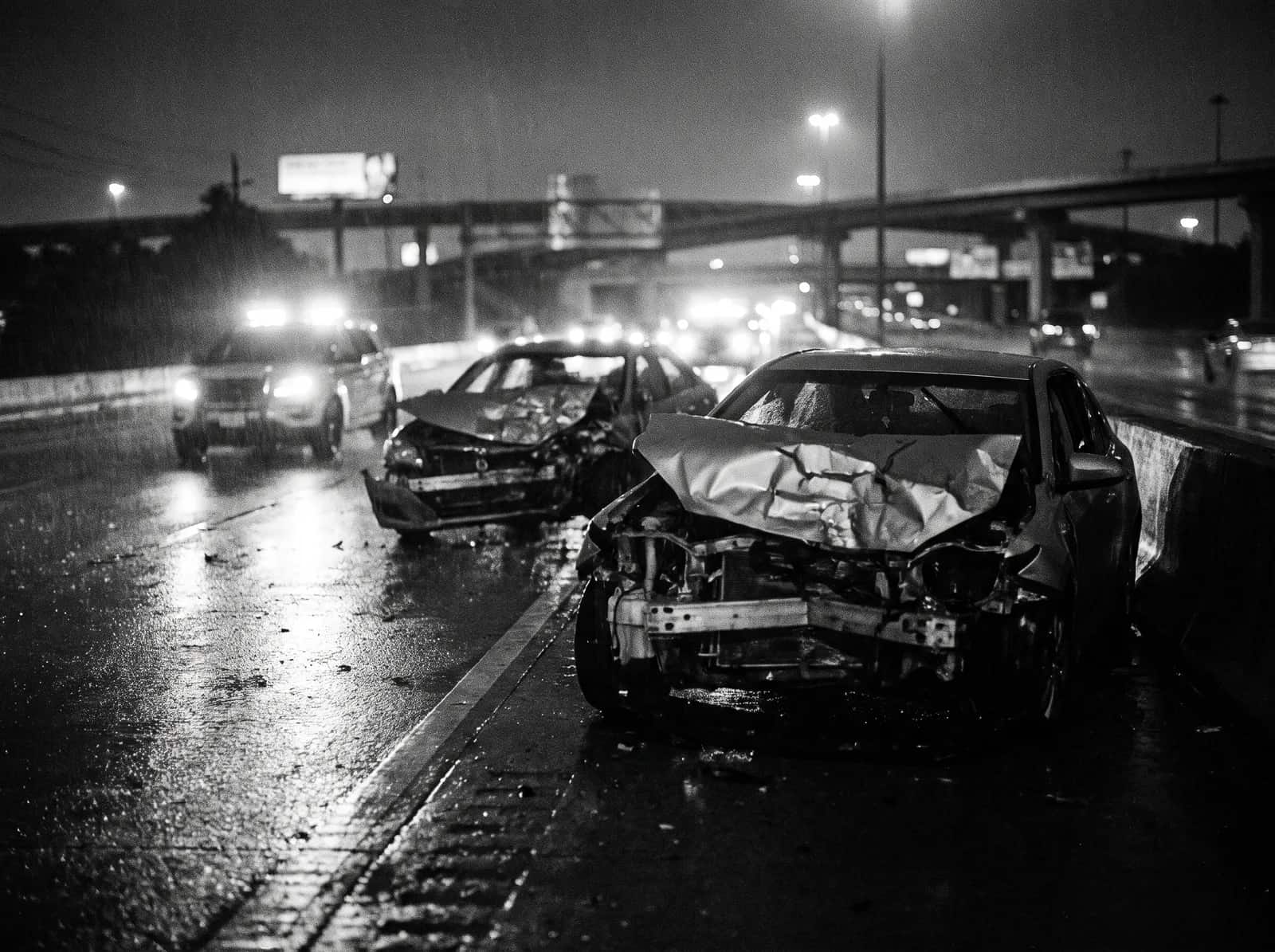

In Texas, a driver must not drive faster than is reasonable and prudent under the conditions, under Transportation Code section 545.351, so a driver can be at fault for speed even below the posted limit. Speed makes crashes more frequent and more severe. Owsley Law Firm uses event data, video, and reconstruction to prove speed and charges no fee unless it wins.
What does Texas law say about speed?
Section 545.351 sets the basic rule: an operator may not drive at a speed greater than is reasonable and prudent under the circumstances then existing, and must control speed as necessary to avoid colliding with another vehicle or person. Posted limits and the default limits in section 545.352 are the upper bound, not a safe harbor. Driving the limit in heavy rain, fog, darkness, or a construction zone can still be negligent.
Violating a traffic safety statute can be evidence of negligence, and a jury considers speed when it divides fault under Chapter 33 proportionate responsibility.

Why does speed make injuries worse?
Crash energy rises with the square of speed, so a modest increase in speed produces a much larger increase in impact force. Higher speed also means more distance traveled before the brakes engage and a longer stopping distance after. A driver going too fast has less time to react and hits harder when there is a collision. Federal highway safety data has long identified speeding as a factor in a large share of traffic deaths.
How do you prove the other driver was speeding?
Speed is proved with objective evidence rather than estimates.
- Event data recorder downloads, which capture speed in the seconds before impact
- Dash camera and traffic camera video, which can be timed frame by frame
- Skid and yaw marks measured at the scene
- Crush damage analyzed by a reconstruction expert
- Telematics from commercial vehicles and some insurance apps
- Witness accounts, especially from drivers who were passed
- Phone and app data in some cases
Where do speeding crashes happen in Houston?
Speeding crashes in Houston are common on the freeways late at night, on the Grand Parkway and toll roads, on wide arterials such as Westheimer and FM 1960, and where frontage roads meet signals. Street racing and stunt driving on open freeway stretches have been a recurring problem in the Houston area. Speeding in school zones and residential areas puts pedestrians and cyclists at particular risk.
What if I was speeding too?
Texas does not bar recovery because you were speeding, but a jury may assign you a share of fault. Under Chapter 33, your recovery is reduced by your percentage, and if you are found more than 50 percent responsible you recover nothing. Whether your speed actually contributed to the crash matters: a driver going a few miles over the limit who is struck by a driver running a red light may have little or no responsibility.
Can speeding support punitive damages?
Ordinary speeding is negligence. Extreme speed, street racing, or speeding combined with intoxication can rise to gross negligence, which may support exemplary damages under Chapter 41. Those claims require clear and convincing evidence of conscious indifference to an extreme risk and are evaluated case by case.
How much is a speeding crash case worth?
Speed tends to make injuries worse, and worse injuries mean larger medical bills, longer time away from work, and more lasting impairment, all of which increase the value of the claim. The available insurance, the evidence of the other driver’s speed, and any argument about your own fault all affect what a case is worth in practice.
When speed was extreme or combined with racing or intoxication, exemplary damages may add to the claim. The firm also checks for an employer’s policy if the speeding driver was working, and for your own UM/UIM coverage if the speeding driver carried only the minimum or no insurance.
What should you know about speed in bad weather?
Houston rainstorms can drop visibility and traction in minutes, and roads flood quickly. A driver who keeps going the posted limit in a downpour, on flooded lanes, or in fog may be driving faster than is reasonable and prudent under section 545.351. Hydroplaning is not a defense when the speed made it likely. Weather records for the time and place of the crash help show the conditions the driver faced.
What about speeding trucks and work vehicles?
A loaded tractor-trailer takes far longer to stop than a car, so speed is even more dangerous in a truck. Trucking companies often use speed limiters, telematics, and dash cameras that record speed continuously, and that data can show not only the speed at impact but a pattern of speeding before the crash. A company that pressures drivers to meet unrealistic delivery times, or ignores a driver’s speeding history, may be liable for its own negligence in addition to its driver’s. The same is true for delivery and service vans whose drivers work under tight schedules.
What should you do after a crash with a speeding driver?
Get medical care and document your injuries. Note anything you saw about the other driver’s speed and ask witnesses for contact information. Photograph the scene, including skid marks before they fade. Ask that both vehicles be preserved so their event data can be downloaded. Do not speculate about speeds in a recorded statement to the other insurer. Remember the two-year filing deadline under section 16.003.
Common questions
What clients ask about speeding accidents.
Can a driver be at fault for speed below the speed limit?
Yes. Section 545.351 requires a speed that is reasonable and prudent for the conditions. Driving the limit in fog or heavy rain can still be negligent.
Does the other driver need to be cited for speeding?
No. A citation can help, but it is not required. Fault in the civil case is decided on the evidence of speed, such as event data, video, and reconstruction.
How is speed measured after a crash?
Through event data recorders, video analysis, skid marks, and crush analysis by a reconstruction expert.
What if both drivers were speeding?
Fault is divided under Chapter 33. You can recover if your share is 50 percent or less.
Is street racing grounds for punitive damages?
It can be. Racing on public roads may support a finding of gross negligence, which can allow exemplary damages under Chapter 41.