
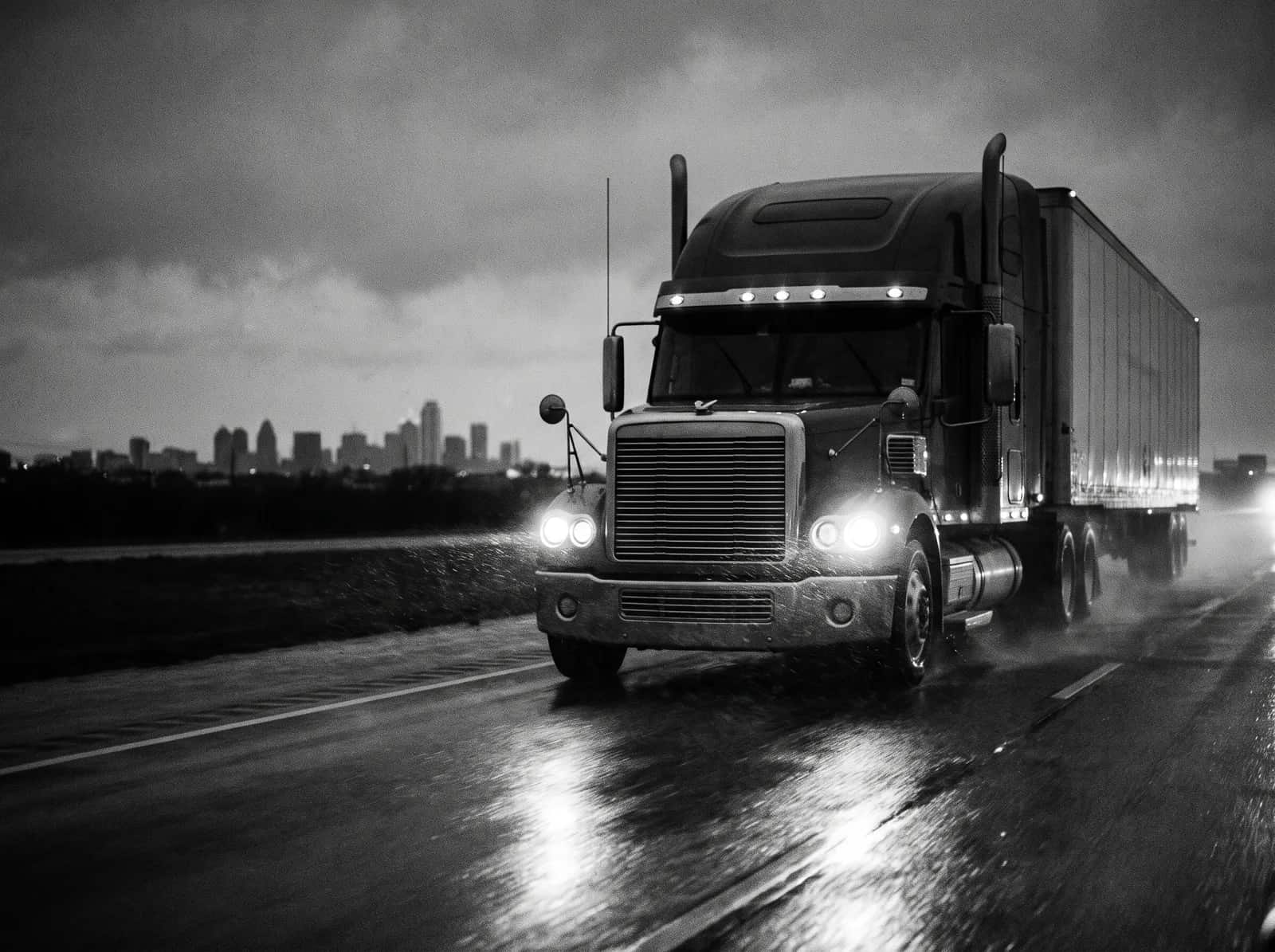

In Katy, a person hurt in a truck accident caused by someone else can recover medical costs, lost income, and pain under Texas law. Owsley Law Firm handles Katy truck accidents from its Houston offices, comes to you, and charges no fee unless it wins. Call before you speak with any insurer.
Truck Accidents in Katy
Where do Katy truck accidents happen?
The Katy Freeway is the truck route between Houston and San Antonio, and the distribution centers along the Grand Parkway add local freight.
Katy truck cases come from the Katy Freeway. I-10 is the truck route between Houston and San Antonio, and its main lanes through Katy carry long-haul freight at speed through congestion that stops without warning at Mason, Fry, and the Grand Parkway. The distribution centers that have grown along the Grand Parkway and Clay Road add local box-truck and delivery traffic to the frontage roads. The firm’s Katy truck cases most often involve a tractor-trailer rear-ending stopped traffic in the I-10 main lanes or a delivery truck at a frontage-road intersection.
Corridors where Katy truck accidents cluster
- I-10 Katy Freeway at the Grand Parkway interchange
- I-10 at Mason Road and Fry Road
- Grand Parkway (SH-99) between I-10 and FM 1093
- Westpark Tollway at the Grand Parkway
- FM 1093 through Cinco Ranch and Fulshear
- FM 1463 and Katy-Flewellen Road
Cases from Katy
What does a Katy truck accident case look like?
An 18-wheeler in the Katy Freeway main lanes sideswipes a car while changing lanes near Fry Road.
Why does Katy see so many serious truck crashes?
Katy grew up along I-10, the interstate between Houston and San Antonio, so long-haul freight runs straight through it, and the Grand Parkway, the Westpark Tollway, and new construction add local truck traffic on top.
TxDOT's county crash tables do not separate truck crashes city by city, but they show the scale of the corridor. Harris County, which holds most of the I-10 corridor through Katy, recorded 546 fatal crashes and 579 deaths in 2024, the most of any Texas county. Fort Bend County recorded 38 fatal crashes, and Waller County, which holds the I-10 stretch toward Brookshire, recorded 9.
A loaded tractor-trailer can weigh many times what a passenger car does, so the same rear-end collision that dents a bumper between two cars can cause spinal fractures and brain injuries when a truck is involved. That difference in force is why truck cases are prepared differently from the first day.
What kinds of truck crashes happen around Katy?
Rear-end collisions in Katy Freeway congestion, sideswipes during lane changes near the Grand Parkway ramps, wide right turns at frontage-road signals, and crashes with dump trucks and construction vehicles on the roads serving new developments.
Eastbound I-10 slows sharply between Katy and the Energy Corridor, the office district that runs along I-10 from Kirkwood Road to west of Barker Cypress Road. A truck driver who is tired, distracted, or following too closely cannot stop an 80,000-pound rig in the space a car needs, and the car in front absorbs the impact.
Lane changes are the second pattern. Trucks moving across lanes to reach the Grand Parkway ramps or the frontage road have large blind spots on the right side and directly behind the trailer. Sideswipe cases turn on the truck's mirrors, its camera footage, and the speed data its engine recorded.
On the frontage roads and on FM 1463, FM 1093, and the roads into new subdivisions, the trucks are often local: dump trucks, concrete mixers, flatbeds carrying building materials, and delivery box trucks. Those carriers may be small companies with fewer records, which makes early evidence collection even more important.
- Rear-end crashes in stopped I-10 traffic
- Lane-change sideswipes near the Grand Parkway ramps
- Wide right turns at frontage-road signals
- Dump trucks and construction vehicles on FM 1463 and FM 1093
- Unsecured loads and debris on the Katy Freeway
Who can be responsible for a Katy truck crash?
The driver and the motor carrier first, and depending on the facts, the company that loaded the trailer, a maintenance shop, a parts manufacturer, or a freight broker that chose an unsafe carrier.
A motor carrier is generally responsible for its driver's conduct on the job, and separately for its own failures in hiring, training, supervising, scheduling, and maintenance. A shipper or loader that overloaded a trailer or failed to secure a load can share fault when cargo shifts or falls.
Freight brokers, the companies that arrange loads without hauling them, used to argue that federal law shielded them from negligent selection claims. On May 14, 2026, the U.S. Supreme Court held in Montgomery v. Caribe Transport II that those state-law claims are not preempted, so a broker that hired a carrier with a poor safety record can be a defendant, depending on the facts.
A company that only rented or leased the truck is generally protected by the federal Graves Amendment from liability just for owning it. The claim then runs against the driver and the business that was operating the truck.
How much insurance does a trucking company carry?
Under 49 CFR 387.9, a for-hire interstate carrier hauling general freight must carry at least $750,000, and higher minimums apply to oil and certain hazardous materials. Many carriers carry excess coverage above those minimums.
The $750,000 general freight minimum applies to for-hire carriers. Under 49 CFR 387.3, the higher tiers for oil, at $1 million, and certain hazardous materials, at $5 million, also apply to private carriers hauling those cargoes in their own trucks. A local construction company running its own dump trucks may carry a commercial policy set by its own choices and Texas law rather than the federal for-hire minimum, which is why the actual policies are requested rather than assumed.
Finding every layer of coverage, including excess and umbrella policies and any shipper or broker coverage, is part of the first weeks of a Katy truck case. The amount available often decides how the case is built.
Your own policy still matters in a truck case. Personal Injury Protection under Insurance Code section 1952.152 pays medical bills and lost income first, regardless of fault, unless it was rejected in writing. Underinsured motorist coverage under Insurance Code section 1952.101 can add to the recovery when a small local carrier's policy is not enough to cover a serious injury, and a claim on it is governed by your policy's notice and consent terms.
Which records prove what happened in a Katy truck crash?
The records federal rules require carriers to keep: hours-of-service logs and electronic logging data, the driver qualification file, inspection and maintenance records, and drug and alcohol testing results, plus the truck's own camera and engine data.
49 CFR Part 395 limits driving and on-duty hours and requires electronic logging devices on most trucks. Part 391 governs who may drive and what goes in the driver qualification file. Part 396 covers inspection, repair, and maintenance. Part 382 requires drug and alcohol testing, including after certain crashes.
Federal rules require carriers to keep hours-of-service records and supporting documents for at least six months, but forward-facing camera video and engine control module data can be overwritten much sooner. A preservation letter sent in the first days puts the carrier on notice that the evidence matters to a claim.
On I-10 through Katy, the scene is often cleared quickly to reopen the main lanes. Photos of the truck, the trailer, the cab door, and the road taken before the tow trucks arrive may be the only record of how it looked.
What should you do in the first days after a Katy truck crash?
Get medical care, write down the carrier's identity, keep every document, and let a lawyer send preservation letters before the carrier's evidence is overwritten.
Medical care comes first. Truck crash injuries such as disc herniations, internal injuries, and concussions often feel worse on the second or third day than at the scene. If you were not taken by ambulance, see a doctor the same day or the next morning and describe every symptom.
Identify the truck. The company name and USDOT number are usually painted on the cab door, and the trailer often carries a different company's name and number. Photograph both, along with the plates and any placards. If a load spilled or a tire came apart on the Katy Freeway, photograph the debris before it is swept off the lanes.
Keep everything the carrier or its insurer sends you, including voicemails and texts. Do not sign a release or a broad medical authorization they send. A release ends the claim even if surgery is needed later, and a broad authorization lets the insurer search your full medical history for something to blame.
The carrier's federal registration and inspection history are public through the Federal Motor Carrier Safety Administration, and checking them early can show whether the company had prior out-of-service orders or crash reports. The firm runs that search at the start of every truck case.
- See a doctor within a day, even if you feel able to wait
- Photograph the cab door, trailer, plates, and any placards
- Keep every letter, text, and voicemail from the carrier
- Do not sign a release or medical authorization from the carrier's insurer
- Ask a lawyer to send preservation letters right away
Who investigates a Katy truck crash?
The same agency that would handle any crash at that location: Katy Police inside the city, a county sheriff or constable in unincorporated areas, or DPS. The trucking company's own investigators often arrive quickly as well.
Under Transportation Code section 550.062, the investigating officer must file the crash report electronically with TxDOT within ten days when anyone is hurt. The report lists the carrier, the truck and trailer, and often the USDOT number, and it can be purchased through the TxDOT Crash Report Online Purchase System.
Carriers and their insurers frequently send an adjuster or investigator to the scene or to the injured driver within hours. They are gathering evidence for the carrier. You can report the crash to your own insurer with the basic facts, but you are not required to give the carrier's insurer a recorded statement, and anything you say can be used to argue about fault.
Which court hears a Katy truck case?
A state court in Harris, Fort Bend, or Waller County, depending on where the crash happened and where the defendants live or have their principal Texas office. If every defendant is from out of state, the case may be moved to federal court in Houston.
Civil Practice and Remedies Code section 15.002 allows filing in the county where the crash happened, the county where an individual defendant lived, or the county of a company defendant's principal office in Texas. A trucking company headquartered in Harris County can therefore be sued there even if the crash happened on the Waller County side of I-10.
Harris County cases go to the civil district courts through the district clerk at 201 Caroline Street in Houston. Fort Bend County cases are filed at the Justice Center in Richmond, and Waller County cases at the Waller County Justice Center in Hempstead, home of the 506th Judicial District Court.
When every defendant is from another state and more than $75,000 is at stake, the defense can remove the case to the U.S. District Court for the Southern District of Texas. Harris, Fort Bend, and Waller Counties are all in its Houston Division. Removal on that basis is not allowed when a properly joined and served defendant is a Texas citizen, such as a driver who lives in Texas.
How does a Texas truck trial work under Chapter 72?
Chapter 72 of the Civil Practice and Remedies Code lets a commercial vehicle defendant ask for a two-phase trial, with liability and compensatory damages first and exemplary damages second.
Chapter 72 uses a broad definition of a commercial motor vehicle tied to commercial use, with no weight threshold, so it can reach a delivery van or a contractor's truck as well as a tractor-trailer. If the employer stipulates in time that the driver was acting in the course and scope of employment, evidence on direct negligence claims against the employer, such as negligent hiring, generally waits for the second phase.
There are exceptions. For carriers subject to federal or Texas motor carrier safety rules, a listed set of evidence can still come in during the first phase to prove negligent entrustment, such as whether the driver was licensed, disqualified, or under an out-of-service order. A Katy truck case is prepared with those rules in mind from the start.
What if a government truck caused the crash?
Claims against the City of Katy, a county, a school district, or TxDOT run under special notice rules and damages caps. The Katy charter requires sworn written notice to the City Secretary within six months.
Government trucks are a real part of Katy traffic: city sanitation and utility trucks, county road and bridge equipment, school district maintenance vehicles, and TxDOT maintenance and work-zone trucks on I-10. The Texas Tort Claims Act allows injury claims arising from a government employee's operation of a motor vehicle, with written notice generally due within six months under Civil Practice and Remedies Code section 101.101.
For a City of Katy truck, Article XII, section 4 of the city charter requires written notice verified by affidavit, directed to the City Secretary, within six months, describing when, where, and how the injury happened and the damages claimed. Damages are capped under section 101.023 at $250,000 per person for a city or the state and $100,000 per person for other local units such as counties and school districts. A private contractor driving for the government is a separate defendant whose liability depends on its contract and its own insurance.
What can you recover after a Katy truck crash?
Medical expenses, lost earnings and earning capacity, physical pain, mental anguish, physical impairment, and disfigurement, plus exemplary damages when gross negligence is proven, subject to Texas caps.
Future medical care and lost earning capacity are often the largest parts of a truck claim. They are proven with treating doctors, life care planners, and economists, and they are why a truck case should not be settled before the long-term picture is clear. Medical expenses are limited to amounts actually paid or incurred under Civil Practice and Remedies Code section 41.0105.
Exemplary damages require clear and convincing proof of gross negligence, such as a carrier that knowingly kept a dangerous driver on the road, and they are capped under Civil Practice and Remedies Code section 41.008. Fault percentages under Chapter 33 apply in truck cases as in any other crash.
Serious truck injuries near Katy are often treated first at Memorial Hermann Katy Hospital, a state-designated Level III trauma facility, or flown or driven to Memorial Hermann-Texas Medical Center or Ben Taub Hospital, both designated Level I. Those records start the damages case.
What reaches you is the recovery after fees, expenses, and liens. A hospital that treated you within 72 hours, including in the emergency room, can claim a lien under Texas Property Code chapter 55, limited to its charges for the first 100 days plus emergency physician charges for the first seven days, capped at half of the recovery, and excluding charges above a reasonable and regular rate. Health plans and Medicaid may have reimbursement claims of their own. Each one is checked and, where possible, reduced before the case closes.
How does the firm handle Katy truck cases, and what does it cost?
The firm handles Katy truck cases from its Houston offices at 601 Sawyer Street and 3535 Westheimer Road. There is no fee unless we win, and clients may be responsible for case expenses, such as court costs, as set out in the written fee agreement.
The first steps are preservation letters to the carrier and anyone else who may hold evidence, a request for the crash report, a search of the carrier's federal registration and safety history, and a review of every insurance policy that may apply, including your own underinsured motorist coverage.
Katy clients can work with the firm by phone, video, and mail, meet at either Houston office, or arrange a meeting at home or in the hospital. The firm keeps you informed as the case moves through investigation, treatment, negotiation, and, if needed, a lawsuit.
The fee is a percentage of the recovery under a written contingent fee agreement, with no fee if there is no recovery. Clients may be responsible for case expenses, such as court costs, as set out in the written fee agreement.
Katy truck crash: records that matter and how long they last
| Record | Who holds it | Why it matters |
|---|---|---|
| Hours-of-service and ELD data (49 CFR Part 395) | Motor carrier, at least six months | Shows fatigue and hours violations |
| Driver qualification file (Part 391) | Motor carrier | Licensing, history, and hiring decisions |
| Inspection and maintenance records (Part 396) | Carrier or repair shop | Brake, tire, and equipment failures |
| Post-crash drug and alcohol tests (Part 382) | Motor carrier | Impairment at the time of the crash |
| Dashcam and engine control module data | Carrier or truck owner | Speed, braking, and what the driver saw |
| Broker carrier-selection file | Freight broker | Whether an unsafe carrier was hired |

What to do now
What should you do after a truck accident in Katy?
- Get examined the same day. Truck crashes cause injuries that surface late, and Houston Methodist West Hospital and Memorial Hermann Katy Hospital take the serious ones from Katy.
- Photograph the truck's USDOT number, the company name on the door, the trailer, and the plates. On I-10 (Katy Freeway) the rig is often towed within the hour.
- Move fast on the carrier's records. The truck's electronic logging data, dashcam video, and engine data sit with the trucking company, and federal rules only require hours-of-service records to be kept for six months, so a preservation letter should go out early.
- Get the Katy crash report. Katy Police, Harris County Sheriff, and Fort Bend County Sheriff reports are all available through the TxDOT Crash Report Online Purchase System, usually within 10 days. The firm obtains it for clients at no charge.
- Do not give a statement to the trucking company's investigator or its insurer. They often start working the crash within hours; your own insurer only needs the basic facts.
- Know where the case goes. Katy truck accidents suits are filed in the Harris County Civil District Courts, downtown Houston (most of Katy), or Fort Bend County District Courts, Richmond (Cinco Ranch and south Katy) depending on the crash location.
- Call the firm. About 35 minutes west of the firm’s Houston offices. The firm comes to you. The consultation is free.
Go deeper
More on truck accident claims in Katy and Texas.
Common questions
Katy truck accident questions
Which Katy roads have the most truck accidents?
I-10 Katy Freeway between Beltway 8 and the Brookshire exits, the Grand Parkway, and the Katy Freeway frontage roads at Mason and Fry.
Where is a Katy truck accident case filed?
In the county where the crash occurred: Harris, Fort Bend, or Waller. Most I-10 crashes in Katy are Harris County cases filed in Houston.
What if part of a truck’s load fell onto my car on I-10 in Katy?
Federal cargo securement rules require loads to be tied down so they cannot shift or fall. When cargo comes off a truck, the carrier and often the company that loaded it can be responsible. Photograph the debris and the truck if it stopped, and get the carrier name and USDOT number from the cab. Debris is often cleared within minutes.
What if the truck driver says I cut him off in Katy Freeway traffic?
That is a common defense, and it is tested with data, not just testimony. The truck’s engine module and logging device record speed and braking, many trucks carry forward-facing cameras, and the managed lanes and frontage roads have their own traffic patterns. Texas proportionate responsibility means you can still recover unless you were more than 50 percent at fault.
Does the firm have an office in Katy?
No. The firm's offices are in Houston, at 601 Sawyer Street and 3535 Westheimer Road. Katy clients work with the firm by phone, video, and mail, at either Houston office, or at home or the hospital by arrangement.
A TxDOT maintenance truck hit me on I-10 near Katy. Can I make a claim?
Generally yes, under the Texas Tort Claims Act, which allows claims arising from a state employee's operation of a motor vehicle. Written notice is generally due within six months, and damages against the state are capped at $250,000 per person.
Can I sue the freight broker that arranged the load?
Possibly. In Montgomery v. Caribe Transport II (May 14, 2026), the U.S. Supreme Court held that state-law claims against a broker for negligently selecting a carrier are not preempted. Whether a claim exists depends on what the broker knew about the carrier.
The crash was on the Waller County side of I-10. Does my case have to be filed in Hempstead?
Not necessarily. Texas venue rules also allow filing where an individual defendant lived or where a company defendant has its principal Texas office, which may be Harris County. If the case goes to federal court, it is heard in Houston either way.
Does Chapter 72 apply if a delivery van, not an 18-wheeler, hit me?
It can. Chapter 72 of the Civil Practice and Remedies Code defines a commercial motor vehicle by its commercial use without a weight test, so a delivery van or contractor's truck may qualify for the two-phase trial rules.
How long does a trucking company keep its logbook data?
Federal rules require at least six months for hours-of-service records and supporting documents. Dashcam video and engine data can be lost much sooner, so a preservation letter should go out in the first days.
How long do I have to file a Katy truck accident lawsuit?
Generally two years from the crash under Civil Practice and Remedies Code section 16.003, with a six-month notice deadline for claims against the City of Katy or another government body.
Sources
Sources this page relies on
- TxDOT, Crashes and Injuries by County, 2024
- Texas DSHS designated trauma facilities list (current as of October 1, 2026)
- Energy Corridor District, boundaries along I-10
- City of Katy Home Rule Charter, Article XII, section 4 (notice of claims)
- Waller County 506th District Court
- 28 U.S.C. 124 (Southern District of Texas, Houston Division counties)
- 49 CFR Part 387 (federal minimum insurance for motor carriers)
- Texas Civil Practice and Remedies Code, chapter 72 (commercial vehicle trials)