
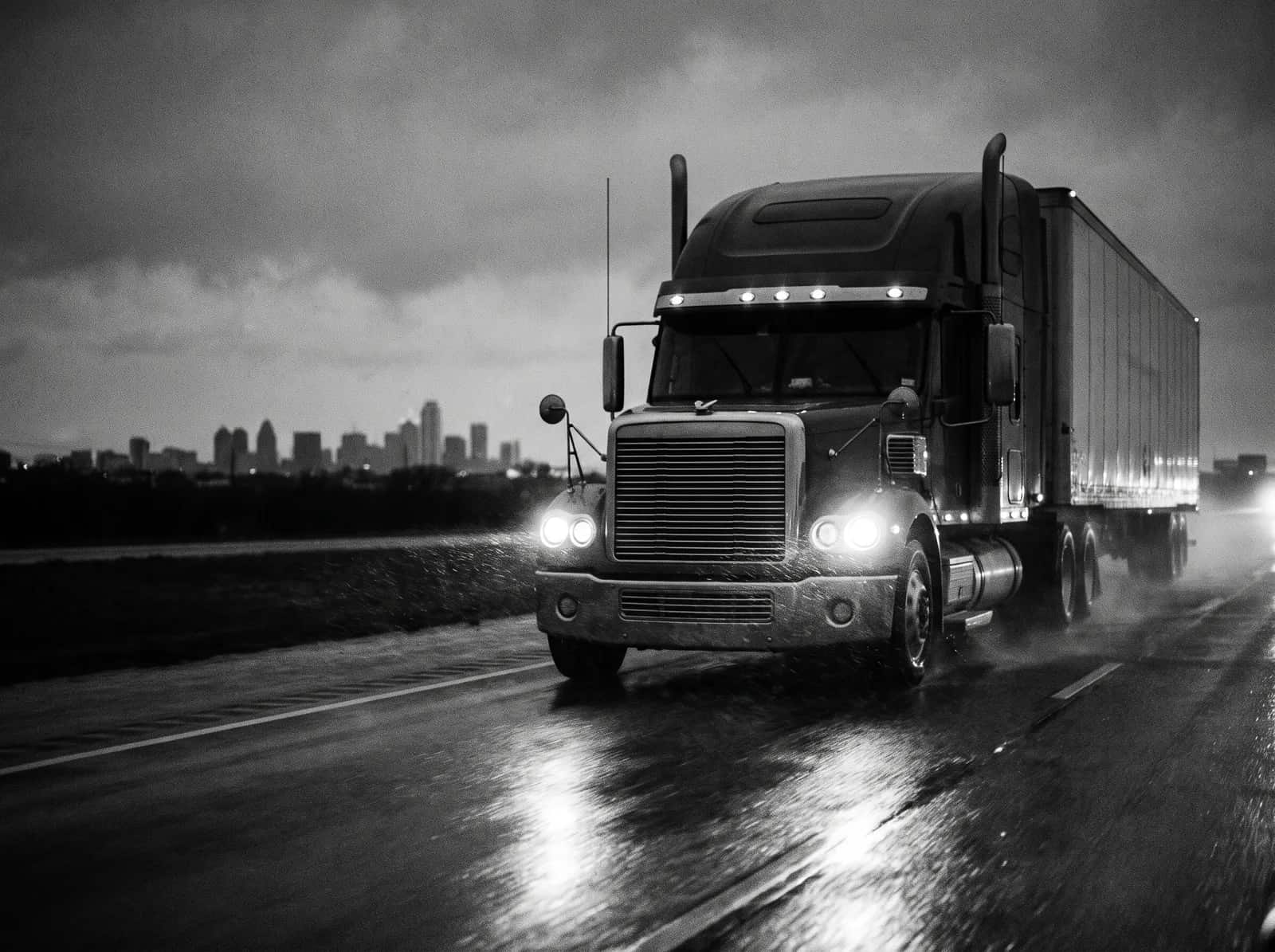

In Austin, a person hurt in a truck accident caused by someone else can recover medical costs, lost income, and pain under Texas law. Owsley Law Firm handles Austin truck accidents from its Houston offices, comes to you, and charges no fee unless it wins. Call before you speak with any insurer.
Truck Accidents in Austin
Where do Austin truck accidents happen?
I-35 through Austin is the freight spine of central Texas, and SH-130 was built to carry trucks around the city, with the highest posted speed limit in the country, 85 miles per hour, on its southern segment. Truck crashes on both are frequent and severe.
Austin truck cases begin on I-35 and SH-130. I-35 through downtown is the freight spine of central Texas, and its construction zones and short merges put trucks into stopped traffic every day. SH-130 was built to carry trucks around the city, and its southern segment has the highest posted speed limit in the country, 85 miles per hour, so a truck crash there is rarely minor. US-183 and SH-71 carry airport cargo and construction trucks serving the region’s growth. The firm’s Austin truck cases most often involve a tractor-trailer rear-ending stopped traffic on I-35 between Cesar Chavez and Rundberg.
Corridors where Austin truck accidents cluster
- I-35 through downtown between Cesar Chavez and Airport Boulevard
- I-35 at US-183 and the Rundberg corridor in north Austin
- MoPac at Lady Bird Lake and the express-lane entrances
- US-183 at SH-71 near the airport
- SH-130 toll road between Pflugerville and Mustang Ridge
- Lamar Boulevard and Riverside Drive through South Austin
Cases from Austin
What does a Austin truck accident case look like?
A commuter on the I-35 lower deck is hit from behind in stop-and-go traffic by a distracted driver; the phone records, subpoenaed later, show a text sent at the second of impact.
Why are Austin truck crashes so severe?
Because heavy trucks share I-35's congested, changing lanes with commuters, and the toll roads around the city carry them at very high speeds. The result is rear-end and lane-change crashes with severe injuries.
I-35 is the freight spine of Central Texas, connecting the border and San Antonio to Dallas, and much of that freight passes straight through downtown Austin. With construction on the I-35 Capital Express projects reshaping the lanes for years, trucks regularly meet stopped traffic and sudden lane shifts.
Outside the core, SH-130 was built in part to carry trucks around the city, and its toll segment between Mustang Ridge and Seguin has an 85 mph limit, the highest posted speed limit in the country. A truck crash at those speeds is rarely minor. US-183, SH-71, and SH-45 add airport cargo, construction trucks, and delivery traffic serving the region's growth.
Who is responsible for a truck crash in Austin?
Often several parties: the driver, the motor carrier, the trailer owner, the shipper or loader, and anyone who maintained the truck, plus a construction contractor if the crash happened in a work zone it controlled.
Delivery fleets add another layer. Branded delivery vans and box trucks in Austin are often operated by separate delivery contractors, so the claim may run against the contractor's commercial policy, with the question of the brand's own responsibility depending on the contracts and how much control it had.
For-hire interstate carriers of general freight must carry at least $750,000 in financial responsibility under 49 CFR 387.9. Identifying every policy, including excess coverage, is part of valuing the case.
- The driver, for speed, fatigue, distraction, or following too closely
- The motor carrier, for its driver on the job and its own hiring and maintenance
- The shipper or loader, for overweight or unsecured loads
- A repair shop or parts maker, for brake and tire failures
- A work zone contractor, for unsafe traffic control
What evidence should be preserved after an Austin truck crash?
Everything the carrier controls: electronic logs, engine data, dash camera video, the driver qualification file, maintenance records, and dispatch records. Federal rules only require hours-of-service records to be kept for six months.
A preservation letter tells the carrier and its insurer that the records must be kept for litigation. Without one, logging data and video can be overwritten in the ordinary course of business. The firm sends those letters quickly and follows up with formal requests once a case is filed.
In serious crashes, Texas DPS commercial vehicle enforcement troopers often perform a post-crash inspection of the truck. That report can document brake, tire, lighting, and logbook violations, and it is separate from the crash report, so it has to be requested on its own.
- Electronic logging device data and supporting documents (49 CFR Part 395)
- Engine control module data: speed and braking
- Driver qualification file (Part 391) and testing records (Part 382)
- Inspection and maintenance records (Part 396)
- Post-crash DPS inspection report, if one was done
What changes when a truck crash happens in an I-35 work zone?
Speed limits are lower and fines increase when workers are present, so a truck that hits stopped traffic in a work zone has usually broken the rules. The contractor's traffic control plan can also be evidence.
TxDOT's Capital Express Central project runs from US 290 East to SH 71 and Ben White Boulevard, with phases TxDOT lists as continuing into the 2030s. Through those years, the lane layout through downtown will keep changing.
If confusing signs, abrupt lane shifts, or missing barriers contributed to the crash, the contractor may share fault with the truck driver. Those records change as the work moves, so they need to be requested quickly.
Where should you get treated after a truck crash in Austin?
Dell Seton Medical Center at the University of Texas is Austin's state-designated Level I trauma center for adults, and Dell Children's Medical Center is a Level I center for children. Get examined the same day even if you feel able to leave the scene.
Truck crash injuries to the spine, brain, and internal organs can appear hours or days later. A same-day exam documents the injury and protects your health.
A hospital that treats you within 72 hours of the crash, including in the emergency room, may file a lien on your claim under Property Code chapter 55, limited by statute and paid from the settlement. The firm verifies and negotiates liens before distribution.
How do federal hours-of-service rules apply to trucks on I-35?
Property-carrying drivers may drive up to 11 hours after 10 consecutive hours off duty, within a 14-hour window, with weekly limits. A driver pushing a schedule through Austin's traffic may run over those limits.
The electronic logging device shows when the driver started, stopped, and rested. Compared with fuel receipts, GPS, and delivery times, it can show a fatigued driver or a falsified log.
Fatigue cases often support claims against the carrier itself, for dispatch practices that made the schedule impossible without breaking the rules.

Should you give a statement to the trucking company?
No, not without counsel. Give your own insurer the basic facts and send everyone else to your lawyer.
Carriers and their insurers often begin investigating within hours. A recorded statement given while you are in pain and on medication can be used to argue you were partly at fault, and under Texas proportionate responsibility every percentage point reduces the recovery, with a complete bar at 51 percent.
Do not sign a release or accept a check for your car that also releases injury claims. Early offers are made before anyone knows the full extent of the injury.
Where is an Austin truck case filed, and how long do you have?
Usually in the Travis County Civil District Courts, or in Williamson or Hays County if the crash happened there, and often in the U.S. District Court for the Western District of Texas, Austin Division, when the carrier is from another state.
Removal to federal court is common in truck cases because interstate carriers are often citizens of other states and damages exceed $75,000. Texas law still governs fault and damages there.
The general deadline is two years from the crash under Civil Practice and Remedies Code section 16.003, with much shorter notice deadlines when a government vehicle or entity is involved. Texas also lets a commercial vehicle defendant ask for a phased trial under Chapter 72 of the Civil Practice and Remedies Code, which shapes how the case is prepared.
How do you identify the trucking company after a crash on I-35 or SH-130?
Start with the USDOT number on the tractor door, the company name, and the trailer plates. The crash report, a DPS inspection, and the bill of lading fill in the rest.
Many trucks on I-35 are owned by one company, pulled under another company's operating authority, and loaded by a third. The USDOT number identifies the motor carrier whose authority the truck was running under, and federal records tie that number to its registered insurer.
If you could not photograph the truck at the scene, the crash report usually lists the carrier. The firm uses the report, any post-crash inspection, and early written requests to identify every company and policy involved.
What damages can you recover after a truck crash, and are there caps?
Texas allows recovery of medical expenses, lost earnings and earning capacity, physical pain, mental anguish, physical impairment, and disfigurement. Compensatory damages in a truck case against a private carrier are not capped; exemplary damages are.
Medical expenses are limited to the amounts actually paid or incurred by or for you, so the billing records and any adjustments matter. In serious truck cases the largest items are often future medical care and lost earning capacity, which need proof from treating doctors, life care planners, and economists rather than estimates.
Exemplary damages, sometimes called punitive damages, require clear and convincing evidence of gross negligence, malice, or fraud, and Chapter 41 of the Civil Practice and Remedies Code caps them in most cases. In a trucking case they usually turn on what the carrier knew, such as a driver with a known record of violations kept on the road, and whether its dispatch practices pushed drivers past the safety rules.
What if a family member was killed in a truck crash?
The surviving spouse, children, and parents can bring a wrongful death claim, and the estate can bring a separate survival claim for what the person suffered before death. The wrongful death deadline is generally two years from the date of death, and the survival claim generally runs from the crash, extended by up to 12 months after the death under Civil Practice and Remedies Code section 16.062.
Texas wrongful death claims are governed by Chapter 71 of the Civil Practice and Remedies Code. The claim belongs to the spouse, children, and parents, and the damages are theirs: lost financial support, lost companionship and care, and mental anguish. The survival claim under section 71.021 is brought by the estate and covers the person's own pain, medical bills, and funeral expenses.
Truck carriers and their insurers often contact grieving families quickly. Do not sign anything or give a recorded statement before talking with a lawyer, and keep every record you receive, including the crash report, the medical examiner's report, and any letters from insurers.
Should you accept the trucking insurer's first offer?
Usually not before your treatment is far enough along to know what the injury will cost. A settlement is final, and a release signed early cannot be reopened when surgery or lost work comes later.
Carriers' insurers sometimes move quickly with an offer, especially when liability is clear. Speed can feel like fairness, but the offer is priced before anyone knows the full medical picture, the future care, or the effect on your ability to work.
A better approach is to document the injury fully, identify every policy, including any excess coverage above the primary limit, and then negotiate from evidence. Any offer can be evaluated against that record, and you decide whether to accept.
How does the firm handle Austin truck cases?
From its Houston offices, with meetings by appointment at 301 Congress Avenue, 12th Floor, and travel to Austin for inspections, depositions, and court.
The team answers calls 24/7, sends preservation letters fast, and coordinates truck and scene inspections. Most of the work happens through records, experts, and the insurers, wherever the client is.
There is no fee unless the firm wins your case. Clients may be responsible for case expenses, such as court costs, as set out in the written fee agreement.
Common Austin truck crash types and what to check
| Crash type | Common cause | Evidence to request |
|---|---|---|
| Rear-end in I-35 traffic | Following too closely, speed, distraction | Engine data, dash camera, phone records |
| Work zone crash | Speed in the zone; unsafe traffic control | Contractor's traffic control plan and logs |
| High-speed toll road crash | Speed, fatigue, tire failure | Logging data, tire and maintenance records |
| Delivery van or box truck crash | Rushed routes, poor training | Contractor agreements and route data |
| Unsecured load or spilled cargo | Improper loading or securement | Bill of lading, loading records, DPS inspection |

What to do now
What should you do after a truck accident in Austin?
- Get examined the same day. Truck crashes cause injuries that surface late, and Dell Seton Medical Center at UT (Level I trauma) and St. David’s Medical Center take the serious ones from Austin.
- Photograph the truck's USDOT number, the company name on the door, the trailer, and the plates. On I-35 the rig is often towed within the hour.
- Move fast on the carrier's records. The truck's electronic logging data, dashcam video, and engine data sit with the trucking company, and federal rules only require hours-of-service records to be kept for six months, so a preservation letter should go out early.
- Get the Austin crash report. Austin Police Department reports are available through the TxDOT Crash Report Online Purchase System, usually within 10 days. The firm obtains it for clients at no charge.
- Do not give a statement to the trucking company's investigator or its insurer. They often start working the crash within hours; your own insurer only needs the basic facts.
- Know where the case goes. Austin truck accidents suits are filed in the Travis County Civil District Courts, Civil and Family Courts Facility, or Travis County Courts at Law depending on the crash location.
- Call the firm. Austin clients are handled from Houston by phone, video, and mail, and the firm travels to Austin for meetings, depositions, and court. The consultation is free.
Austin truck accidents we handle
Specific Austin truck accident cases
Go deeper
More on truck accident claims in Austin and Texas.
Common questions
Austin truck accident questions
Which Austin roads have the most truck accidents?
I-35 through downtown and north Austin, SH-130, US-183, and SH-71, with I-35’s construction zones leading the count.
Are construction-zone truck crashes treated differently?
Texas work zones often carry lower posted limits, and fines double when workers are present, so a truck that hits stopped traffic in one may have been speeding or following too closely for the conditions. The contractor’s traffic-control plan can also be evidence.
Can I recover from the company if a delivery van hit me in Austin?
Usually, yes. Branded delivery vans are often driven by employees of a separate delivery contractor, and that contractor’s commercial policy is normally the first source of payment. Whether the brand itself shares responsibility depends on the contracts and how much control it had over the driver. The van number and the company name on the door are the starting point.
Will DPS inspect the truck after a serious Austin crash?
In serious truck crashes, Texas DPS commercial vehicle enforcement troopers often perform a post-crash inspection. That report can document brake, tire, lighting, and logbook violations that support the claim. It is separate from the crash report itself, so it has to be requested specifically. Photos of the truck taken at the scene help fill gaps if no inspection was done.
Who pays if a delivery van hits me in Austin?
Usually the delivery contractor's commercial policy pays first. Whether the brand on the van shares responsibility depends on the contracts and how much control it had over the driver.
Does DPS inspect trucks after serious Austin crashes?
Often. Texas DPS commercial vehicle enforcement troopers commonly do post-crash inspections in serious truck crashes, and the inspection report must be requested separately from the crash report.
Can a construction company be responsible for a truck crash on I-35?
Yes, if its traffic control helped cause the crash. The contractor's traffic control plan and daily records show how the zone was set up, so request them early.
How fast can trucks go on SH-130?
The SH-130 toll segment between Mustang Ridge and Seguin has an 85 mph limit, the highest posted in the country, and crashes there tend to be severe. Speed and tire condition are often central to those cases.
What is the deadline for an Austin truck accident lawsuit?
Generally two years from the crash, with shorter notice deadlines for claims involving government vehicles or entities.
Will my Austin truck case be heard in federal court?
It might. When the carrier is from another state and more than $75,000 is at stake, the defense can move the case to the federal court in Austin, where Texas law still applies.
Sources
Sources this page relies on
- 49 C.F.R. § 387.9 (carrier insurance minimums)
- 49 C.F.R. Part 395 (hours of service)
- 49 C.F.R. Part 391 (driver qualification)
- 49 C.F.R. Part 396 (inspection and maintenance)
- Tex. Prop. Code ch. 55
- Tex. Civ. Prac. & Rem. Code § 16.003
- Tex. Civ. Prac. & Rem. Code ch. 72, subch. B
- Tex. Civ. Prac. & Rem. Code ch. 41
- Tex. Civ. Prac. & Rem. Code § 16.062
- Tex. Civ. Prac. & Rem. Code ch. 71
- Tex. Civ. Prac. & Rem. Code § 71.021
- TxDOT Crash Report Online Purchase System