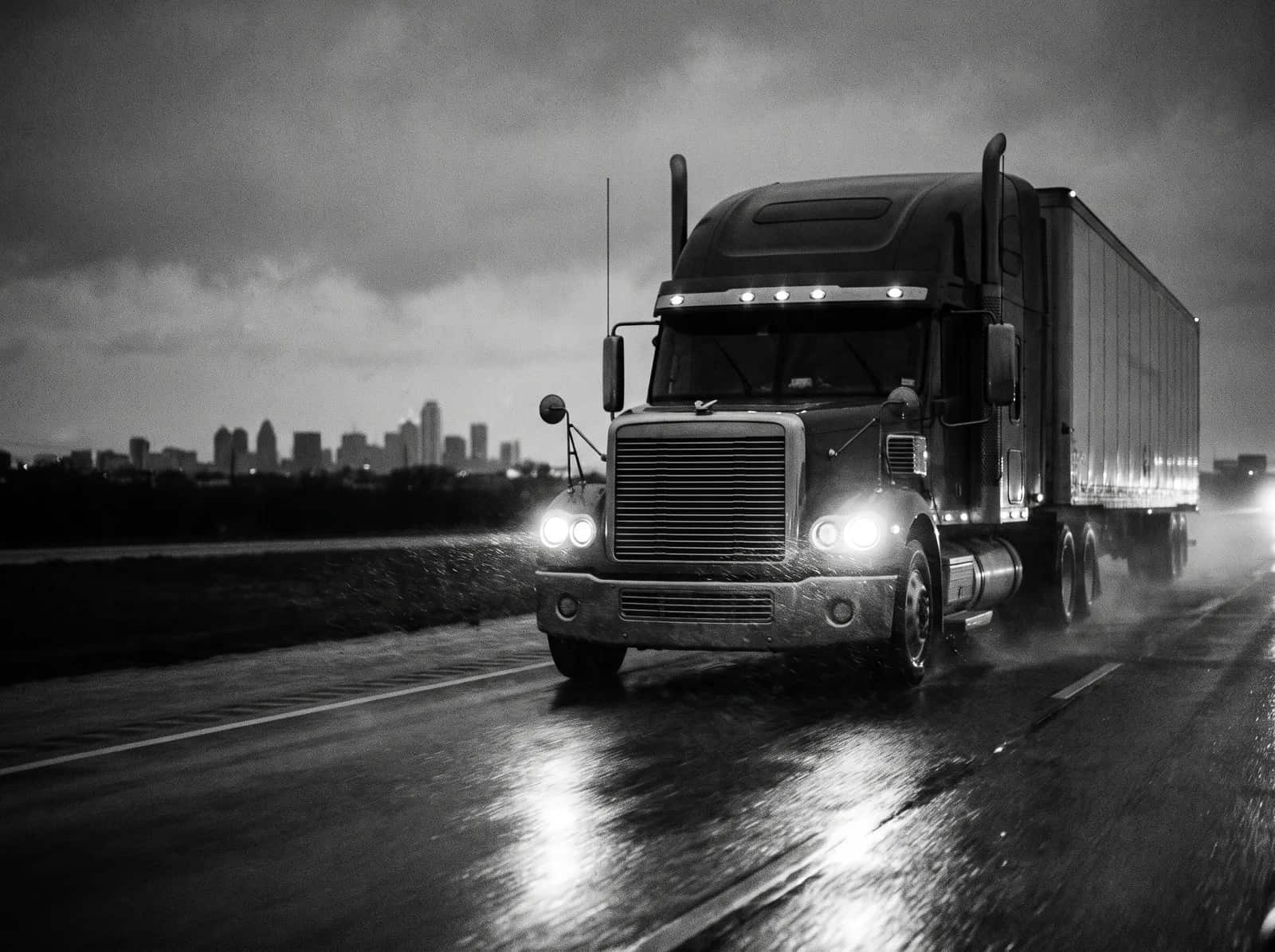

San Antonio sits on I-35, one of the main freight routes between the Laredo border crossings and the rest of the country, and on I-10 between Houston and the west. A San Antonio 18-wheeler crash can involve the driver, the carrier, a broker, and the shipper, each with separate insurance. Owsley Law Firm handles Bexar County truck cases and charges no fee unless it wins.
Why are 18-wheeler crashes common in San Antonio?
I-35 carries a large share of the freight that crosses the border at Laredo, and that traffic runs straight through San Antonio on its way north. I-10 brings trucks from Houston and from the west, and Loop 410 and Loop 1604 carry trucks around the city to warehouses, distribution centers, and job sites.
The mix of long-haul trucks, local delivery trucks, and fast-growing suburban commuter traffic on the loops produces rear-end, merge, and wide-turn crashes every day.
- Rear-end crashes in I-35 congestion through downtown and the northeast side
- Merge crashes at the I-10 and Loop 410 interchange
- Fatigue crashes on long runs north from the border
- Wide-turn crashes at warehouses and job sites along Loop 1604
Does it matter that the truck crossed the border?
A truck hauling freight across the border into the United States must meet U.S. federal safety rules once it is on U.S. roads, and the carrier is subject to federal registration and insurance requirements. That matters because it determines what records exist and which insurers are involved.
Cross-border freight often involves a chain of companies: the carrier, a freight broker, a customs broker, and the shipper. The firm identifies each one, because responsibility and insurance can sit at any link.
Who can be responsible for a San Antonio truck crash?
The driver and the motor carrier are the usual defendants. A carrier can be responsible for its driver’s conduct and for its own failures, such as hiring an unqualified driver or ignoring hours-of-service limits under 49 CFR Part 395. A shipper that overloaded or badly secured cargo, a trailer owner, and a maintenance shop can share fault. Federal rules require at least $750,000 in coverage for general freight carriers under 49 CFR 387.9, and more for some hazardous loads.
What evidence proves a San Antonio 18-wheeler case?
The truck’s engine control module, electronic logging device, and any cameras record speed, braking, and hours. The carrier’s maintenance, inspection, and driver qualification files show whether it followed the rules. A preservation demand goes out at the start so that none of it is discarded.
Public evidence matters too: the crash report, TxDOT traffic cameras, and nearby business video. Injured people in San Antonio are often treated at University Hospital or Brooke Army Medical Center, both Level I trauma centers, and those records document the injury from the first hour.
What should you do after an 18-wheeler crash in San Antonio?
Get emergency care. Then, only if you are able:
- Photograph the truck, the trailer, the company name, and the USDOT number
- Note the trailer number and any placards for hazardous materials
- Collect witness names and phone numbers
- Refuse to discuss fault with the carrier’s investigator or insurer
Where are San Antonio truck cases filed?
Bexar County cases are filed in the civil district courts at the Bexar County Courthouse at 100 Dolorosa. A truck case may also be heard in federal court in the Western District of Texas, San Antonio Division, in some situations, and a crash outside Bexar County may belong in that county.
Texas Chapter 72 rules for commercial vehicle cases can split a trial into phases, and the general two-year deadline under section 16.003 still applies.
What happens to the truck after a San Antonio crash?
After a serious crash, the tractor and trailer are usually towed to a storage yard, and the carrier will want them back on the road or repaired as soon as possible. Once the truck is repaired or the data is pulled by the carrier’s own technicians, important evidence can be changed or lost.
A preservation demand asks the carrier to keep the tractor, trailer, engine data, logging data, dashcam video, and driver records unchanged. If the carrier refuses or the evidence is at real risk, a court can order an inspection. The firm can arrange for an independent download of the engine data and an inspection of the brakes, tires, lights, and cargo securement before anything is altered.
How does the firm handle San Antonio truck cases?
Owsley Law Firm handles Bexar County truck cases from its Houston offices and meets San Antonio clients by appointment at 9901 I.H. 10 West, Suite 800, or comes to you. The team preserves the truck data, identifies every company and policy in the freight chain, and builds the case to the standard the federal rules set. There is no fee unless the firm recovers money for you.
Go deeper
More on 18-wheeler accidents in San Antonio and Texas.
Common questions
San Antonio 18-wheeler accidents questions
What if the truck was owned by a Mexican carrier?
A foreign carrier operating in the United States must register and carry insurance under U.S. federal rules. The firm identifies the carrier, its U.S. insurance, and any U.S. companies in the freight chain.
Can I sue the broker who arranged the load?
Sometimes. Broker liability depends on what the broker did and how much control it exercised, and the law in this area is still developing. The firm reviews the broker’s role in every case.
What if I was hit by a truck on Loop 1604 near a construction site?
Construction trucks such as dump trucks and cement mixers are commercial vehicles too. The company that owns and dispatches the truck, and sometimes the contractor, may be responsible.
How much insurance does an 18-wheeler carry?
Federal minimums start at $750,000 for general freight and rise for hazardous materials, and many carriers carry more. The actual limits are identified early in the case.
How long do I have to file after a San Antonio truck crash?
Generally two years from the crash, or two years from the death in a wrongful death case. The evidence work should start long before that.