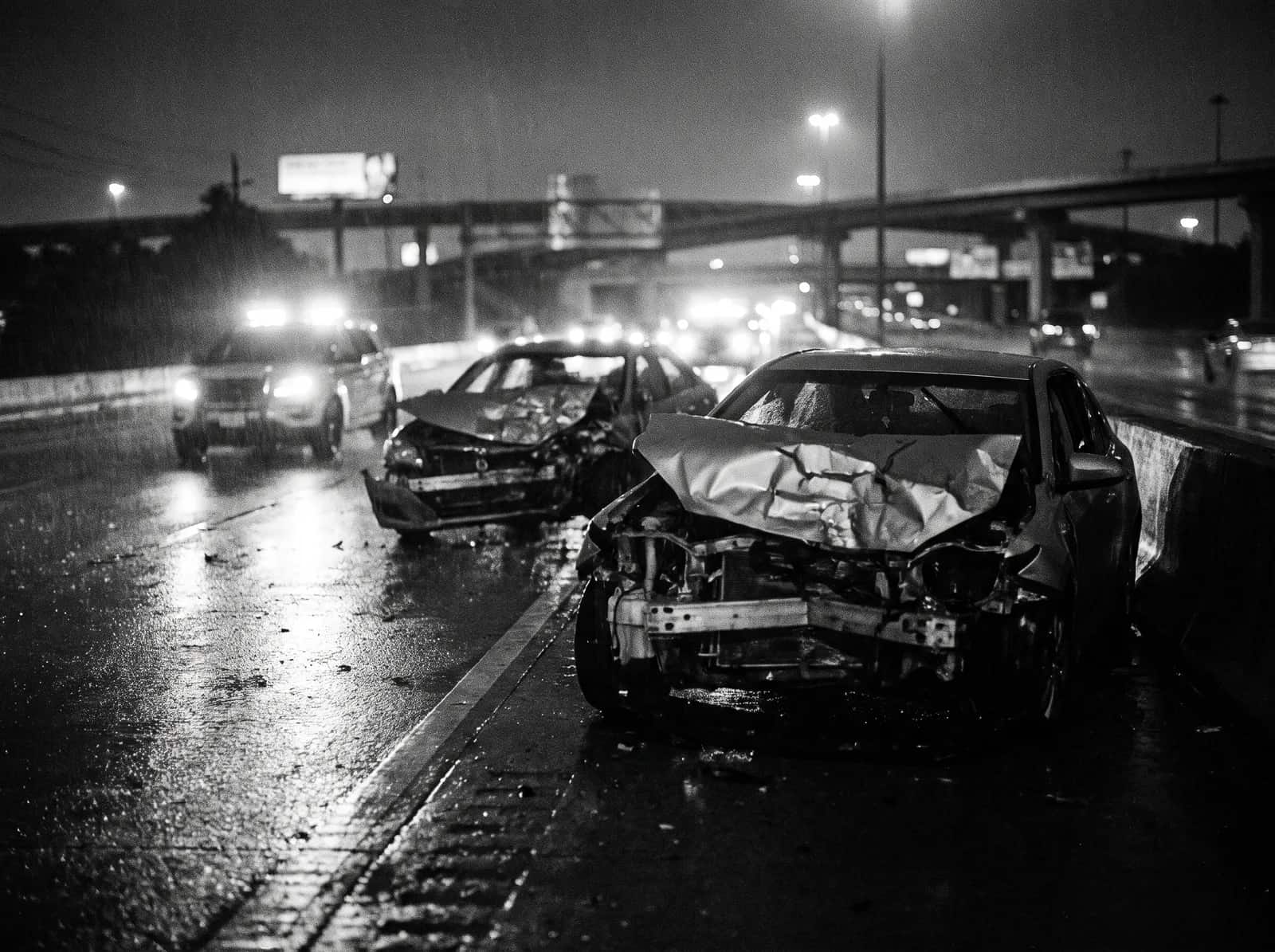

Your claim is against the driver, and which insurance pays depends on the driver’s app status. Off the app, the driver’s personal policy applies. Logged in and waiting, the rideshare policy must provide at least 50/100/25. During a ride, it must provide $1 million. Prove the app status first.
Being hit by a rideshare driver is not like riding in their car. As another driver, you are a third party, and the insurance that pays you depends on what the driver was doing in the app at that moment.
Texas Insurance Code Chapter 1954 sets the minimums. If the driver was logged in and available but had not accepted a ride, section 1954.052 requires at least $50,000 per person, $100,000 per incident, and $25,000 for property damage. If the driver had accepted a ride, was on the way to a pickup, or had a passenger, section 1954.053 requires a total of at least $1 million.
If the driver was not logged in at all, the claim runs through the driver’s personal auto policy like any other crash. Texas requires at least 30/60/25 in liability coverage under Transportation Code section 601.072, and serious injuries often exceed that. Your own uninsured and underinsured motorist coverage may then help.
Fault still matters. Texas uses proportionate responsibility under Civil Practice and Remedies Code Chapter 33: your recovery is reduced by your share of fault, and you recover nothing if you are found more than 50 percent responsible. Photos, witnesses, and video from nearby businesses often decide that.
Rideshare drivers often drive more miles in congested areas than most drivers, especially around airports, nightlife districts, and event venues, and they use phones for navigation and requests. When distraction is an issue, the driver’s phone and app activity at the moment of the crash can be requested in a lawsuit, and Texas Transportation Code section 545.4251 prohibits reading, writing, or sending electronic messages while driving.
If the rideshare driver was carrying a passenger, that passenger is also a witness. Their account of the driver’s speed, phone use, and attention can be important, and their name should be in the crash report.
Write down the driver’s name, the car, and whether a rideshare sticker was displayed, and ask the officer to note it in the report. Owsley Law Firm handles these claims across Texas and charges no fee unless it wins.
What to do, step by step
- Call 911 and ask the officer to note that the driver was driving for Uber or Lyft.
- Photograph the car, any rideshare sticker, the driver’s phone mount, and the scene.
- Get the driver’s name, insurance, and whether a passenger was in the car.
- Report the crash to your own insurer.
- Call a lawyer to request the app-status records.

Rideshare drivers must also carry proof of the required coverage. Under Insurance Code section 1954.056, the driver has to show it to the other people involved, insurers, and the investigating officer after a collision, and disclose on request whether they were logged on or carrying a passenger. Asking for that at the scene, or through the officer, saves time later.
Your own coverage can keep things moving while the insurers sort out app status. Personal injury protection pays medical bills and lost wages regardless of fault, and collision coverage can repair your car with your deductible later recovered from the at-fault policy. Using your own coverage does not waive your claim against the rideshare driver.
A passenger in the rideshare car is a strong indicator of app status, because a passenger means a prearranged ride was underway. Ask the officer to record the passenger’s name as a witness.
Property damage claims follow the same coverage rules. Your car’s repair or total loss can be claimed against the applicable policy, and your own collision coverage can pay first while the liability insurer is identified.
Related questions
Can I sue Uber or Lyft directly?
Usually the claim is against the driver and the insurance that covers them. Claims against the company itself depend on the company’s own conduct and the facts.
What if the driver says they were not working?
The company’s records will show whether they were logged in. Do not accept the driver’s statement as the final answer.
How long do I have to file?
Generally two years for an injury claim under section 16.003, but evidence should be gathered much sooner.
Read next