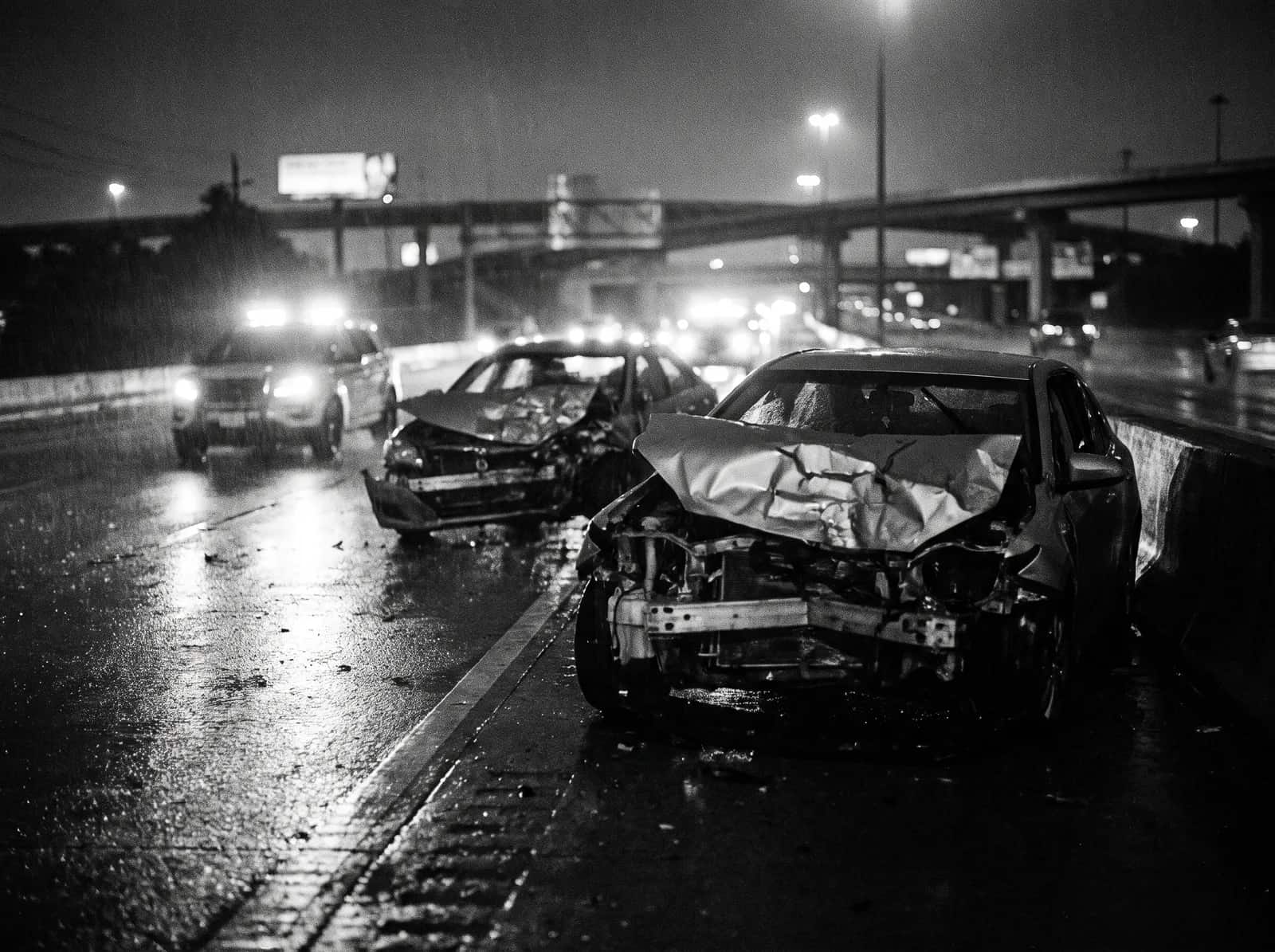
Texas Insurance Code Chapter 1954 sets insurance for rideshare drivers. While logged in and waiting, coverage must be at least 50/100/25. From the moment a ride is accepted until the last rider leaves, liability coverage must be at least $1 million. App status at the moment of the crash decides which applies. Owsley Law Firm handles Uber and Lyft claims and charges no fee unless we win.
Rideshare crashes raise one question first: what was the driver doing in the app? Texas law sets different minimum coverage depending on whether the driver was offline, logged in and waiting, or on a trip. The answer can mean the difference between $30,000 and $1 million in coverage.
This page explains the coverage periods, who must carry the insurance, and how the coverage applies to passengers, other drivers, and pedestrians.
How much insurance must Uber and Lyft drivers carry in Texas?
While logged in and waiting for a request, at least $50,000 per person, $100,000 per incident, and $25,000 property damage. During a prearranged ride, at least $1 million aggregate.
Rideshare companies classify drivers as independent contractors, and Texas law supports that classification in many settings. That status affects whether the company itself can be sued, but it does not change the insurance requirements in Chapter 1954. The coverage still has to be in place during the logged-in and trip periods.
Both periods also require uninsured or underinsured motorist coverage and PIP where required by the Insurance Code. When the app is off, the driver is a private motorist and only their personal policy applies.
- App off: driver’s personal policy
- Logged in, waiting: 50/100/25 minimum
- Ride accepted to drop-off: $1 million minimum
- UM/UIM and PIP where required

When does a prearranged ride begin and end?
It begins when the driver accepts a ride request through the app and ends when the last requesting rider leaves the vehicle.
That means the $1 million coverage applies while the driver is on the way to pick up a rider, not only once the rider is in the car. Food delivery trips are not prearranged rides under the statute.
Who provides the rideshare insurance?
The driver, the rideshare company, or a combination of both, under section 1954.051.
In practice, the rideshare company usually maintains the policy for the logged-in and trip periods. The policy must be primary and comply with Texas auto insurance law.
Does the $1 million policy pay if another driver caused the crash?
The $1 million is liability coverage for the rideshare driver’s fault. If another driver caused the crash, that driver’s insurance pays first, then the rideshare policy’s UM/UIM coverage may apply.
For a passenger, the claim path depends on who was at fault. For another motorist or pedestrian hit by a rideshare driver on a trip, the $1 million liability coverage is usually the main source.
What if the rideshare driver was offline?
Then the driver is a private motorist, and only their personal auto policy applies.
Personal auto policies often exclude coverage when a vehicle is used to carry passengers for a fee. If the driver was offline, that exclusion should not apply, and the personal policy should respond. If the driver claims to be offline but was actually logged in, app data resolves the dispute.
Your own UM/UIM and PIP coverage remain available if the driver’s coverage is missing or too low.
What evidence proves app status?
Trip records, app screenshots, the driver’s statements, and the rideshare company’s data.
Riders should screenshot the trip receipt right away. Other drivers should note any rideshare signs in the vehicle and ask the driver whether they were on a trip.
How it is proven after a crash
- Trip receipt and ride history
- App status data from the rideshare company
- Photos of rideshare signs or decals
- The driver’s statements at the scene
- The CR-3 crash report
Mistakes that cost people money
- Not screenshotting the trip receipt
- Assuming the $1 million always applies
- Accepting a personal policy denial without checking app status
- Waiting to request app data
Frequently asked questions
Does Uber’s insurance cover passengers in Texas?
Yes, during a prearranged ride. Which coverage pays depends on who caused the crash.
What if my Uber driver was not logged in?
The driver’s personal policy applies, and personal policies often exclude commercial use. App records settle the question.
Does rideshare insurance cover DoorDash drivers?
Not under Chapter 1954’s prearranged ride rules. Delivery coverage depends on the platform and the driver’s own policy.
Who pays if I was hit by a Lyft driver while driving?
If the Lyft driver was on a trip and at fault, the $1 million liability coverage usually applies.
How long do I have to file?
Generally two years from the crash under section 16.003.
This page is general information about Texas law and is not legal or medical advice. Every case depends on its own facts. Contact the firm for a free review of yours.
Keep reading